Free Wednesday night cycling at Dubai Autodrome
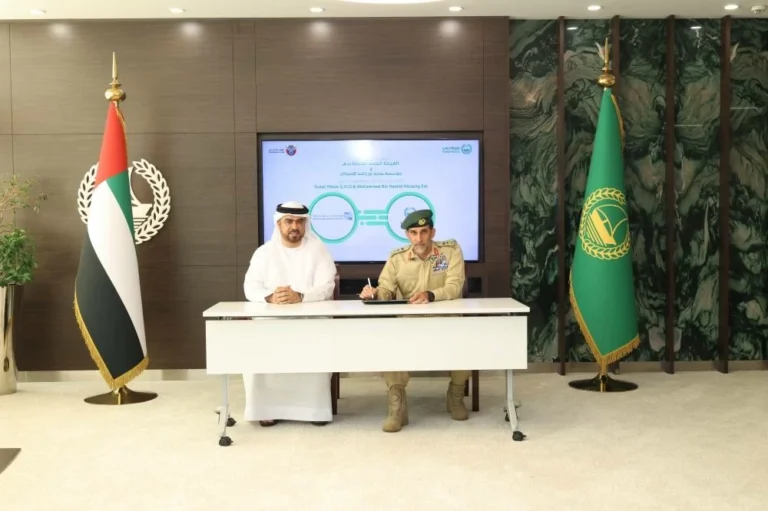
Dubai Police is hosting free Ride with Dubai Police community cycling sessions at Dubai Autodrome every Wednesday throughout April 2026, from 7:00pm to 10:00pm, as part of an initiative to encourage active community living. It’s a free community cycling session at Dubai Autodrome in Dubai Sports City, giving residents a controlled, traffic-free circuit to ride while meeting officers in an informal setting and supporting Dubai’s active-living agenda.
Event Specs
| Feature | Data |
| Implementing Authority | Dubai Police (Dubai Police General Headquarters), in coordination with Dubai Autodrome operations |
| Date & Timings | Every Wednesday in April 2026, 7:00pm–10:00pm |
| How to join | Free entry community cycling session; registration required via short link (bit.ly/4mcLtQj) |
| Location | Dubai Autodrome, Dubai Sports City (MotorCity area), Dubai; online registration via web link |
How the Night Ride with Dubai Police Works
The weekly April program offers Dubai Autodrome as a controlled, traffic-free venue for residents to cycle in the evening. This supports safer participation for families and beginners by keeping riders within a managed facility instead of mixing with vehicles on open streets.
Entry is free, but participation requires pre-registration using the Dubai Police short link to manage capacity and facilitate on-site check-in at the Autodrome. Riders should arrive between 7 pm and 10 pm, complete event check-in, and follow instructions from Dubai Police personnel and venue staff for safe movement on the track.
The fixed weekly schedule every Wednesday in April 2026 establishes a consistent routine for residents in Dubai Sports City, Jumeirah Village Circle (JVC), Jumeirah Village Triangle (JVT), and Arabian Ranches. The evening timing aligns with post-work travel and cooler temperatures. The event also serves as a community engagement opportunity, bringing Dubai Police officers into direct contact with residents outside police stations and formal service settings.
Riders must arrive with a roadworthy bicycle and adhere to venue safety rules during track access, as the session is held at a motorsport facility. Ensuring proper hydration and basic bike readiness, such as checking brakes and tire pressure, directly affects ride safety and minimizes delays during entry at Dubai Autodrome.
At a Glance
- What it is: ‘Ride with Police’ free community cycling hosted by Dubai Police
- When: Wednesdays in April 2026, 7:00pm–10:00pm
- Where: Dubai Autodrome, Dubai Sports City (MotorCity area), Dubai
- How to join: Register online via bit.ly/4mcLtQj before arriving
Check the registration link HERE and register before you go, then arrive early at Dubai Autodrome to complete check-in and get track-entry instructions from Dubai Police staff.
Eid Al Adha Holiday 2026 UAE: Deals, Trips & Scam Warnings
Eid Al Adha Holiday 2026 UAE: Dubai Rolls Out Deals, But Watch Your Wallet
The Eid Al Adha holiday 2026 UAE announcement is here, and if you haven't started planning yet, you're already behind, hotels are filling up, flight prices are climbing, and scammers are sharpening their tools. Here's everything you need to know before you book a single thing.
What's Actually Been Announced, And What It Means for Your Calendar
UAE authorities have confirmed the Eid Al Adha holiday for 2026, giving residents and employers the green light to lock in leave plans. As with previous years, the break is expected to trigger one of the most intense short-window travel surges of the year, the kind where family beach resort rooms and popular desert experiences disappear within days of the announcement. If you're waiting for prices to drop, they won't. This is peak demand territory.
It's worth noting: while the holiday has been widely reported, the exact dates are pending official confirmation through UAE Cabinet communications. Keep an eye on official government channels for the final word before you commit to non-refundable bookings.
Dubai Is Pulling Out All the Stops for Staycations and Road Trips
Dubai Economy and Tourism (DET), operating through the Visit Dubai platform, is already curating a full menu of Eid experiences designed to keep residents, and GCC visitors, spending locally. Think bundled hotel packages at beachfront resorts, attraction deals across Downtown and family leisure corridors, ticketed entertainment, and dining promotions spread across the city's key districts.
For residents who'd rather hit the road than the airport, the road-trip angle is getting serious attention this Eid. Driving to nearby destinations is a genuine cost-control strategy when peak airfares are brutal, but it comes with its own checklist: get your car serviced before the break, book accommodation in your destination early (not the night before), and plan your departure timing around the predictable traffic surge on the first day of the holiday. Popular rest stops and border crossings will be busy.
The Scam Warning You Shouldn't Scroll Past
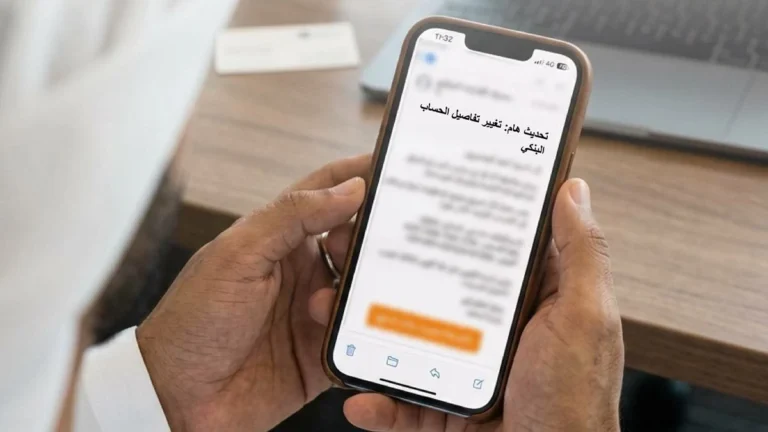
Every Eid booking surge brings a matching wave of fraud attempts, and 2026 is no different. UAE consumer protection authorities consistently flag a familiar pattern: fake social media ads offering hotel rates that look too good to be true, cloned booking pages designed to harvest your payment details, and WhatsApp messages pushing "limited slots" with payment links that go nowhere legitimate.
| Red Flag | What It Looks Like | |---|---| | Unrealistic discounts | "5-star resort, 80% off, tonight only" | | Off-platform payment requests | Bank transfers or links sent via DM | | Pressure tactics | "Only 2 rooms left, pay now" | | Unverifiable contact details | No official website, no listed address | | Cloned booking pages | URLs that look almost right but aren't |- Safe booking channels: Official hotel websites, reputable OTAs (Booking.com, Expedia), or the Visit Dubai platform directly
- Payment rule: Never transfer money via bank transfer or a link sent through an unsolicited message
- Verification step: If a deal arrives via Instagram or WhatsApp, search the property independently before clicking anything
- Who to report to: Dubai Economy and Tourism (DET) handles consumer complaints related to tourism services in Dubai
Eid Al Adha 2026 is shaping up to be a big one for Dubai's tourism economy, and a busy one for your inbox. The deals are real, the road trips are worth it, and the scams are predictable enough to avoid if you know what to look for. Book early, book through verified channels, and enjoy the break.

UAE Lottery Winning Numbers: Dh30m Jackpot Unclaimed
UAE Lottery Winning Numbers Are Out for May 13, And the Dh30 Million Jackpot Is Still Up for Grabs
The UAE Lottery winning numbers for the May 13, 2026 draw have just been released, and while three lucky ticket-holders are celebrating a Dh100,000 payday each, the headline Dh30 million jackpot has rolled over, meaning nobody matched the full combination and the top prize lives to fight another draw.
The Numbers, the Winners, and What the Rollover Means for the Next Draw
The official winning combination drawn on May 13 came in as 12, 11, 29, 18, 7, 10, with Month 2 as the additional qualifier. Three participants matched enough of the sequence to each pocket Dh100,000 in lower-tier prizes, a solid return, but nowhere near the life-changing sum sitting at the top of the prize structure. Because no single ticket matched the complete winning line, the Dh30 million jackpot carries forward, which historically drives a sharp spike in ticket sales and public interest ahead of the following draw. Gulf News has reported on the draw outcome, though the results are currently listed as unverified through an independent authoritative confirmation.
The UAE Lottery operates on a rollover model: when the jackpot goes unclaimed, the prize pool accumulates rather than resets, keeping the headline figure, and the buzz around it, firmly in play. Participants buy tickets through official channels, and after each draw, the operator publishes the winning numbers across its verified platforms. Claiming any prize requires identity verification and physical or digital ticket validation through official portals. Winners are strongly advised to act only on instructions published by the lottery operator directly and to ignore any unsolicited messages claiming they have won.
What a Rolling Dh30 Million Jackpot Means for Residents Right Now
For anyone holding a May 13 ticket, the immediate priority is straightforward: cross-check your numbers against the official sequence, 12, 11, 29, 18, 7, 10, Month 2, using the lottery's verified app or website. Do not share your ticket barcode, personal documents, or any financial details over messaging apps or with anyone who contacts you unsolicited. Large unclaimed jackpots in the UAE consistently trigger a wave of impersonation scams across WhatsApp, Instagram, and lookalike websites that promise accelerated claims or ask for upfront processing fees. UAE consumer protection authorities and the lottery operator itself have repeatedly flagged this pattern. If you did not enter the draw, the rollover simply means the next draw will carry a larger headline prize, and ticket demand will climb accordingly.
- Draw Date: May 13, 2026
- Winning Numbers: 12, 11, 29, 18, 7, 10
- Additional Qualifier: Month 2
- Jackpot Value: Dh30 million
- Jackpot Status: Unclaimed, rolls over to next draw
- Lower-Tier Winners: Three participants
- Lower-Tier Prize Per Winner: Dh100,000
- Source: Gulf News (results unverified by independent authority at time of publication)
The Dh30 million UAE Lottery jackpot remains unclaimed after the May 13 draw, with winning numbers 12, 11, 29, 18, 7, 10 and Month 2 failing to find a full match. Three players each walked away with Dh100,000 in lower-tier prizes, keeping the draw's momentum alive. With the jackpot now rolling over, residents should verify their tickets through official channels only, and treat any unsolicited winner notification as a red flag.

Dubai school fees 2026-27: No increase confirmed
Dubai School Fees 2026-27 Frozen: KHDA Confirms Zero Increase for Every Private School in the Emirate
Dubai school fees 2026-27 will not rise by a single dirham, the Knowledge and Human Development Authority (KHDA) made that official on May 22, 2026, under the directives of Sheikh Hamdan bin Mohammed bin Rashid Al Maktoum. Every private school across the emirate, regardless of curriculum or rating, must hold its current fee schedule flat for the entire upcoming academic year.
What Exactly Changed, and Why It Affects Your Family Budget Right Now
Normally, Dubai's private school fee cycle works like this: KHDA evaluates each school through its annual inspection programme, assigns a performance rating, and that rating feeds into a framework that can permit schools to apply for fee adjustments. In most years, families brace for at least some upward movement, even modest increases compound quickly when you factor in multiple children, transport, uniforms, and activity fees. This year, that entire adjustment process has been overridden from the top. The directive is a blanket freeze, not a school-by-school decision, which means there are no exceptions and no grey areas to navigate.
The announcement came directly through the Dubai Media Office and is published on the official Sheikh Hamdan website (hamdan.ae). KHDA, the authority that licenses and regulates all private schools in Dubai, is the body responsible for enforcing the freeze at school level. If a school attempts to raise fees for 2026-27 in any form, tuition, registration, or mandatory add-ons, that would be a direct breach of this directive.
Who This Affects, and What You Should Do Before Re-Enrolment
This applies to every parent with a child currently enrolled in, or planning to enrol in, a private school in Dubai for the 2026-27 academic year. That covers British, Indian CBSE and ICSE, American, IB, and all other curricula operating under a KHDA licence. Whether your school is rated Outstanding or Acceptable, the rule is the same: fees stay where they are today.
- Announced by: Knowledge and Human Development Authority (KHDA), under the directives of Sheikh Hamdan bin Mohammed bin Rashid Al Maktoum
- Announcement date: May 22, 2026
- Scope: All private schools, emirate-wide, across all curricula
- Fee change permitted: None, zero increase for the 2026-27 academic year
- Enforcement authority: KHDA (khda.gov.ae)
- Official source: hamdan.ae/en/latest-news/581
Here is what to do in plain terms. First, when your school sends its re-enrolment paperwork for 2026-27, check the fee schedule line by line against what you paid in 2025-26. The numbers must be identical. Second, if your school quotes you a higher figure, for any reason, under any label, do not pay it without querying it in writing with the school's finance office and citing the KHDA directive. Third, if the school does not resolve it, you can file a complaint directly with KHDA through their parent portal or contact centre. The authority has a clear mandate here and a track record of acting on fee-related complaints.
For families currently outside Dubai and planning a move, this freeze is genuinely useful for relocation budgeting. Education allowances from employers can be locked in now with confidence, because the fee your HR team quotes today will still be the fee in September. That kind of predictability is rare in a market where school fees have historically been one of the most volatile household cost lines.
Dubai's private school fee freeze for 2026-27 is a straightforward, enforceable directive, your school fees cannot go up, full stop. Check your re-enrolment invoice carefully, and if the numbers don't match what you paid this year, raise it with KHDA immediately. For the first time in a while, this is one education cost you can plan around with complete certainty.

Dubai Police Fireworks Warning: Dh100,000 Fine Risk
Dubai Police Fireworks Warning Puts Dh100,000 Fine and Jail Time on the Table This Eid
The Dubai Police fireworks warning issued ahead of Eid is unambiguous: import, buy, use, or trade fireworks without a licence in Dubai and you are looking at a fine of up to Dh100,000 and up to one year behind bars.
What Dubai Police Are Actually Cracking Down On, and Why Now
This is not a general reminder about being careful with sparklers. Dubai Police have drawn a hard line across the entire chain of activity, importing, purchasing, storing, transporting, and using fireworks, unless you hold a valid licence to do so. The warning lands at a deliberate moment: Eid celebrations drive a surge in informal trading, with unlicensed sellers often operating through social media channels and pop-up arrangements that can spread fast through residential communities. Authorities are intensifying inspections precisely to cut that off before it starts.
The logic behind targeting the full supply chain is straightforward. Risk does not begin the moment someone lights a fuse, it begins the moment an unregulated product enters a building, a car boot, or a storage room. Dubai's enforcement framework treats fireworks containing explosive or pyrotechnic materials as controlled items, not casual consumer goods, and the penalties reflect that classification. A single unlicensed transaction, even a purchase, can trigger legal exposure under this framework.
What This Means If You Live, Work, or Manage Property in Dubai
For residents, the exposure is more personal than many realise. Setting off fireworks on a balcony, in a car park, or near a building entrance is not just a safety hazard, it is a criminal offence without the correct authorisation. Building managers and community security teams are expected to tighten access controls during the Eid period, and Dubai Police are encouraging residents to report suspicious storage or sales activity before an incident occurs. Families with children, shift workers trying to sleep, and pet owners dealing with noise anxiety all feel the downstream effects when unlicensed fireworks go off in dense residential areas, and burns, eye injuries, and secondary fires are documented outcomes when pyrotechnics are handled without training or protective measures.
- Who issued the warning: Dubai Police
- Prohibited activities: Importing, buying, using, or trading fireworks without a licence
- Maximum fine: Dh100,000
- Maximum jail term: Up to one year
- Timing: Issued ahead of Eid 2026
- Who is at risk: Individuals, households, and venue operators allowing unlicensed use on their premises
- Safe alternative: Attend officially permitted public displays with trained operators and safety perimeters in place
Dubai Police have made the rules clear ahead of Eid: fireworks without a licence carry penalties serious enough to derail anyone's holiday plans. The safest way to enjoy the celebrations is to leave the pyrotechnics to the professionals at organised public events. If you see unlicensed fireworks being stored or sold in your community, reporting it to authorities is the fastest way to keep your neighbourhood safe.

US Iran Deal: Hormuz Reopening on the Table
US Iran Deal Could Reopen Hormuz in 60 Days, and Reprice Gulf Risk Overnight
A proposed US Iran deal that would extend a ceasefire by 60 days and reopen the Strait of Hormuz is reportedly within reach, according to Axios, and for a region where maritime trade is the economic backbone, the implications run far deeper than a diplomatic headline.
What's Actually on the Table
The framework, as reported by Axios and cited by Khaleej Times, goes well beyond a simple pause in hostilities. The reported package includes a 60-day ceasefire extension, the reopening of the Strait of Hormuz to commercial shipping, and a green light for Iran to sell oil more freely on global markets. Running parallel to that is a US commitment to negotiate sanctions relief and the unfreezing of Iranian funds, the financial lever that Tehran has long demanded as the price of any durable agreement.
It's worth being clear about what this is at this stage: unverified. The claim has not been confirmed by either Washington or Tehran. But in geopolitics, credible reports of near-term deals move markets and shift planning assumptions long before ink touches paper. The fact that Arab and Muslim leaders are reportedly backing the framework adds a layer of regional legitimacy that makes this more than background noise.
Why the Strait of Hormuz Is the Real Story Here
The Strait of Hormuz is not just a shipping lane, it is the single most consequential chokepoint in global energy trade. Linking the Arabian Gulf to the Gulf of Oman and the wider Indian Ocean, it carries a significant share of the world's seaborne crude oil and refined products. When risk rises in and around Hormuz, the consequences are immediate and cascading: war-risk insurance premiums spike, tanker operators reroute or demand higher charter rates, and a "risk premium" gets baked into benchmark oil prices within hours. A credible reopening window compresses all of that in reverse.
For Dubai specifically, the downstream effects are not abstract. The emirate's re-export economy depends on predictable, cost-efficient shipping schedules. Freight rate volatility hits inventory planning. Insurance cost spikes feed into logistics pricing. And any sustained pressure on oil prices, upward or downward, eventually shows up in UAE fuel prices, airline operating costs, and the price of imported goods on supermarket shelves.
The Sanctions Angle: More Iranian Oil, Softer Prices?
The sanctions relief and funds-unfreezing component of the reported deal carries its own set of consequences for Gulf energy markets. If Iran is permitted to sell oil more freely, additional barrels enter a global market that is already navigating demand uncertainty. That supply increase can soften crude prices, a dynamic that Gulf producers and the UAE's own energy planning authorities at the Ministry of Energy and Infrastructure will be watching closely. The question is always whether any relief is durable or temporary, and that depends entirely on the compliance architecture written into any final agreement.
- Ceasefire Extension: 60 days, as reported by Axios
- Key Maritime Route: Strait of Hormuz, links Arabian Gulf to Indian Ocean
- Iran Oil Sales: Freer access to global markets reportedly included
- US Commitments: Sanctions relief negotiations and unfreezing of Iranian funds
- Regional Backing: Arab and Muslim leaders reportedly supportive
- Claim Status: Unverified, sourced to Axios, cited by Khaleej Times
What UAE Businesses and Residents Should Watch
For UAE-based logistics operators, trading firms, and importers, the non-obvious move right now is not to wait for formal confirmation. War-risk premiums and charter rates can shift faster than headline oil prices, and faster than most procurement cycles. Companies dependent on predictable shipping schedules through the Gulf should be stress-testing their freight and insurance terms against both a confirmed-deal scenario and a breakdown scenario. The Central Bank of the UAE and the Abu Dhabi Department of Economic Development have both flagged global trade disruption as a key risk variable in 2025-2026 planning cycles, and a Hormuz reopening, or the failure of one, sits squarely inside that risk envelope.
For residents, the more immediate read-through is fuel prices and the cost of imported goods. The UAE's monthly fuel price committee, which sets pump prices based on global benchmarks, will be sensitive to any sustained shift in crude driven by Iranian supply re-entering the market. A meaningful softening in oil prices, if the deal holds, could translate into lower pump prices in the months ahead, though the 60-day window means nothing is locked in yet.
A reported US-Iran deal framework, 60-day ceasefire, Hormuz reopening, and a path toward sanctions relief, is unverified but consequential enough to move planning assumptions across Gulf shipping, energy, and trade. For the UAE, a country whose prosperity runs through maritime corridors, the difference between a deal and a breakdown is measured in freight rates, fuel prices, and investor confidence. Watch the next 60 days closely.