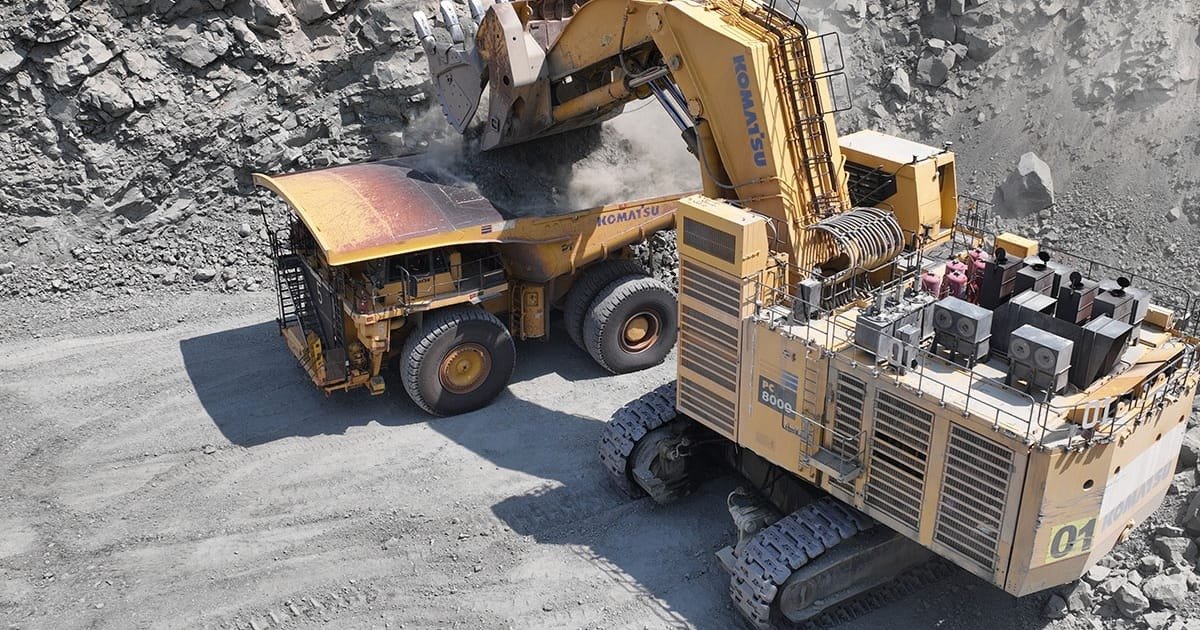
(Credit - Gulf News)
Africa Critical Minerals Are Now the World’s Most Contested Supply Chain
Africa’s critical minerals, cobalt, copper, lithium, and rare earths, have moved to the centre of a three-way competition between China, Gulf states, and Western powers, each racing to secure the raw materials that power batteries, electricity grids, electronics, and defence systems.
Why Infrastructure Is the Real Prize, Not Just the Mine
The strategic logic driving investment in 2026 is straightforward: a mine without a corridor is stranded. Every major external player is pairing mining access with the ports, railways, roads, and power projects needed to move ore from extraction sites to processing hubs and export terminals. Whoever finances and builds that logistics chain earns long-term commercial leverage, and reduces their own supply-chain risk at home.
China’s approach has centred on large-scale infrastructure financing and construction tied directly to trade and industrial capacity. The goal is to reduce supply-chain vulnerability for Chinese manufacturers by securing upstream mineral flows before competitors can. Western partners, led by the United States, have responded by promoting alternative financing frameworks, governance standards, and supply-chain partnerships, targeting specifically the minerals most critical to the global energy transition.
Gulf Investors Are Quietly Building a Third Corridor Strategy
Gulf investors have expanded their footprint across Africa through ports, logistics networks, energy projects, and mining-linked deals. The strategic fit is clear: Africa’s resource base aligns with Gulf ambitions in trade connectivity, industrial diversification, and downstream processing, giving Gulf states a role in global supply chains that goes well beyond their own hydrocarbon revenues.
- Minerals in focus: Cobalt, copper, lithium, and rare earths, all central to battery manufacturing, power grids, and defence technology.
- China’s edge: Established infrastructure financing and construction capacity, with trade and industrial ties already embedded across multiple African economies.
- Western counter-strategy: Alternative financing, governance-linked partnerships, and supply-chain agreements targeting energy-transition minerals.
- Gulf positioning: Port and logistics investment, energy deals, and mining-linked financing that connects Africa‘s resource base to Gulf trade and processing ambitions.
What African Governments Actually Want
The framing of this competition as a binary choice between blocs misreads how most African governments are operating. Many are engaging China, Gulf investors, and Western partners simultaneously, treating each as a source of capital, technology, and market access rather than as an ideological alignment. The priorities African leaders consistently push for are jobs, government revenue, delivered infrastructure, and local value addition: processing ore domestically rather than exporting raw material at low margins.
That demand for local value addition is increasingly a deal condition, not a negotiating afterthought. Governments that can enforce it gain more from the competition; those that cannot risk locking in the same extractive dynamic that defined earlier resource booms. The country that controls the processing step, not just the mine, captures the higher-margin part of the supply chain.
The Supply-Chain Consequence for Businesses and Buyers
For procurement teams, infrastructure investors, and manufacturers dependent on critical minerals, this competition is becoming a cost-and-risk calculation as much as a geopolitical story. Contract terms, local value-add requirements, and financing conditions attached to corridor projects directly affect who secures stable offtake agreements, who gains processing capacity, and who faces logistics bottlenecks when a corridor is controlled by a rival’s financing partner.
Africa holds a significant share of the world’s reserves of minerals essential to the energy transition and modern defence systems, making the continent’s infrastructure corridors as strategically important as the mines themselves. The competition between China, Gulf investors, and Western powers is intensifying, but African governments are increasingly setting the terms, demanding jobs, revenue, and local processing rather than simply choosing sides. For any business or government dependent on critical mineral supply chains, understanding who controls the corridor is now as important as understanding who owns the deposit.


Spain World Cup final showdown
Spain Reaches World Cup Final with Historic Defense
Spain's national football team, La Roja, has reached the FIFA World Cup final, driven by a remarkable balance of attacking flair and defensive resilience. Luis de la Fuente's side will face defending champions Argentina at MetLife Stadium on Monday, seeking to add a second World Cup crown to their achievements. La Roja's journey to the final has been marked by an unbeaten run, with the team conceding just one goal in seven matches, the best defensive record in the tournament.
This impressive defensive performance has been complemented by the team's attacking quality, with Mikel Oyarzabal emerging as the leading scorer with five goals. Teenage sensation Lamine Yamal has also made a significant impact, dazzling on the wings, while captain Rodri has controlled the midfield. The team's campaign began with a surprise goalless draw against Cabo Verde but quickly gained momentum with a 4-0 win over Saudi Arabia, where Yamal scored his first World Cup goal.
The knockout rounds have showcased Spain's growing confidence, with comfortable wins over Austria in the Round of 32. La Roja sealed top spot in Group H with a hard-fought 1-0 win over Uruguay, demonstrating their ability to perform under pressure. As they prepare to face Argentina, Spain's balanced team approach, combining attacking flair with exceptional defensive resilience and discipline, will be crucial in determining the outcome of the final.
The final match against Argentina will be played at MetLife Stadium, marking a significant moment in the tournament. Spain's success in reaching the final reflects their dedication and teamwork, and they will look to capitalize on this momentum to secure a historic win.

World Cup Final Pitch Debate
World Cup Final Pitch Sparks Debate
The pitch at MetLife Stadium in East Rutherford, New Jersey, is under scrutiny as Argentina and Spain prepare for the World Cup final. FIFA insists the hybrid grass surface meets top standards despite criticism from players and coaches. Several players and coaches have offered contrasting views on the surface, with some, like Brazil's Vinicius Junior, expressing dissatisfaction, while others, such as Norway's Ståle Solbakken, found it better than expected, especially when wet.
France coach Didier Deschamps called the pitch "special" - and not in a good way. The surface, a grass field with synthetic fibers stitched in to reduce the risk of divots and tears, has drawn mixed reviews through the first seven games of the tournament at the stadium. After a nearly two-week break for staff to get it in the best condition possible, the most important game takes place there on Sunday when Argentina and Spain meet in the final. Neither team has played at the Meadowlands stadium yet, adding another element of uncertainty to the matchup.
The pitch's condition is expected to be influenced by rain, with players and coaches saying it plays faster and better when wet. Before Norway faced Senegal in New Jersey, Solbakken compared the Meadowlands pitch to AstroTurf, saying the short, firm grass could be good for teams who like to possess the ball. Torrential rain fell before and during the game on June 22, changing the complexion of how it played. Solbakken noted that the rain made the pitch better, allowing the ball to move faster and smoother.
This debate comes ahead of the highly anticipated World Cup final between Argentina and Spain, with the pitch's condition potentially impacting the teams' strategies and performance. The final is scheduled to take place on Sunday, and fans are eagerly awaiting the outcome.
The controversy surrounding the pitch is reminiscent of previous discussions about the quality of playing surfaces in major tournaments. As the world watches the World Cup final, the condition of the pitch will be under close scrutiny, with many wondering how it will affect the game.

Dubai explosions probe expanded
UAE Expands Probe into False Dubai Explosions Report
The Public Prosecution has expanded its investigation into the publication and circulation of a false report claiming explosions had been heard in central Dubai. Counsellor Dr Hamad Saif Al Shamsi, Attorney-General of the UAE, stated that the Public Prosecution is continuing its investigation, which includes questioning the reporter and summoning those responsible for preparing, approving, and publishing the report at the news agency. Local journalists and news agencies are affected as the Public Prosecution examines their respective roles and the procedures followed in preparing, approving, and publishing the report.
The investigation aims to determine responsibility and take necessary legal action based on its findings. The Attorney-General affirmed that the agency's decision to withdraw the report and publish an apology does not preclude the continuation of the investigation. The Public Prosecution is taking these measures to ensure compliance with legal and professional standards governing the verification of information before publication.
The Dubai Media Office had previously denied a Reuters report on explosions in Downtown Dubai. This incident highlights the importance of verifying information before publication to maintain media standards and avoid spreading false news.
The Public Prosecution's investigation into the false report is ongoing, following the report's publication on July 18, 2026. This probe is part of the UAE's efforts to ensure that media outlets adhere to professional standards and verify information before publication.

Kuwait Airways Reschedules Flights Due to Airport Suspension
Kuwait Airways Reschedules Flights Amid Airport Suspension
Kuwait Airways announced the rescheduling of the majority of its commercial flights following a temporary suspension of take-off and landing operations at Kuwait International Airport due to the ongoing Iranian aggression on the country. Passengers are urged to closely monitor their flight status as automated updates and text messages are being sent to inform travelers of timely changes.
The airline's decision affects the majority of its commercial flights, with passengers advised to keep a close eye on their flight status. The temporary suspension of operations at Kuwait International Airport has prompted the national carrier to take this measure to ensure the safety of its passengers.
The suspension of operations at Kuwait International Airport is a result of the ongoing Iranian aggression on the country. Kuwait Airways has assured its passengers that it is taking all necessary measures to minimize the impact of the suspension on its flight schedule.
This development comes as the Iranian aggression on Kuwait continues, prompting the country to take necessary measures to ensure the safety of its citizens and visitors. The rescheduling of flights by Kuwait Airways is a precautionary measure to ensure the safe operation of its flights.
Kuwait Airways has not specified when the normal flight schedule will resume, but it has assured its passengers that it will keep them informed of any changes to their flight status. The airline has also advised passengers to check their flight status regularly for updates.
As the situation at Kuwait International Airport continues to evolve, passengers are advised to stay informed and follow the instructions of the airline and the airport authorities. The safety of passengers is the top priority, and all necessary measures are being taken to ensure their safe travel.

Emirates ID Renewal Rejected?
Fix Emirates ID Renewal Issues
If your Emirates ID renewal application has been rejected, you're not alone. The Federal Authority for Identity, Citizenship, Customs and Port Security (ICP) has identified eight common reasons why this happens. Here's what you need to know to get your application back on track.
- Photograph Issues: A non-compliant photograph can cause your application to be rejected. The ICP has specific guidelines for photographs, including that they must be no more than six months old, 35mm in width, and 45mm in height, with a resolution of at least 600dpi. Ensure your photograph meets these requirements to avoid rejection.
- Passport Mismatches: If your passport details don't match those in your Emirates ID application, your application may be rejected. Double-check your passport details before submitting your application to avoid this issue.
- Unrenewed Residence Visas: An unrenewed residence visa can also cause your Emirates ID renewal application to be rejected. Make sure your residence visa is up to date before applying for Emirates ID renewal.
- Missed Biometric Appointments: Missing a biometric appointment can lead to application rejection. If you've missed an appointment, reschedule it as soon as possible to avoid further delays.
- Incorrect Passport Details: Incorrect passport details, such as an incorrect passport number or expiry date, can cause your application to be rejected. Verify your passport details carefully before submitting your application.
- Incomplete Information: Incomplete information in your application can also lead to rejection. Ensure you fill out all required fields and provide all necessary documents to avoid this issue.
- Unaddressed Modification Requests: If you've requested modifications to your Emirates ID, such as a name change, and haven't completed the necessary steps, your application may be rejected. Follow up on any modification requests to ensure your application is processed smoothly.
- Incorrect Contact Details: Incorrect contact details, such as an invalid email address or phone number, can prevent you from receiving important updates on your application status. Make sure your contact details are up to date and accurate.