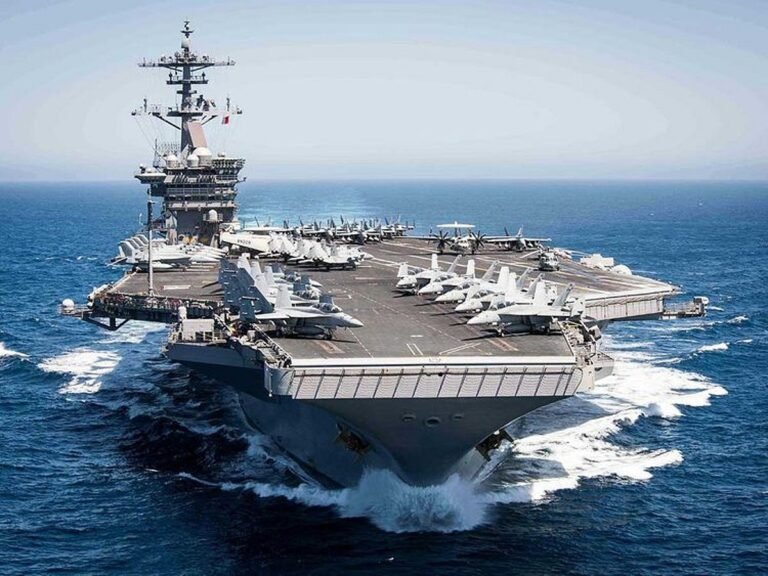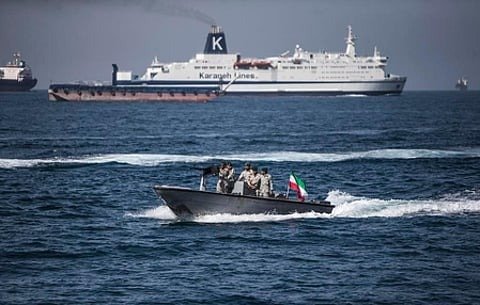
(Credit - Gulf News)
100 Days of War With Iran: One Goal Met, One Elusive, and a Costly Stalemate Taking Shape
One hundred days into the US-Iran war, the strategic ledger is uneven, President Donald Trump entered the conflict with two declared objectives, and by June 7, 2026, only one of them can be claimed as achieved.
The Chess Move: Capability Denial vs. Leadership Change
The United States isn’t just fighting a military campaign against Iran. It is attempting to simultaneously dismantle a nuclear program and engineer a political transformation, two war aims that operate on entirely different timelines, require different instruments, and carry different verification burdens.Trump’s stated goals were explicit: end Iran’s nuclear program and pursue regime change. The 100-day assessment concludes that one of those objectives has been met. The source does not specify which goal has been achieved, but the framing, a “costly stalemate” with further military action still under consideration, signals that the harder, longer-horizon objective remains unresolved.This is the structural tension at the core of the conflict. Destroying or degrading physical nuclear infrastructure is a discrete military task. Achieving verified, durable dismantlement, the kind that satisfies nonproliferation standards, requires inspections, compliance mechanisms, and political settlement. Regime change is an even more open-ended ambition: it cannot be declared complete by the attacking power and depends on internal Iranian dynamics that no external military campaign fully controls.Economic Driver: Energy Markets Are Already Absorbing the Shock
The conflict has pushed energy prices higher, a consequence that was predictable the moment hostilities began in a region that sits astride critical maritime chokepoints. Even without confirmed supply disruptions, markets reprice risk when Gulf security deteriorates. Shipping insurance costs widen, refinery margins shift, and crude benchmarks move on perceived threat to infrastructure and transit routes, not just actual barrels lost.The stalemate dynamic compounds this. A short, decisive conflict resolves uncertainty. A prolonged, inconclusive one keeps the risk premium embedded in prices, affecting energy-intensive industries, import-dependent economies, and logistics operators across global supply chains. Specific price figures were not provided in the available reporting, but the directional signal, higher and more volatile, is documented.Geopolitical Driver: The Escalation Calculus Is Still Open
Trump is now weighing further military action. That decision sits at the intersection of coercion logic and escalation risk. Additional strikes, whether expanded airstrikes, maritime interdiction, or intensified pressure, are designed to raise the cost for Iran and force a strategic concession. The counter-risk is retaliation, regional spillover, and a conflict that deepens rather than resolves.The 100-day mark is itself a strategic signal. It is long enough to assess whether initial objectives were realistic, and short enough that a course correction, either toward negotiation or toward intensified pressure, remains politically viable for the administration. The fact that further military action is being considered, rather than ruled out, suggests the White House has not concluded that the current posture is sufficient to achieve its remaining goal.The Ripple Effect: Three Groups Feeling the Pressure
Energy buyers and industrial operators are navigating a sustained risk premium in crude and shipping costs. The stalemate removes the near-term prospect of price normalisation. Hedging costs rise, long-term supply contracts face repricing pressure, and contingency planning, previously a back-office function, moves to executive decision-making.Regional governments and security partners face a recalibration of threat assessments. A prolonged US-Iran conflict without a clear resolution trajectory keeps the broader Middle East in a state of elevated alert. Diplomatic channels that might otherwise be used for de-escalation are constrained by the active military posture of the United States.Nonproliferation institutions and arms control frameworks are watching the “nuclear program ended” claim with particular scrutiny. The gap between physical destruction of facilities and verified, inspected dismantlement is significant. If the achieved goal is the former without the latter, the durability of that outcome, and its meaning for the global nonproliferation order, remains an open question that no military campaign alone can close.The Contrarian View
The strongest counter-argument to framing this as a failure or stalemate is that 100 days is an arbitrary and premature benchmark for a conflict with structural objectives of this scale. Regime change in particular has historically unfolded over years, not months, and nuclear dismantlement, even when politically agreed, takes time to verify. Critics of the stalemate narrative would argue that sustained military pressure, even without a declared second victory, is itself a form of strategic coercion that constrains Iranian decision-making and may be producing effects not yet visible in public assessments. The absence of a second achieved goal does not automatically mean the strategy is failing, it may mean the harder goal simply takes longer.- War Duration: 100 days as of June 7, 2026
- Stated US Objectives: End Iran’s nuclear program; pursue regime change
- Goals Achieved: One of two, per current assessment, specific goal not confirmed in available reporting
- Economic Impact: Energy prices elevated; conflict described as a costly stalemate
- Next Decision Point: Trump administration weighing further military action
One hundred days in, the US-Iran war has delivered a partial scorecard, one goal claimed, one still contested, and an energy market that has already priced in the uncertainty. The administration’s next move, escalate, negotiate, or hold, will define whether this conflict resolves on American terms or settles into a longer, more expensive strategic impasse. The 100-day mark is not a conclusion; it is a decision point.
Loading more…