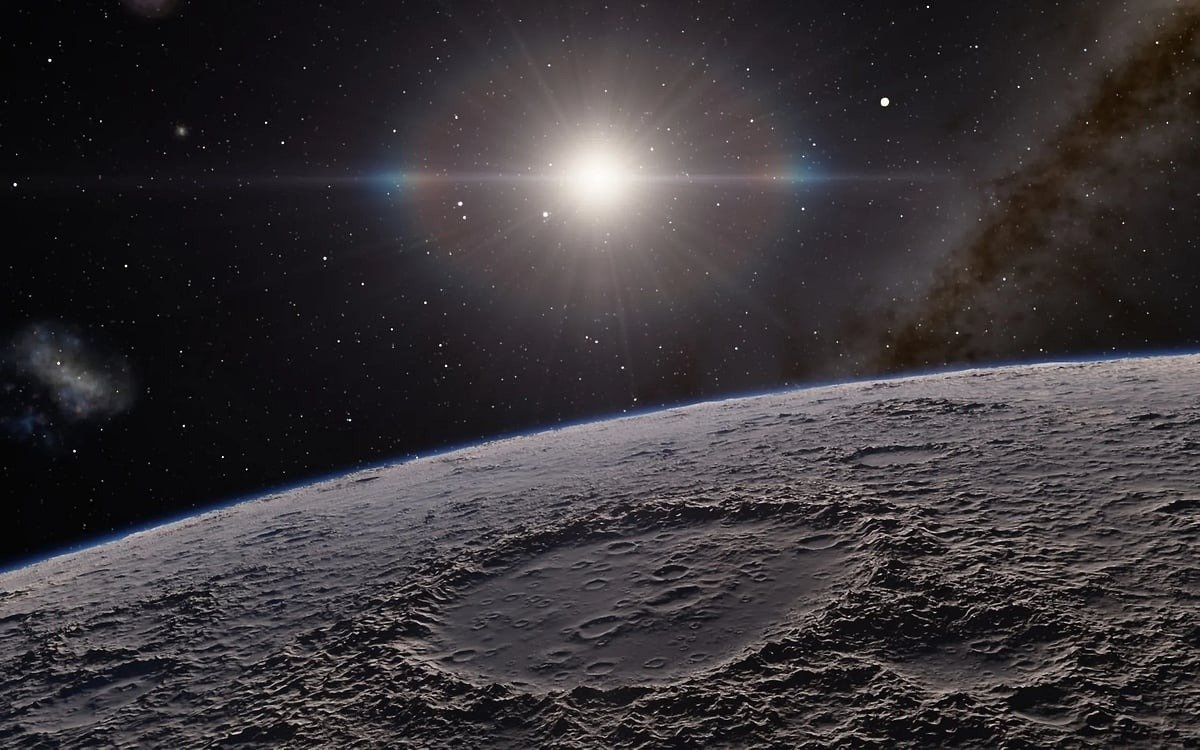
Moon Crater Photos: NASA's Wait Begins
The wait for photos of the Moon crater left by SpaceX’s rocket impact has begun, with NASA’s Lunar Reconnaissance Orbiter expected to capture before-and-after images within two weeks. On August 5, 2026, the upper stage of a SpaceX Falcon 9 rocket struck the Moon, ejecting an estimated 1,100 tonnes of lunar material. The impact was tracked by Abu Dhabi‘s Al Khatim Astronomical Observatory, which detected neither a flash nor visible ejecta.
The Al Khatim Astronomical Observatory, part of the International Astronomy Centre, produced the most detailed estimate of the impact, with director Mohammad Shawkat Odeh stating that the collision excavated around 450 cubic metres of lunar soil and rock. Under the Moon’s weak gravity, some of the ejecta could have risen as high as three kilometres above the surface before falling back.
NASA‘s Lunar Reconnaissance Orbiter, which has been mapping the Moon since 2009, will be used to capture the before-and-after images of the impact site. The orbiter will have to pass over the right patch of ground, in the right lighting, at the right altitude for the resolution needed, before downlinking, processing, and comparing the images against the existing archive to confirm the new feature is the crater rather than something already there.
The Korea Pathfinder Lunar Orbiter will also look for opportunities to capture imagery of the impact site, according to a NASA spokesperson. The first pictures are expected to appear between the middle and end of August, although no specific date has been promised. Locating a crater roughly 25 metres across on a surface the size of Africa takes time, even when you know approximately where to look.
Scientists had been uncertain about what the impact would look like, with predictions ranging from a brief flash to a visible cloud of dust and rock, to nothing at all. The complication was that the rocket struck the lit side of the Moon, making any impact flash difficult or impossible to detect. However, detections by the Lowell Observatory in Flagstaff, Arizona suggest evidence of a plume, which Al Khatim is now waiting on observations from other ground-based observatories and space telescopes to confirm.
The impact of the SpaceX rocket on the Moon is a significant event, with NASA planning to collect data from the event and refine techniques for tracking objects in space. The wait for photos of the Moon crater may be long, but it will be worth it to see the aftermath of this historic event.
For those waiting for the photos, it’s a matter of patience. The images will be released as soon as they are available, and they will provide a unique glimpse into the aftermath of the SpaceX rocket impact on the Moon.