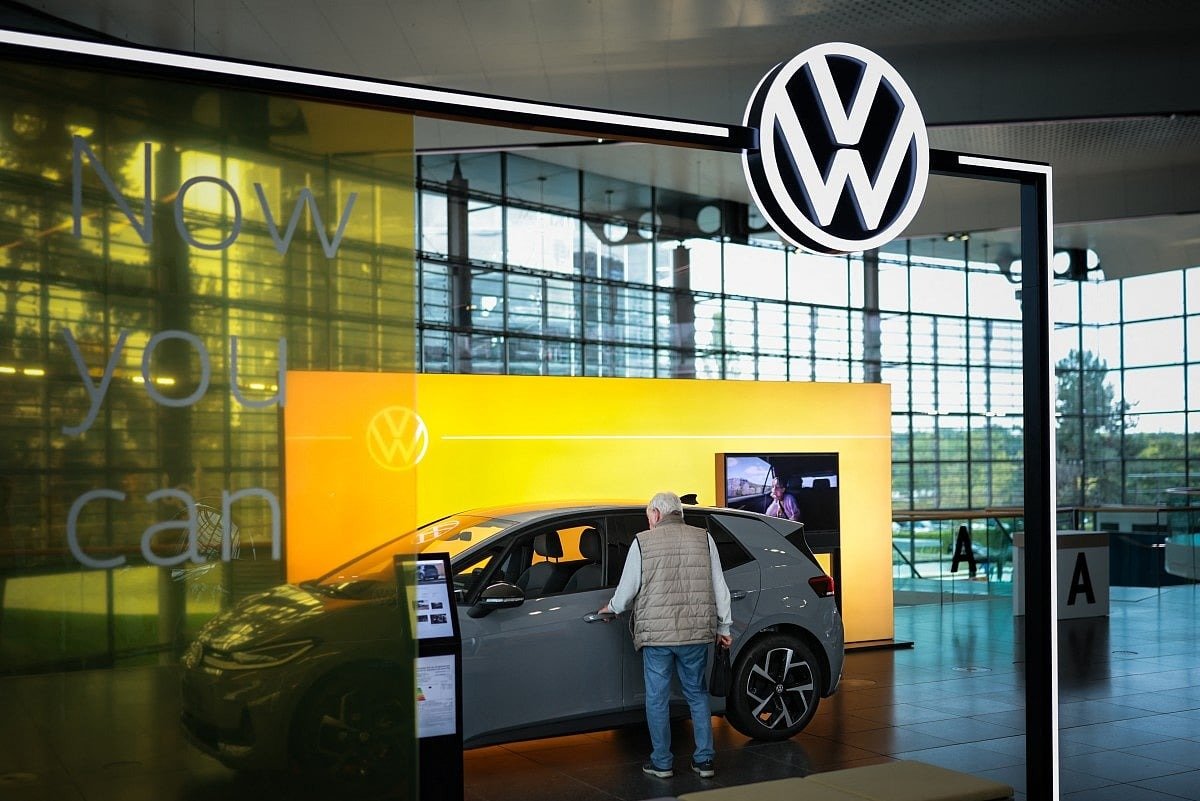
German Carmakers Hit a Wall as China's EV Pivot Sparks 5.8B Euro Loss
Volkswagen’s 5.8 billion euro ($6.5 billion) loss for the three months ending September highlights a brutal financial reckoning for legacy auto giants in their most lucrative overseas market. Europe’s largest carmaker is now driving a historic restructuring effort that could eliminate up to 120,000 jobs by the end of the decade. BMW and Mercedes-Benz are also slashing headcount and issuing profit warnings as the foundational strengths of German engineering run aground against China’s rapid, digital-first electric vehicle revolution.
The market shift caught legacy executives completely off guard. Annual vehicle deliveries in China for the big three German manufacturers dropped by roughly a third between 2019 and 2025, sinking to 3.87 million vehicles. Meanwhile, domestic Chinese brands expanded their market share from 37.8 percent to 65.3 percent, according to data from the China Passenger Car Association (CPCA).
As Tu Le of Sino Auto Insights observed, legacy players brought analogue toys to a digital party. Decades of making bumper profits fueled an air of elitism and disbelief that competitors could operate differently. While Volkswagen remains a leader in petrol and diesel cars in China, that traditional combustion-engine segment is rapidly turning into a wasting asset. New energy vehicles accounted for a record 67.8 percent of sales last month, per CPCA figures, leaving legacy petrol models looking obsolete as local rivals like BYD and Xpeng captured consumer demand with advanced software, local batteries, and aggressive state-backed charging infrastructure.