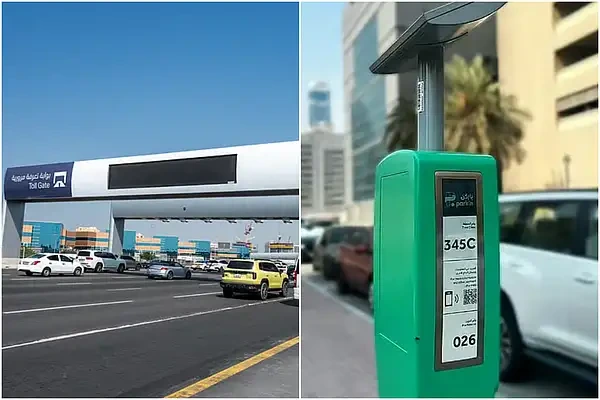
(Credit - Khaleej Times)
5% VAT on Salik and Parking Fees Is Now Live. Here’s What It Costs You Every Month
If you drive in Dubai daily, the 5% VAT on Salik tolls and public parking fees that took effect on June 1, 2026 is already adding up on every single trip. It arrived at the same time as higher petrol prices and the end of cash parking payments.
What Changed on June 1, 2026
Until May 31, 2026, Dubai motorists paid Salik toll charges and public parking fees at face value, with no VAT component on top. From June 1, every Salik gate crossing and every public parking transaction now carries a 5% VAT surcharge, so the total you pay per trip is higher than the posted rate. Combined with petrol prices that have also moved upward, the cumulative monthly hit for a regular commuter is real.
The shift away from cash parking payments runs alongside the VAT change. If you previously topped up a parking meter with coins or paid in cash, that option is gone. All Dubai public parking payments now go through digital channels, card or app-based, so anyone without a linked payment method needs to sort that out immediately to avoid fines.
Before vs. After: The June 1, 2026 Changes at a Glance
| What | Before June 1, 2026 | From June 1, 2026 |
|---|---|---|
| VAT on Salik toll charge | Not applied | 5% added per crossing |
| VAT on public parking fee | Not applied | 5% added per transaction |
| Cash parking payments | Accepted | No longer accepted |
| Petrol prices | Lower | Increased (effective June 2026) |
How This Hits Different Drivers
If you’re a daily commuter crossing one or more Salik gates twice a day, five days a week, the 5% VAT adds a small but consistent amount to each crossing. Over a full month of roughly 40 to 44 gate crossings, that becomes a noticeable line item, especially combined with higher fuel costs at the pump.
If you’re a delivery driver or part of a company fleet, the impact multiplies fast. Businesses running last-mile delivery, field service teams, or company cars across Dubai will see higher per-trip operating costs on both tolls and parking. Expense policies, reimbursement workflows, and customer delivery pricing may all need revisiting to reflect the new VAT-inclusive totals.
If you’re a ride-hailing driver, working on platforms where you absorb running costs before earnings, the combination of VAT on Salik, VAT on parking, and higher petrol prices compresses your net income per trip. Tracking VAT-inclusive receipts digitally is now both a financial and a compliance necessity.
If you relied on cash for parking, this is the most urgent change. Dubai’s public parking system no longer accepts cash. You need a working digital payment method, through the RTA’s app, a linked card, or another approved platform, before your next parking session, or you risk a fine.
Key Facts to Keep in Mind
- VAT Rate: 5% applied per Salik toll crossing and per public parking transaction, effective June 1, 2026
- Cash Parking: No longer accepted at Dubai public parking, digital payment only
- Petrol Prices: Also increased from June 2026, adding a second cost pressure for motorists
- Who It Affects: All Dubai road users, commuters, fleet operators, delivery drivers, and ride-hailing drivers
Your Next Steps Right Now
- Check your Salik account balance via the Salik app or RTA’s official portal to ensure your account reflects VAT-inclusive deductions going forward; top up if needed. See our Dubai parking VAT guide for the exact Dh4.20/hour peak rate.
- Set up or verify a digital parking payment method through the RTA Dubai app (available on iOS and Android) or a linked card before your next parking session. Cash is no longer an option.
- Review your monthly transport budget to account for the 5% VAT on both tolls and parking, plus the June 2026 petrol price increase; adjust standing orders or expense claims accordingly.
- Fleet and business operators should update expense reimbursement policies and per-trip cost calculations to reflect VAT-inclusive Salik and parking charges. Check with your accounts team whether input VAT recovery applies to your business category under FTA (Federal Tax Authority) guidelines.
- Keep digital receipts for every parking and toll transaction. VAT-inclusive records are now part of your transport paper trail, and businesses may need them for VAT filing purposes with the FTA.
Dubai’s driving costs shifted upward on June 1, 2026, with 5% VAT now applied to every Salik crossing and public parking transaction, on top of higher petrol prices. The end of cash parking payments means every driver needs a working digital payment method today, not tomorrow. For frequent commuters and business fleets alike, the practical move is to recalculate monthly transport spend now, before the numbers surprise you at month-end.
For the gate list and the base toll rates before VAT, see our Dubai Salik guide.