(Credit - WAM)
Dubai driverless pods hit Bluewaters Island for four-week trial
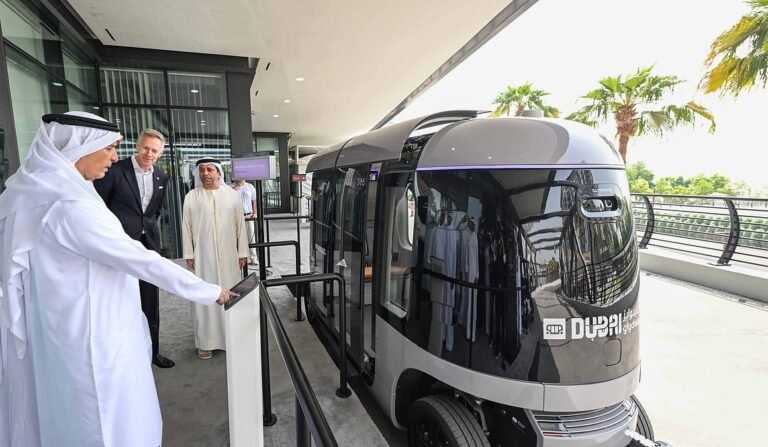
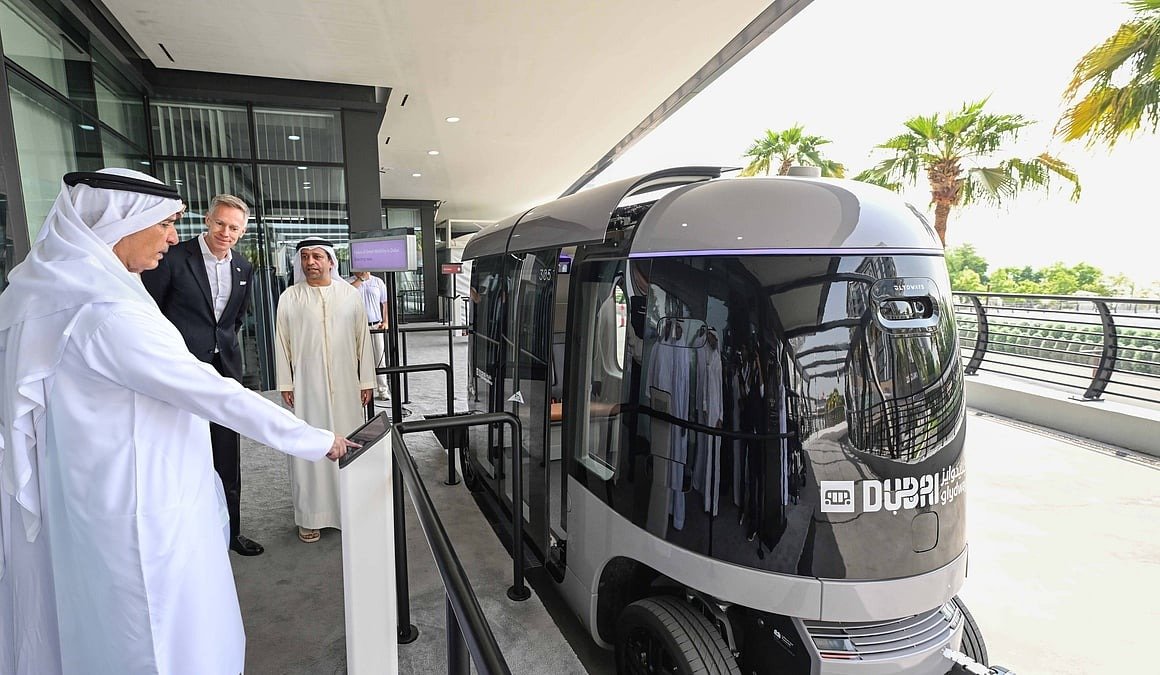
Small, self-driving electric vehicles capable of carrying up to six passengers have begun a four-week trial at Bluewaters Island. The Roads and Transport Authority (RTA) launched the Dubai Glydways automated transit system on Sunday, introducing an on-demand mobility network designed to test safety, reliability, and passenger experience across the area.
Operating on narrow, dedicated guideways separate from regular road traffic, the pods travel at speeds of up to 50km/h and cover as much as 250km on a single battery charge. Each vehicle accommodates four to six passengers and features artificial intelligence alongside 20 high-resolution LIDAR sensors, radar, and high-definition cameras to track surroundings. The network is engineered to coordinate more than 10 vehicles in close succession with intervals of less than one second, yielding a total system capacity of more than 20,000 passengers per hour in both directions.
The initiative is being implemented in partnership with Glydways and Dubai Holding. Mattar Al Tayer, Director General and Chairman of the Board of Executive Directors of RTA, officially launched the trial after taking a five-minute journey in one of the autonomous vehicles at Bluewaters. Mark Seeger, Founder and Co-CEO of Glydways, also participated in the initial run.
Al Tayer stated that the trial operation marks an important stage in assessing the system’s operational and technical aspects, evaluating its ability to provide a safe, seamless, and reliable mobility experience, and exploring integration opportunities with the public transport network, particularly for first- and last-mile journeys. Seeger described the launch as an important milestone in the company’s collaboration with the authority.
RTA is studying several possible expansion routes following the trial, including a 2.8km connection between National Paints Metro Station and Bluewaters. Other areas under consideration include Jumeirah Village Circle, Dubai Festival City, Business Bay, and Mohammed Bin Rashid City. According to RTA figures, the technology could reduce capital costs by up to 90 per cent and operating costs by up to 70 per cent compared to conventional rail systems, relying on lightweight ground-level or elevated structures instead of heavy infrastructure.