Weekly DXB Traffic Crosses 81% Mark Driven By Transit Demand
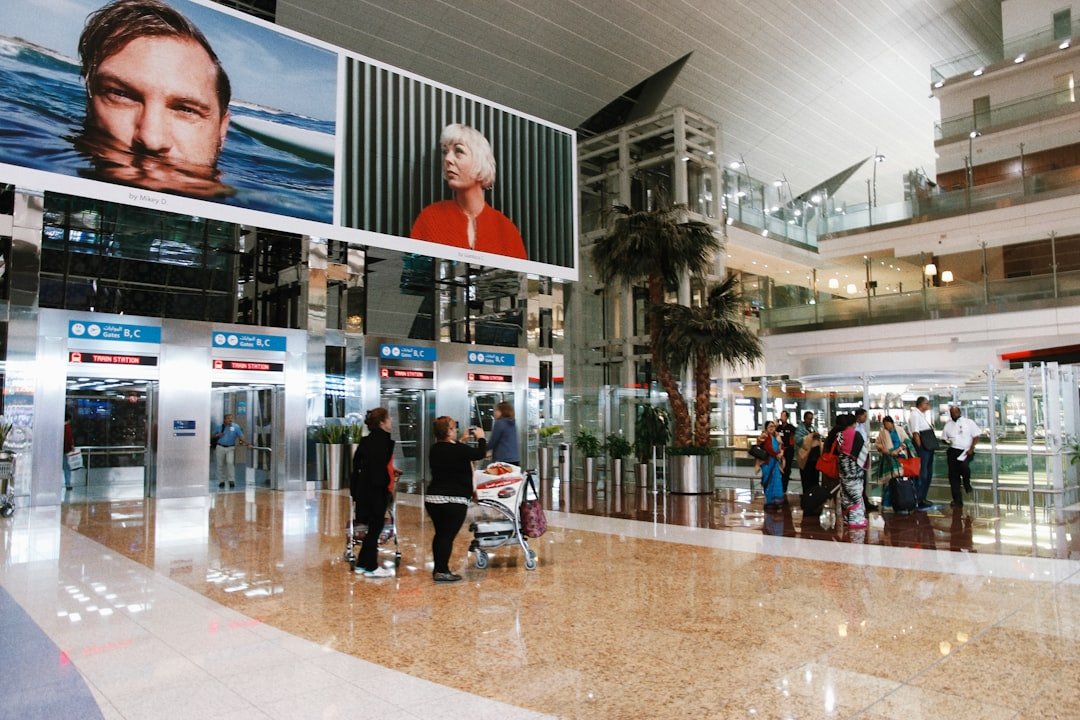
At Dubai International Airport, flight schedules and concourses are steadily filling out as weekly traffic passes 81% of previous operational levels. Seat capacity at the airport has reached approximately 86%, driven by expanded airline schedules and rising transit movement through the hub.
Flight Schedules Expand Across 217 Global Destinations
National carriers Emirates and flydubai are leading the operational ramp-up, with both airlines maintaining recovery rates between 80% and 90%. Their ongoing delivery of new aircraft and addition of fresh routes are adding direct seats to the airport’s network daily.
In total, more than 50 airlines now operate out of Dubai International Airport, linking the emirate directly to roughly 217 destinations across 99 countries. Dubai Airports Chief Operating Officer Majed Al Joker confirmed that stronger transit traffic and preparations for upcoming winter flight schedules are expected to support performance across the second half of the year.


US visa interview delays mount as global appointments paused
US Embassy Appointments Cancelled Globally for Consular Officer Training
The US Department of State has paused and rescheduled visa interviews across embassies and consulates worldwide to execute a mandatory officer training initiative launched this month. International applicants, foreign workers, and prospective immigrants face sudden appointment cancellations and unexpected processing waits as diplomatic missions adjust interview calendars globally.
State Department offers no timeline for resuming regular interview schedules
Applicants with existing interview slots have received formal cancellation emails informing them that their appointments were cancelled without replacement dates or times provided. The State Department launched the training initiative to enforce stricter, standardized screening rules focused on evaluating whether applicants might become a public charge or depend on federal public benefits under US law. A State Department spokesperson stated that the global training program aims to ensure consular officers are equipped to evaluate every applicant comprehensively and consistently, requiring visa service appointments to be adjusted to accommodate the coursework.
The disruption follows an August 21 federal court ruling that struck down a separate policy suspending immigrant visa issuance for applicants from 75 countries, after a US judge determined Secretary of State Marco Rubio exceeded his statutory authority.

$103,265 H-1B Visa Fee Proposal Triggers Offshore Shift
Proposed $103,265 H-1B Visa Fee Accelerates Shift to Indian Tech Hubs
The U.S. Department of Homeland Security's proposed $103,265 additional fee on cap-subject H-1B visa petitions represents a direct financial barrier designed to reprice foreign technical talent in the American domestic market. Rather than forcing enterprise employers to absorb massive administrative overhead to bring specialists stateside, this capital penalty accelerates a structural realignment toward insourcing tech operations directly within overseas markets.
An $8.8 Billion Filing Penalty on American Employers
The United States Department of Homeland Security (DHS) designed the regulatory proposal to levy an additional $103,265 per petition at the time of filing, added directly on top of existing statutory charges. According to agency projections based on the annual 85,000 cap-subject petition threshold, the measure would collect approximately $8.8 billion every year. The statutory framework caps new visas at 85,000 annually, comprising 65,000 regular-cap spots and 20,000 reserved under the advanced-degree exemption for graduates of U.S. higher education institutions. Within the regular pool, 6,800 slots are set aside specifically for citizens of Chile and Singapore.
This fiscal escalation arrives alongside administrative freezes, with the U.S. government pausing visa appointments worldwide on Tuesday. Economist and former United Nations advisor Santosh Mehrotra noted that the financial disruption extends far beyond external IT vendors, striking directly at the operational budgets of domestic American corporations. While Indian firm Tata Consultancy Services (TCS) maintains a substantial H-1B filing volume, the majority of petitioning entities are U.S.-headquartered companies operating within American borders.
Structural Migration to Global Capability Centres
The sheer scale of the proposed fee structure reinforces an ongoing pivot away from traditional visa-reliant staffing models toward direct offshore infrastructure. American enterprises are bypassing traditional third-party software exporters, choosing instead to establish internal Global Capability Centres (GCCs) across major Indian industrial clusters, including Bengaluru, Chennai, Hyderabad, and the Greater National Capital Area.
This operational shift allows multinational firms to retain access to Indian technical personnel without navigating complex U.S. immigration frameworks or incurring hefty filing surcharges. As international enterprises insource core digital functions directly within Indian capability hubs, the necessity of physically transferring engineers to work within U.S. borders continues to diminish.
Corporate Budgets and Talent Mobility
For U.S. enterprise employers, the regulatory burden forces an immediate calculus regarding hiring location and cost absorption. Executives must decide whether to absorb a six-figure surcharge per petitioned employee, attempt to adjust corporate compensation structures, or redirect investment toward expanding foreign engineering facilities. Because domestic American firms constitute the bulk of cap-subject sponsors, the cost penalty lands primarily on U.S. operating budgets rather than foreign service vendors.
For Indian technology professionals, the rising barrier to U.S. entry narrows a long-standing corridor for international career mobility. With direct U.S. transfer pathways coming under heightened regulatory and financial pressure, skilled workers are exploring alternative international markets, including the Middle East, Southeast Asia, and Europe, while simultaneously absorbing expanded senior roles inside domestic Global Capability Centres.
While the policy proposal aims to generate significant federal revenue and curb foreign worker sponsorship, its practical effect on protecting domestic employment remains broadly contested. Because global corporate employers retain the capital and operational flexibility to establish offshore hubs, penalizing domestic visa filings risks accelerating the permanent relocation of enterprise technology functions to overseas jurisdictions.

WhatsApp Strict Account Settings: How to Block Cyber Attacks
Stop Unknown Files and Calls With WhatsApp’s New Lockdown Feature
WhatsApp introduces lockdown-style security to block high-tech attacks
WhatsApp is rolling out a brand-new feature called Strict Account Settings to shield users from targeted cyberattacks, account hijacking, and stealth spyware. When activated, the security feature adopts a lockdown approach to untrusted communication: it automatically blocks media attachments, files, and incoming calls from unknown senders.
The upgrade arrives as cybercriminals increasingly use messaging apps to distribute malicious links, scrape user data, and hijack phone accounts. By stopping incoming media files and attachments from people outside your contact list before they touch your device, the system cuts off the primary methods bad actors use to install spyware secretly. While this restricts how freely non-contacts can share files with you, it creates a far tighter barrier against remote hacking.
Global deployment is currently underway. During this security upgrade, some users may notice brief 24-hour account reviews or temporary feature blocks while automated systems work to resolve mistakenly flagged accounts.
Who needs the new security feature most
Public figures and journalists face the heaviest exposure to tailored hacking attempts and stealth spyware campaigns. Attackers frequently single out high-profile targets with malicious links or dangerous file attachments disguised as routine messages. Enabling strict security blocks these dangerous attachments from untrusted accounts at the gate, keeping private chats and personal data out of reach.
General account holders also gain direct defensive benefits against widespread digital threats. Cybercriminals rely on mass messages containing bad media files to breach accounts, scrape private info, or execute account takeovers. Activating these controls ensures suspicious calls from strangers are silenced and unexpected files from untrusted numbers are immediately blocked.
How to activate Strict Account Settings on your device
Setting up the new security controls takes under a minute inside the app's existing privacy controls.
- Open WhatsApp on your device and navigate to Settings > Privacy > Advanced.
- Turn on Strict Account Settings to automatically block media attachments and silence incoming calls from unknown numbers.
- Turn on two-step verification inside your account settings for extra login protection.
- Protect your access by never sharing your account PIN or one-time registration codes with anyone.

Rial Hits 2M: Inside Trump Iran Economic D-Day
Rial Collapses Past 2 Million as Naval Squeeze Bottlenecks Iranian Oil
Washington's current strategy relies on an explicit bet that physical naval interdiction can convert theoretical financial sanctions into an immediate liquidity crisis. By pairing US Treasury Secretary Scott Bessent’s "economic D-Day" against covert financial networks with direct interdiction in the Strait of Hormuz, the United States aims to completely cut Tehran’s access to foreign currency before military deployment costs force an operational reset.
The Mechanics of the Maritime Chokehold
The current offensive combines regulatory financial isolation with direct maritime force. Treasury Secretary Scott Bessent structured the "economic D-Day" initiative to dismantle every remaining operational path supporting Iranian state revenues. The targets expand beyond conventional banking channels to encompass illicit ship-to-ship crude transfers, disguised financial transactions, and physical movements of gold.
Physical force actively reinforces these sanctions at sea. American warships are blockading Iranian ports to keep crude exports contained while simultaneously escorting third-country commercial tankers along southern transit routes near Oman. This dual operation shifts the maritime balance. Between February 28 and the first ceasefire on April 8, Iran maintained crude exports of roughly 1.8 million barrels per day, outstripping its 2025 daily average of around 1.7 million barrels per day while restricting regional traffic. Under active blockade enforcement, that revenue generation engine has effectively stalled.
Fiscal Collapse and Political Stress in Tehran
The direct effect of this chokehold is visible across Iran's financial indicators and political leadership statements. The Iranian rial has plummeted past two million to the US dollar, stripping purchasing power from the domestic market and signaling systemic financial stress.
Senior officials in Tehran have acknowledged the operational reality of the squeeze. Iranian Central Bank Governor Abdolnaser Hemmati confirmed the outcome directly, stating plainly that the country is not exporting oil. This admission reflects an unprecedented break in official revenue projections.
Political leaders are voicing open concern regarding institutional endurance. Iranian Parliament Speaker Mohammad Bagher Ghalibaf warned publicly that military strength cannot insulate the state if basic food supplies and financial circulation collapse, noting that the country cannot endure without economic growth. Concurrently, Iranian President Masoud Pezeshkian indicated that bringing the conflict to a close while maintaining power and dignity represents a necessary consideration, demonstrating the profound internal pressure facing Tehran's decision-makers.
Naval Deployment Strain and Foreign Trade Impact
Sustaining an absolute naval and financial blockade imposes severe operational demands on American military logistics. Enforcing interdiction mandates while providing active escorts for global commercial traffic requires continuous deployment of carrier strike groups in the Persian Gulf. The physical toll is demonstrated by the USS Abraham Lincoln, which logged more than 270 days at sea without touching land before being relieved by the USS George Washington. Reallocating the USS George Washington to the Persian Gulf leaves American military posture without a carrier deployed in the Pacific, creating clear strategic trade-offs for Washington.
The blockade also directly targets the trade links between Iran and its primary external buyer. Beijing remains Iran's primary crude customer, relying on complex maritime transfer protocols to receive shipments. As Washington tightens enforcement against ship-to-ship transfers and gold settlement mechanisms, processing non-compliant crude trades carries severe sanctions liabilities for foreign counterparties.
The Endurance Equation
Despite severe monetary depreciation and zeroed-out official crude exports, Tehran retains significant asymmetric retaliatory options. Stockpiles of ballistic missiles and long-range drones leave Iran capable of escalating the conflict or targeting energy infrastructure across the Persian Gulf.
The immediate trajectory depends on a structural timeline comparison. Tehran's domestic economy faces severe currency depreciation and depleted hard currency reserves, while Washington faces escalating naval deployment costs, asset wear, and geopolitical exposure in other theaters. The outcome hinges on which threshold is reached first: the exhaustion of Tehran's financial reserves or the operational limits of an extended American naval containment campaign.

7 Tracks That Defined Dolly Parton’s Songwriting Legacy
7 Songs That Reveal the Real Story Behind Dolly Parton’s Genius
Dolly Parton passed away at age 80 on Tuesday, August 25, 2026, leaving behind a career that stretched across decades, film sets, and global cultural history. At the absolute core of everything she built, from theme parks to philanthropy, was her work as a songwriter.
Selecting just a handful of tracks from a massive discography is tough, but these seven essential songs explain how a country storyteller became an enduring global figure.
1. "Just Because I’m a Woman"
Parton wrote this country classic following a direct conversation with her late husband, Carl Dean, who had asked if she had been with anyone else before they met.
The song tackled double standards head-on at a time when the women’s liberation movement was just taking off. Pushing back against traditional gender expectations, her protagonist delivers a plain truth to her partner: "My mistakes are no worse than yours, just because I’m a woman."
2. "Coat of Many Colours"
This autobiographical track tells the story of Parton's mother sewing her a winter coat out of discarded scraps of fabric.
Schoolmates mocked her for wearing rags, but the lyrics reframed the moment entirely. "Now I know we had no money, but I was rich as I could be, in my coat of many colours my momma made for me," she sang. It remains one of the most famous storytelling tracks in country music history.
3. "Jolene"
The dread-filled tone of "Jolene" actually came from a lighthearted running joke between Parton and her husband.
Speaking to NPR in 2008, Parton explained that a local bank teller had taken an obvious shine to Dean. He enjoyed visiting the branch just to get the extra attention, leading Parton to tease him: "You’re spending a lot of time at the bank. I don’t believe we’ve got that kind of money." What sounded like a tense ballad about marital collapse was, in reality, completely innocent.
4. "I Will Always Love You"
Before Whitney Houston turned it into a massive pop blockbuster, Parton wrote this ballad as a farewell gift to her long-time TV partner, Porter Wagoner.
She had worked with Wagoner since 1967 and used the song to signal her departure from *The Porter Wagoner Show* in 1974. Released as the second single from her 13th studio album, it was already a classic before Houston recorded her rendition for *The Bodyguard* soundtrack in 1992, a version that stayed at number one on the Billboard Hot 100 for a then-record-breaking 14 weeks.
5. "Here You Come Again"
This pop crossover hit stands out in Parton’s catalogue for a rare reason: she did not write it.
Penning credit belongs to Barry Mann and Cynthia Weil. The track was first recorded by B.J. Thomas and originally intended for Brenda Lee before finding its way to Parton. She took the pop arrangements in stride but made sure the studio mix kept her signature steel guitar loud and clear.
6. "9 to 5"
That rhythm playing at the start of "9 to 5" isn’t a percussion track, it was created by Parton clacking her long acrylic nails together.
Written for the 1980 movie of the same name, the track doubled as her acting debut alongside Jane Fonda and Lily Tomlin. Featured on her album *9 to 5 and Odd Jobs*, the song became an anthem for workplace equality and earned Parton her very first Oscar nomination.
7. "Islands in the Stream"
Written by the Bee Gees, this 1980s duet with Kenny Rogers proved how easily Parton's clarion soprano could cross over into mainstream pop.
Brothers Barry and Robin Gibb had conflicting views on who the track was originally for, Barry noted it was intended for Diana Ross, while Robin claimed it was written for Marvin Gaye. Once Parton and Rogers stepped into the studio together, their natural vocal harmony turned the song into a historic pop hit.
The Final Verdict
If you only play one track to understand Parton's full range as a cultural force, make it "9 to 5."
While "I Will Always Love You" showcases her raw mastery of the heartbreak ballad and "Coat of Many Colours" anchors her narrative roots, "9 to 5" hits every single mark of her legacy. It highlights her sharp rhythmic instincts, her talent for storytelling, and her lifelong commitment to standing up for working people.