(Credit - Dubai Police HQ Website)
Dubai Police Impound Vehicle and Slap Driver With Dh50,000 Fine After Dangerous Maneuvers on City Roads
Dubai Police have moved to impound a vehicle after its driver pulled off a series of reckless, dangerous maneuvers that put other road users at serious risk , and the financial hit that followed is just as severe as the enforcement action itself.
A Dh50,000 Fine and a Seized Car: Dubai’s Zero-Tolerance Signal to Reckless Drivers
The incident, confirmed by Dubai Police HQ on 22 May 2026 and accompanied by official footage showing the vehicle and the enforcement action, resulted in both an immediate impoundment and a Dh50,000 fine. That combination , losing your car on the spot and facing a five-figure financial penalty , is exactly the kind of escalated response Dubai’s traffic enforcement framework is designed to deliver when a driver’s behavior crosses from careless into genuinely dangerous territory.
Dubai Police don’t reach for impoundment lightly. It’s a tool reserved for high-risk conduct , think aggressive lane-cutting at speed, racing-style maneuvers, or behavior that can trigger multi-vehicle collisions on fast-moving corridors. When authorities determine that a driver poses an immediate threat to public safety, the vehicle comes off the road there and then. The financial penalty stacks on top, ensuring the deterrent hits both the driver’s freedom of movement and their wallet simultaneously.
What This Means If You Drive in Dubai Every Day
For the hundreds of thousands of commuters navigating Dubai’s main arterials during morning and evening peaks, this enforcement action is a direct reminder that the roads are actively monitored , not just by cameras, but by patrols with the authority to act immediately. Dubai’s Roads and Transport Authority (RTA) and Dubai Police operate an integrated enforcement system that combines automated speed and red-light cameras with targeted patrols specifically watching for high-risk driving patterns. When those patterns show up, the response is swift and public. The release of official video footage isn’t incidental , it’s part of the deterrent strategy, broadcasting the consequences to every driver scrolling their feed.
- Enforcement Action: Vehicle impounded following reckless driving maneuvers that threatened public safety
- Financial Penalty: Dh50,000 fine imposed on the driver
- Date of Action: 22 May 2026
- Enforcing Authority: Dubai Police HQ
- Official Source: dphq.ae
- Evidence Released: Official video footage published by Dubai Police showing the vehicle and enforcement action
Dubai Police’s decision to impound a vehicle and issue a Dh50,000 fine in a single enforcement action sends an unambiguous message: dangerous driving in Dubai carries consequences that go well beyond a standard ticket. Across the UAE, authorities have been steadily tightening penalties for high-risk road behavior, and high-profile cases like this one , backed by official video , are a core part of that strategy. If you’re behind the wheel in Dubai, the enforcement net is wider, faster, and more expensive than it’s ever been.
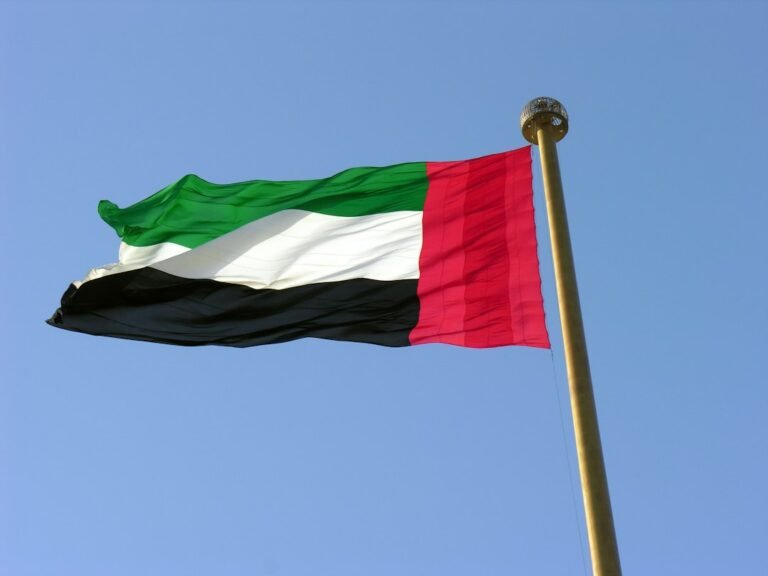

UAE rejects Iran Hormuz authority over sea traffic
UAE Rejects Iran Hormuz Authority in a Clear Signal That Gulf Sea Lanes Stay Under International Law
The UAE rejects Iran's Hormuz authority, and it's not standing alone. Four other Gulf states have joined the pushback against Tehran's move to assert new control over maritime traffic in the Strait of Hormuz, one of the world's most consequential shipping corridors. The collective rejection, issued on May 22, 2026, sends a direct message: who governs passage through Hormuz is not Iran's call to make unilaterally.
What Iran Actually Did, And Why the Gulf States Said No
Iran moved to establish a new authority designed to manage the flow of maritime traffic through the Strait of Hormuz. On paper, that might sound administrative. In practice, it's a significant geopolitical move. The Strait of Hormuz is the narrow waterway connecting the Arabian Gulf to the Gulf of Oman and the broader Indian Ocean, and a substantial share of the world's crude oil, refined petroleum products, and liquefied natural gas flows through it every single day. Whoever controls the rules of passage in that corridor holds enormous leverage over global energy supply chains.
The UAE and its Gulf partners aren't disputing Iran's geography, Tehran does border the strait. What they're rejecting is the idea that any one country can unilaterally rewrite the rules of passage. Under established international law, specifically the frameworks governing transit passage and freedom of navigation, commercial vessels have the right to move through international straits without interference. The Gulf states' position is straightforward: those rules were built through decades of multilateral agreement, and no single declaration can override them.
What This Means for Shipping, Trade, and Your Wallet
For residents and businesses in the UAE, this isn't abstract geopolitics. The Strait of Hormuz is the artery through which the region's energy exports flow, and through which a significant portion of imported goods arrive. When uncertainty creeps into that corridor, shipping companies react fast. War-risk insurance premiums climb. Freight rates get repriced. Vessels may reroute where alternatives exist, adding days and cost to supply chains. For a trade-dependent economy like the UAE's, those pressures can filter through into fuel-linked transport costs, imported goods pricing, and business continuity planning across logistics, retail, and manufacturing sectors.
- Who rejected the move: The UAE and four other Gulf states (collectively)
- What Iran claimed: A new authority to manage maritime traffic in the Strait of Hormuz
- Legal basis cited by Gulf states: International law governing freedom of navigation and transit passage
- Key risk flagged: Unilateral claims could escalate regional tensions and disrupt commercial shipping
- Strategic significance of Hormuz: Major transit route for Gulf crude oil, refined products, and LNG exports
The UAE and its Gulf partners are drawing a clear line: maritime governance in one of the world's most critical chokepoints must remain rules-based and internationally recognized. By rejecting Iran's new authority, the coalition is protecting not just a principle, but the commercial predictability that underpins regional trade and energy exports. For businesses and residents, the message is that the UAE is actively working to keep those sea lanes stable, but the situation is worth watching closely.
What You Should Know and Watch Next
If you're in logistics, shipping, or import-dependent business in the UAE:
- Monitor war-risk and marine insurance premium updates from your broker, these are typically the first indicators of elevated Hormuz tension being priced into the market.
- Check with freight forwarders on contingency routing options, particularly for time-sensitive cargo.
- Follow official statements from UAE authorities and the Ministry of Foreign Affairs for any escalation or resolution signals.
If you're a resident tracking fuel and goods prices:
- Any sustained disruption to Hormuz traffic can translate into energy price volatility, which feeds into transport and consumer goods costs over time.
- For now, the rejection is a diplomatic signal, not an active disruption, but the situation warrants attention.

Dubai Private School Fees 2026-27: No Hike Confirmed
Dubai Private School Fees 2026-27 Are Frozen , And Every Parent in the City Should Know This
Dubai private school fees 2026-27 will not go up by a single dirham, the Knowledge and Human Development Authority (KHDA) has officially confirmed , giving hundreds of thousands of families across the emirate a rare, clear-cut financial breather heading into the next academic cycle.
What KHDA Just Decided , And Why It's a Bigger Deal Than It Sounds
In a city where private schooling isn't a luxury but the default option for most residents, tuition is typically the heaviest household bill after rent. So when KHDA , the government body that regulates every private school fee in Dubai , says fees are frozen, that's not a minor footnote. It means your child's school legally cannot charge you more next year than it did this year. Full stop.
Here's what makes this situation more challenging: the 2025-26 academic year allowed a fee increase of 2.35%. While that may seem minor on paper, for a school charging AED 60,000 annually, it translates to an additional AED 1,410 per child. For families with two or three children, this adds up to a significant strain on the household budget. However, for 2026-27, this financial pressure has been completely removed.
How Dubai's School Fee System Actually Works
KHDA doesn't just rubber-stamp whatever schools want to charge. The authority operates a regulatory framework tied to an education cost index , a measure of how much it actually costs schools to run their operations. Schools cannot unilaterally raise fees; they need KHDA's approval, and that approval is granted based on sector-wide conditions, not individual school requests. This year, the index and sector conditions simply didn't justify an increase, so none was permitted.
What this also means is that the freeze isn't permanent policy , it's a year-by-year call. Last year, conditions supported a 2.35% rise. This year, they don't. Parents who want to stay ahead of the curve should track KHDA's annual announcements each cycle, because even a modest percentage change at a premium school can translate into thousands of dirhams.
The Immediate Impact on Families in Dubai Today
Beyond the headline number, this decision has a few practical knock-on effects worth understanding. First, it gives families genuine budgeting certainty , you can plan your 2026-27 household finances without building in a tuition buffer. Second, many Dubai private schools already offer flexible payment plans, spreading fees across terms or months rather than demanding a lump sum upfront. A fee-freeze year is a good moment to ask your school whether those options are available or can be extended.
There's also a competitive angle here. When schools can't compete on price increases, they tend to compete harder on value , think KHDA inspection ratings, extracurricular offerings, student support services, and academic outcomes. For parents who've been weighing whether to switch schools, a freeze year can actually be a smart window to reassess what you're getting for what you're already paying.
- Confirmed by: Knowledge and Human Development Authority (KHDA)
- Decision: No private school fee increase permitted for the 2026-27 academic year
- Previous cycle: 2.35% fee increase was permitted for 2025-26
- Who it covers: All KHDA-regulated private schools in Dubai
- Payment flexibility: Many schools continue to offer termly or monthly instalment plans
- Effective from: 2026-27 academic year
Dubai's school fee freeze for 2026-27 is a direct, confirmed relief for families who've been navigating rising living costs across the board. KHDA's regulatory grip on private school pricing is precisely why this kind of protection exists , and why it's worth paying attention to every year. If you have children in a Dubai private school, now is the time to lock in your budget, ask about payment plan options, and hold your school accountable to the value it's already charging you for.
Your Next Steps as a Dubai Parent
1. Confirm with your school directly, Ask for written confirmation that your 2026-27 fees will remain unchanged from 2025-26.
2. Ask about payment plans, If you're managing cash flow, request a termly or monthly instalment option. Many schools offer this quietly; you just have to ask.
3. Check your school's KHDA rating, Visit the KHDA website to review your school's latest inspection report. A fee freeze is a good prompt to make sure you're getting the quality you're paying for.
4. Bookmark KHDA's annual announcements, Fee decisions are made cycle by cycle. Set a reminder to check KHDA's official channels each spring before the next academic year begins.

UAE Crude Pipeline Bypass Hits Halfway Mark
UAE Crude Pipeline to Bypass Strait of Hormuz Is Halfway Done , and ADNOC Is Pushing Hard to the Finish Line
The UAE crude pipeline designed to route oil exports around the Strait of Hormuz has hit the halfway mark, with ADNOC chief executive Sultan Al Jaber confirming the project is being actively accelerated toward a 2027 launch through the Fujairah terminal on the country's east coast.
Why ADNOC Is Racing to Reroute Gulf Oil Exports
The Strait of Hormuz is the single most pressure-sensitive chokepoint in global energy. On any given day, a significant share of the Gulf's crude and refined products squeezes through that narrow corridor between the Arabian Gulf and the Gulf of Oman. When regional tensions spike , whether through maritime incidents, insurance cost surges, or shipping disruptions , freight rates climb, voyage times stretch, and oil price volatility follows almost immediately. ADNOC's pipeline push is a direct architectural response to that exposure.
The new pipeline runs from Abu Dhabi to Fujairah, a port city that sits entirely outside the Strait. Once operational, it will allow ADNOC to push crude to export terminals and loading berths on the east coast without touching the Hormuz corridor at all. The project adds a second viable export artery , one that regional tensions cannot easily threaten. Sultan Al Jaber's decision to accelerate the build signals that ADNOC views the current geopolitical environment as reason enough to compress the timeline wherever engineering allows.
What the Fujairah Route Unlocks for UAE Export Strategy
Fujairah already functions as one of the world's busiest bunkering hubs and a major crude storage centre. Expanding the pipeline feed into that ecosystem doesn't just add capacity , it deepens the UAE's ability to honour long-term offtake agreements with Asian buyers even during periods when Gulf shipping lanes are under stress. The UAE Ministry of Energy and Infrastructure has consistently framed export route diversification as a pillar of national energy security, and this pipeline is the most concrete expression of that policy to date.
For businesses and industrial fuel buyers operating across the UAE, the downstream logic is straightforward: resilient export infrastructure keeps government revenues stable, which in turn supports continued public investment and buffers the broader economy from sudden external shocks. For global oil markets, additional bypass capacity reduces the risk premium that traders embed in crude prices during tension spikes , meaning the pipeline's completion could, over time, help moderate price volatility that has nothing to do with actual production levels.
Project Snapshot: What We Know and What Needs Confirmation
- Project owner: ADNOC (Abu Dhabi National Oil Company)
- Announced by: Sultan Al Jaber, ADNOC Chief Executive
- Route: Abu Dhabi to Fujairah (east coast, outside the Strait of Hormuz)
- Current status: Reported at the halfway mark; acceleration confirmed
- Target launch (source text): 2027
- Alternative timeline (web context): "Next year" , unverified, pending official ADNOC confirmation
- Strategic purpose: Expand crude export capacity and reduce single-route dependency on the Strait of Hormuz
- Claim rating: Operational timeline remains unverified , authoritative confirmation expected from ADNOC or the UAE Ministry of Energy and Infrastructure
ADNOC's Hormuz bypass pipeline is no longer a planning document , it is a construction site at the halfway point, being pushed faster by a CEO who clearly reads the regional risk map closely. The 2027 target is the number to anchor on until ADNOC issues a formal commissioning date. When that announcement comes, energy traders, shippers, and downstream buyers across the Gulf will need to reprice their assumptions about UAE supply reliability , and that repricing will almost certainly move in the UAE's favour.
Parkin 5% VAT Dubai Parking Starts June 1, 2026
Parkin 5% VAT on Dubai Parking Is Coming June 1 , Here's What Every Driver Needs to Know
If you park in Dubai regularly, the Parkin 5% VAT on Dubai parking is about to make every transaction a little more expensive , and June 1, 2026 is the date it all kicks in.
What's Actually Changing on June 1
Parkin Company PJSC has confirmed it will apply a 5% Value Added Tax to all of its parking services across Dubai from June 1, 2026. That covers the full range , public parking tariffs, parking permits, and every other paid service Parkin operates. The change is being made to bring Parkin's billing in line with UAE federal tax regulations, coordinated with the relevant government authorities.
In practical terms, the VAT gets added at the point of payment. So whether you're tapping through the Parkin app, feeding a meter, or renewing a monthly permit, the final amount you're charged will be 5% higher than the base parking rate. The UAE's federal VAT system has been in place since 2018, administered by the Federal Tax Authority (FTA) at a standard rate of 5%. Parkin bringing its services into consistent VAT treatment is part of how public-facing operators align with that national framework as their operating models evolve.
Who Feels This the Most
For the occasional parker, the difference per transaction is small. But for daily commuters, residents in high-demand commercial zones, and businesses running staff or visitor permit accounts, the cumulative effect adds up quickly. Think retail outlets, clinics, hospitality businesses, and delivery fleets , anyone paying for frequent short-stay parking or holding multiple permits will see a noticeable uplift in their monthly parking spend. Dubai's paid parking zones are heavily used, and the city's highly digitised payment ecosystem means the VAT component should appear automatically across apps, machines, and any SMS-style payment flows from the changeover date.
- Who: Parkin Company PJSC
- What: 5% VAT applied to all parking services, including public tariffs and permits
- When: June 1, 2026
- Where: Dubai, United Arab Emirates
- Why: Alignment with UAE federal VAT regulations and government coordination
- VAT Rate: 5% (UAE standard rate, Federal Tax Authority)
- Payment Channels Affected: Apps, parking meters, permit renewals
What You Should Do Before June 1
Keep an eye on Parkin's official channels and any updated tariff displays rolling out in late May 2026. If you're renewing a permit that straddles the June 1 changeover date, it's worth checking directly with Parkin on how the VAT is applied to that renewal. Watch your receipts too , you'll want to confirm whether VAT is shown as a separate line item or folded into the final total, and understand how refunds would be handled if a transaction is reversed after the new rules take effect.
Dubai parking is getting a 5% VAT surcharge from June 1, 2026 , a small percentage that adds up fast for daily drivers and businesses with permit accounts. The change is Parkin aligning with the UAE's federal tax framework, not a new parking fee. Check your totals carefully at checkout from June 1 onwards, and review any permit renewals that cross the changeover date.

UAE EV Sales Lead Middle East for Second Year
UAE EV Sales Claim the Middle East's Top Spot Again , and This Time, It Looks Structural
UAE EV sales have secured the country's position as the Middle East's number-one electric vehicle market for the second consecutive year, a back-to-back ranking that signals something more durable than a one-off spike , it points to a genuine rewiring of how the country buys and drives cars.
Why the Repeat Ranking Carries More Weight Than the First
Topping a regional chart once can be explained away by timing, a single incentive cycle, or a fleet procurement push. Doing it twice , while the broader GCC EV market reportedly doubles in adoption over the same period , is a different story. It means the UAE's lead is holding even as neighbouring markets accelerate, which suggests the country has built structural advantages that are compounding rather than fading.
Those advantages are not accidental. The UAE's charging ecosystem has expanded rapidly across public roads, mall destinations, office parks, and residential communities , particularly in Dubai and Abu Dhabi, where daily commuting patterns and well-lit highway networks are well-suited to battery-electric use. For most drivers in these cities, a round trip rarely exceeds 150 kilometres, which sits comfortably within the range of mainstream EVs. The result: the psychological barrier of "range anxiety" , long the single biggest obstacle to EV consideration , is losing its grip on the market.
The Policy Engine Running Beneath the Sales Numbers
The UAE's long-term target , EVs comprising 50 per cent of all vehicles on the road by 2050 , sits within the country's broader net-zero strategy, where urban transport is one of the largest sources of emissions. That target is not a passive aspiration. It is being backed by a combination of government fleet mandates, procurement signals, and fee structures designed to lower the total cost of EV ownership over time. When a government with the UAE's purchasing power and regulatory speed commits to a direction, the private market tends to follow quickly , and the sales data suggests that alignment is already happening.
Critically, the infrastructure build-out is now creating a feedback loop. More chargers reduce ownership friction for apartment residents and commuters who cannot rely on home charging. Lower friction drives higher adoption. Higher adoption justifies further charger investment. Property developers, owners' associations, and facility managers in high-density communities are increasingly being pulled into this cycle , planning electrical capacity, parking allocation, and billing models for chargers as a standard part of asset management rather than a future consideration.
What This Means for Residents, Businesses, and the Wider GCC
For consumers in Dubai and Abu Dhabi, the practical upshot is a market that is becoming meaningfully more competitive. As GCC-wide adoption doubles, manufacturers and dealers are responding with broader model availability, sharper pricing, and improving after-sales infrastructure , trained technicians, parts supply chains, and battery servicing capability that were thin on the ground just two years ago. Buyers today are entering a market that is better equipped to support them than at any previous point.
For fleet operators and commercial property managers, the signal is more urgent. The pace of change in the UAE's EV market means that charging access is transitioning from a differentiator to a baseline expectation , particularly in premium residential and commercial assets. Buildings and business parks that plan for this now will be better positioned as tenant and employee expectations shift over the next three to five years.
For the wider region, the UAE's sustained lead within a fast-growing GCC market sets a reference point. Saudi Arabia, Kuwait, and others are accelerating, but the UAE's head start in charging density, policy clarity, and consumer familiarity gives it a durable advantage , one that will likely be tested as regional competition for EV investment and model launches intensifies.
- Regional Ranking: UAE ranked No. 1 in Middle East EV sales for the second consecutive year
- GCC Momentum: EV adoption across the GCC reportedly doubled within a single year
- Long-Term Target: UAE aims for EVs to represent 50% of all vehicles on the road by 2050
- Key Growth Drivers: Expanding public and destination charging networks, government fleet mandates, and alignment with national climate goals
- Primary Markets: Dubai and Abu Dhabi, where driving patterns and infrastructure density favour EV adoption
- Source: Gulf News (claim unverified independently)
The UAE's back-to-back lead in Middle East EV sales is less about a single year's numbers and more about the infrastructure, policy, and consumer confidence that have been quietly stacking up behind them. With GCC adoption doubling and the 2050 target firmly on the agenda, the question for businesses and residents is no longer whether EVs will become mainstream on UAE roads , it's how quickly the ecosystem around them needs to catch up. The country that builds the most frictionless ownership experience will hold this ranking for years to come.