Dubai Terminal 3 Immigration Counters 24/7 Through Eid, Here’s What Every Traveller Needs to Know
Dubai Terminal 3 immigration counters will run 24/7 throughout the Eid break, with the Dubai immigration authority keeping passport control fully staffed from May 25 to May 29, 2026, a direct response to one of the year’s busiest travel surges at Dubai International Airport.
Round-the-Clock Border Processing at DXB’s Busiest Terminal
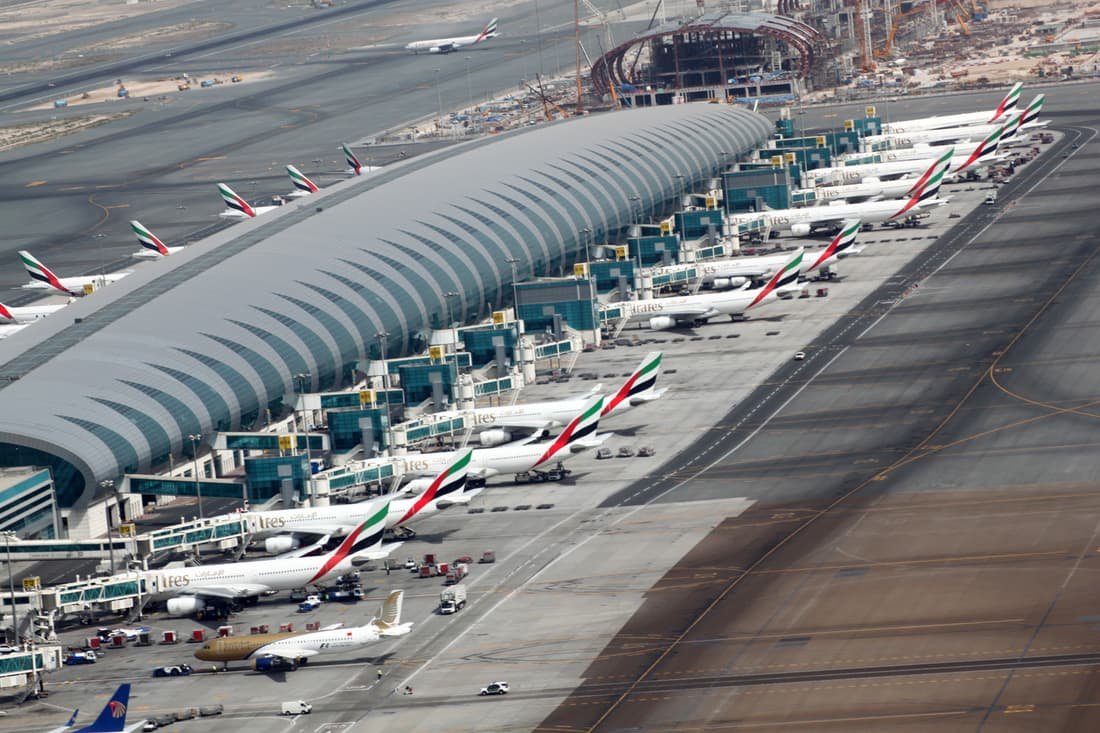
Terminal 3 is the operational heart of Dubai International Airport, the primary home of Emirates and the gateway for the bulk of long-haul arrivals, departures, and transfer passengers moving through DXB on any given day. During Eid, that volume jumps sharply. UAE residents head outbound for holidays, families fly in to reunite, and regional visitors arrive for short breaks, all compressing into a tight five-day window that puts serious pressure on every touchpoint in the airport.
By keeping immigration counters active around the clock, the Dubai immigration authority is targeting the bottleneck before it forms. The practical mechanics are straightforward: late-night and early-morning arrival banks, when multiple widebody aircraft can land within minutes of each other, no longer have to rely on reduced overnight staffing. Coverage stays consistent across the full 24-hour cycle, which means the queue at passport control is less likely to balloon into the baggage hall and spill downstream into ground transport and connecting flight timings.
What This Actually Changes for Your Eid Journey
For residents and visitors flying through DXB Terminal 3 between May 25 and May 29, the extended operating window from the General Directorate of Residency and Foreigners Affairs (GDRFA) Dubai translates into more predictable processing times, regardless of what hour your flight lands or departs. That consistency has a knock-on effect across the entire airport ecosystem: airlines maintain tighter on-time performance, ground handlers can sequence baggage more efficiently, and taxi and ride-hailing demand around the airport approaches becomes easier to absorb. In a city where aviation directly feeds tourism revenue, hotel occupancy, and time-sensitive business travel, keeping immigration throughput steady during a peak holiday week protects far more than just queue lengths.
- Who: Dubai immigration authority, GDRFA Dubai, managing Terminal 3 passport control
- What: All Terminal 3 immigration counters operating 24 hours a day, 7 days a week
- When: May 25, 2026 through May 29, 2026
- Where: Dubai International Airport (DXB), Terminal 3
- Why: To absorb the Eid travel surge and prevent congestion at passport control
Even with counters running non-stop, demand-driven peaks will still occur, especially around major arrival and departure banks, so building extra time into your airport journey remains the smartest move.
Dubai International Airport urged passengers travelling during Eid Al Adha 2026 to arrive at least three hours before departure as long queues are expected at immigration and other processing points.


Dubai School Calendar 2026-27: Key Dates and Holidays
Dubai School Calendar 2026, 27: Exact Term Dates & Holidays
Students in Dubai are heading back to classrooms on 31 August 2026, leaving families with a tight window to sort out uniforms, travel, and childcare before the new academic year kicks off.
The UAE Ministry of Education has released its official academic framework for the 2026, 27 school year, mapping out every term, mid-term break, and holiday from late August right through to the summer break on 2 July 2027. If you are trying to coordinate family holidays, flight bookings, or annual leave around school closures, getting your diary organized now avoids last-minute scrambles.
However, there is a crucial catch for parents with children enrolled in private institutions. While public schools and private campuses following the Ministry curriculum lock into these exact dates, other private providers operate under different curricula. British, American, IB, Indian, and other international schools are permitted to run approved calendar variations, particularly when it comes to mid-term breaks.
That means the official Ministry schedule serves as your baseline planning framework, but you cannot rely on it blindly. The Knowledge and Human Development Authority publishes individual school calendars, making a direct check with your child's specific campus the safest route before booking non-refundable flights or holiday packages.
For families whose schedules align directly with the Ministry framework, the core dates to mark down are straightforward. The first major pause of the academic year arrives quickly in autumn, running from 12, 18 October 2026, with students heading back to lessons on 19 October. It is a brief window that many households use for a short local trip or simply to help younger children catch their breath after the initial weeks of the term.
Later in the year, the winter break stretches from 14 December 2026 through 3 January 2027, with classes resuming on 4 January 2027. Because this represents the longest continuous break during the school year, families planning international travel to visit relatives or take winter holidays will want to look at flight availability and accommodation prices well ahead of time.
Spring brings the final major scheduled pause before the end-of-year exams, running from 5, 11 April 2027, with students returning on 12 April. Parents should also factor in potential adjustments around Islamic holidays, which can shift relative to the standard academic calendar and require keeping a close eye on direct communications from school administrations.

Toxic early reviews tear into Yash's new movie for a brutal 194-minute runtime
194 Minutes of Chaos: Toxic Early Reviews Hit Yash’s Big-Budget Fairytale
Yash’s much-hyped *Toxic: A Fairy Tale for Grown-Ups* has finally hit screens, pulling in heavy advance bookings that crossed Rs 45 crore and neared Rs 50 crore ahead of release. But if early reactions are any indication, the massive box office momentum hides a deeply divided audience, with critics slamming the film as a style-over-substance disaster where the narrative fails to hold together.
For all the heavy marketing push led by director and co-writer Geetu Mohandas alongside Yash, the production faces sharp backlash for a punishing 194-minute runtime. Reviewers haven't held back, with at least one critic dubbing it the *Saaho* of Yash's career, a direct nod to a high-profile project that opened big but left audiences cold on content.
On the positive side, critics consistently single out the film's rich production values, crisp cinematography, and Yash's commanding screen presence. Specific bright spots include an inventive circus action sequence, a handful of grounded moments shared between Yash and Kiara Advani (who plays Nadia), and a stronger, better-executed final act that helps the film finally find its footing right when it matters most.
On the negative side, reviewers point to an overcrowded character roster, an editing style so relentlessly fast-paced that emotional beats never get room to breathe, and a chaotic screenplay that leaves viewers confused for long stretches. Critics also take aim at over-stylized dialogue leaning too heavily on repetitive analogies, Ravi Basrur's background score, and a heavy reliance on violence and glamour that many argue leads to a regressive treatment of its female characters.
With pre-sales blasting past Rs 45 crore before audiences even sat in theaters, the financial stakes are enormous, but ticket-holders are paying for a sprawling endurance test that feels heavily reminiscent of Yash's previous work in the *KGF* franchise, leaving some fans thrilled by the familiar "mass" persona while others bemoan the lack of creative reinvention.
For hardcore fans chasing Yash's signature action style and high-end visual polish, it's worth weathering the narrative gaps. For viewers looking for tight storytelling and a fresh character arc, skip it.

Iran petrol shortages trigger 20-litre limit as pumps dry up
Drivers face 20-litre caps as fuel stations shut across Tehran
Fuel stations across Tehran and major Iranian cities shut down or capped sales this week as a daily supply shortfall of up to 15 million litres crippled local distribution networks. Motorists in Tehran, Karaj, Mashhad, and Kerman waited in lines extending past two hours or drove between multiple empty stations as operating outlets limited individual purchases to 20 litres per vehicle.
Damaged refineries and naval blockade push daily fuel deficit to 15 million litres
Stations in Tehran districts including Pasdaran, Mirdamad, Shariati Park, Damavand, Mirza-ye Shirazi, and Dolat ran dry or imposed 20-litre fill caps per vehicle as drivers queued around city blocks. Iran’s Energy Optimisation Organisation confirmed the country faces a daily deficit of 14 to 15 million litres against national demand of roughly 135 million litres. Officials linked the gap to record domestic consumption, infrastructure damage to refineries and storage sites from strikes during the conflict that began in February, and an ongoing US naval blockade in place since mid-July that restricts petrol imports.
Mohsen Haji-Mirzaei, chief of staff to President Masoud Pezeshkian, stated that government fuel quotas will be cut while the subsidised base price remains unchanged, leaving excess purchases subject to higher tariffs. Officials at the National Iranian Oil Products Distribution Company attributed the supply bottlenecks to delivery delays, heavy traffic, war-damaged urban infrastructure, and panic buying. Pressure on the market intensified following an announcement by US Treasury Secretary Scott Bessent regarding expanded secondary sanctions targeting Iran's economy.
The current distribution crisis follows earlier strikes on Iranian refining and processing infrastructure during the conflict that began in February 2026, which severely damaged the nation's capacity to refine crude oil for domestic use.

Nepal flash flood leaves 384 missing after border quake
Nepal Flash Flood Leaves 384 Missing Near Tibet Border
At least 384 travellers remain missing following a catastrophic flash flood along the Nepal-Tibet border, which struck after an earthquake triggered an avalanche in the Bhote Koshi river area on Wednesday, August 26, 2026. Foreign tourists, pilgrims, and security personnel are among those unaccounted for as rescue teams struggle to reach isolated mountain zones cut off by damaged infrastructure.
Nepal's Foreign Minister Shisir Khanal told parliament that preliminary information indicated an earthquake struck the area at around 8:37 am local time, sparking an avalanche that caused the flash floods. The Nepal Tourism Board confirmed that the missing group comprises 291 foreign nationals and 93 Nepali citizens.
Among the foreign nationals reported missing are 105 Indian citizens, 12 British nationals, and three US citizens. The affected region sits on a heavily traveled route to Kailash Manasarovar in Tibet, drawing hundreds of Hindu pilgrims at this time of year. Police confirmed that at least 17 people died in the disaster, with broader police reports indicating the wider death toll has risen to 157 as recovery operations continue.
The missing individuals also include 26 police officers, nine armed police personnel, 44 military personnel, and local customs and immigration officials. Infrastructure across the Rasuwa and Nuwakot districts has suffered extensive damage, severing roads, bridges, communications networks, and hydropower facilities. Khanal stated that Kathmandu is coordinating relief efforts with authorities in China following significant damage reported across the border in Tibet.

European Leagues Demand Gianni Infantino FIFA Exit
European Football Chief Calls for Infantino Exit Over Governance Scandals
European Leagues President Claudius Schaefer declared on Wednesday that FIFA President Gianni Infantino cannot have a future leading world soccer's governing body, citing unilateral decision-making and alleged breaches of Swiss association law. The statement directly impacts 53 professional men's and women's football leagues whose governing organizations are demanding structural governance reforms ahead of next year's FIFA presidential election.
Legal Breach Allegations and Political Scandals Threaten Infantino's Fourth-Term Bid
FIFA currently faces mounting resistance from three major confederations, Europe's UEFA, Asia's AFC, and CONCACAF, which have discussed a potential vote of no confidence after Infantino unilaterally awarded an inaugural peace prize to US President Donald Trump without Council approval and overturned a World Cup ban for American forward Folarin Balogun.
The governing body's internal rift worsened following the departure of FIFA Chief Operating Officer Kevin Lamour, alongside UEFA President Aleksander Ceferin officially ruling out a bid for the presidency.