Dh55 Billion Push at Al Maktoum Airport Ahead of 2032 Transition
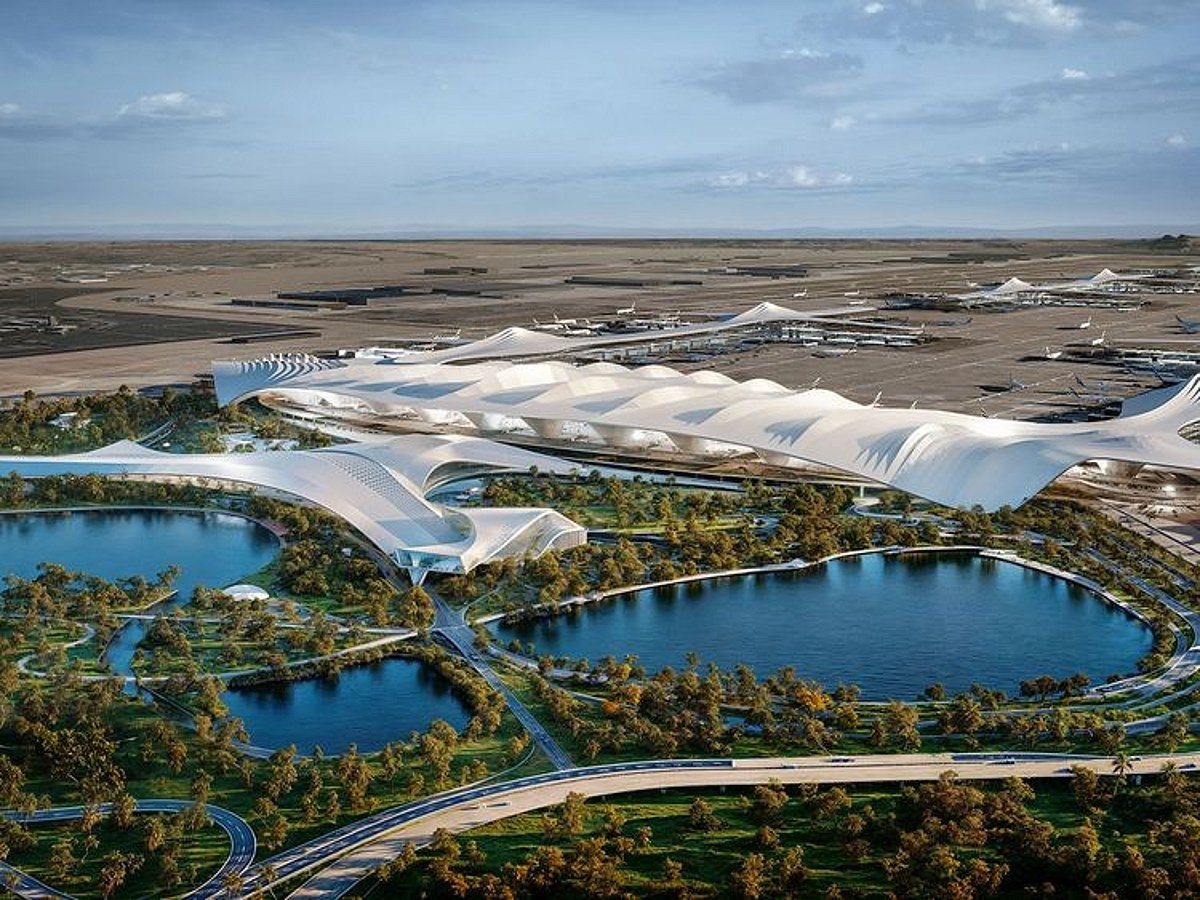
Heavy equipment is actively reshaping the desert floor across Dubai World Central at Al Maktoum International Airport (DWC). Workers have already driven 17,000 piles into the dirt and shifted 45 million cubic metres of earth. With Dh13 billion worth of construction currently active on-site and 10 million work hours completed over the last 15 months, the transition to Dubai’s next primary aviation hub is well out of the planning phase.
Dh55 Billion in Fresh Packages and a 50km Automated Transit System
Dubai Airports will award another Dh55 billion in construction packages before the end of the year to maintain momentum across the new campus. Among the incoming major builds is a fully automated 50 km train network contracted to Japan’s Mitsubishi Heavy Industries, which will connect every concourse across the sprawling facility.
The rush comes down to simple mathematics on the existing city hub: Dubai International Airport (DXB) is projected to hit absolute capacity by 2032. Once operations migrate to DWC, the city will complete the largest airport transition program in history, moving entirely away from operating two major hubs side-by-side.
The expanded site is built to process 260 million passengers annually. That scale, paired with smaller long-range jets like the Airbus A321XLR, is designed to boost Dubai’s direct connections to 600 cities, tripling the current destination network by the time the mega-hub goes live.


Branded Residences Command 64% Premium in UAE Market Boom
Buyers Pay 64% Premium as UAE Branded Residence Pipeline Explodes
Dubai currently hosts 64 completed branded residence developments and has another 87 projects in its pipeline, securing the top spot globally for city-level market concentration. Driven by sustained international wealth migration, the UAE ranks second globally behind the United States for total branded residence projects. Ras Al Khaimah has simultaneously climbed into ninth place worldwide among sought-after real estate markets, propelled by major developments like the Wynn Al Marjan Island resort.
| Market Metric | Verified Statistic |
|---|---|
| UAE Global Country Rank (Savills) | 2nd worldwide (behind USA) |
| Dubai Completed Branded Developments | 64 projects |
| Dubai Pipeline Branded Developments | 87 projects |
| Ras Al Khaimah Global Rank | 9th worldwide |
| Average Branded Price Premium (CBRE) | 64% over non-branded properties |
| Global Sector Growth Rate (Savills) | Nearly 20% annually |
| Middle East & Africa Growth Forecast by 2031 | Over 270% expansion |
Buyers pay an average 64 per cent premium for branded units compared to equivalent non-branded properties, according to research from CBRE. That price gap reflects buyer demand for operational reliability, high service standards, and instant recognition, particularly among international investors purchasing units remotely without visiting the site first.
The market has expanded far beyond traditional hotel-backed properties. Non-hospitality brands, including fashion houses, automotive manufacturers, and design studios, are claiming a rapidly expanding share of new launches. Sector data from Savills shows global market growth approaching 20% annually, with project volume across the Middle East and Africa projected to surge by more than 270% by 2031.
Developers are adjusting their portfolios to capture distinct buyer profiles. For example, BNW Developments incorporates both traditional hospitality operators like Wyndham and lifestyle brands like Tonino Lamborghini into its project lineup. This dual-track strategy lets developers offer buyers a choice between operational trust and design exclusivity. In Ras Al Khaimah, this combination of non-hospitality partnerships and major anchor projects has shifted the emirate from a value-focused market into an international luxury investment hub.

UAE banks security adds biometrics to end SMS code fraud
No More SMS Codes: UAE Banks Roll Out Biometric App Logins
Residents checking accounts across Abu Dhabi and the wider UAE are running into a fundamentally different login routine on their phones. Banks have quietly pulled the brakes on relying solely on text-message codes, shifting toward multi-layered digital security that turns your actual device and your face or fingerprint into the key.
The update hits both daily app check-ins and online checkout screens. Instead of waiting for a one-time password via SMS, customers now encounter instant notifications popping up directly inside their banking apps the moment a login attempt or transaction is triggered.
Biometrics and In-App PINs Take Over
The mechanics are shifting away from vulnerable text messages. To complete an online purchase or access an account, users now verify their identity through biometric features already registered on their devices, whether that means facial recognition, fingerprint scans, or eye scans. Paired with a dedicated in-app PIN known only to the customer, the process requires the user's registered phone and banking application to be actively present in the authentication chain.
When buying something online, an immediate notification hits the phone registered with the bank. The buyer opens the app, reviews the transaction details, approves it using the biometric check and PIN, and then heads back to the merchant's website to finish the payment. A text message still arrives after successful logins or requested transactions, giving users a chance to review activity and manually approve or reject it from within the app.
The Central Bank requires licensed financial institutions to keep customers informed of account movements via text message or email as they happen, while keeping details accessible through phone and internet banking platforms. These updated access controls lean on that framework, combining multiple elements at once, the registered device, the app itself, a custom PIN, and biometric characteristics, to make life much harder for fraudsters relying on SIM card swapping, phishing, social engineering, and intercepted verification codes.

Al Maktoum International Airport Sees Dh55b Push By Year-End
Dh55 Billion Expansion Push Keeps Al Maktoum Airport On Track For 2032
Out at Dubai World Central, the heavy machinery isn't slowing down. Construction at Al Maktoum International Airport is moving ahead at full pace, completely unfazed by recent regional disruptions, according to Dubai Airports Chief Executive Paul Griffiths.
Dh13 Billion Underway as DWC Expansion Maintains Full Momentum
The physical footprint at the site is scaling up fast. Right now, 9,000 workers are on site executing Dh13 billion worth of active construction contracts. Dubai Airports will award another Dh55 billion in additional contracts before the end of the year.
Groundwork data highlights the momentum across the site. Over the past 15 months, crews have logged 10 million work hours, driven 17,000 piles into the ground, and moved 45 million cubic metres of earth. Alongside the construction update, Dubai Airports confirmed it made zero layoffs across its workforce during recent regional flight disruptions, keeping operations fully intact.
The sustained building pace ensures the megaproject remains on track as Dubai prepares for anticipated capacity limits at Dubai International Airport by 2032.

US Visa Interview Delays Mount As Global Appointments Paused
US Embassy Appointments Cancelled Globally for Consular Officer Training
The US Department of State has paused and rescheduled visa interviews across embassies and consulates worldwide to execute a mandatory officer training initiative launched this month. International applicants, foreign workers, and prospective immigrants face sudden appointment cancellations and unexpected processing waits as diplomatic missions adjust interview calendars globally.
State Department offers no timeline for resuming regular interview schedules
Applicants with existing interview slots have received formal cancellation emails informing them that their appointments were cancelled without replacement dates or times provided. The State Department launched the training initiative to enforce stricter, standardized screening rules focused on evaluating whether applicants might become a public charge or depend on federal public benefits under US law. A State Department spokesperson stated that the global training program aims to ensure consular officers are equipped to evaluate every applicant comprehensively and consistently, requiring visa service appointments to be adjusted to accommodate the coursework.
The disruption follows an August 21 federal court ruling that struck down a separate policy suspending immigrant visa issuance for applicants from 75 countries, after a US judge determined Secretary of State Marco Rubio exceeded his statutory authority.

Dubai International Airport Traffic Hits 81% Level
Weekly DXB Traffic Crosses 81% Mark Driven By Transit Demand
At Dubai International Airport, flight schedules and concourses are steadily filling out as weekly traffic passes 81% of previous operational levels. Seat capacity at the airport has reached approximately 86%, driven by expanded airline schedules and rising transit movement through the hub.
Flight Schedules Expand Across 217 Global Destinations
National carriers Emirates and flydubai are leading the operational ramp-up, with both airlines maintaining recovery rates between 80% and 90%. Their ongoing delivery of new aircraft and addition of fresh routes are adding direct seats to the airport's network daily.
In total, more than 50 airlines now operate out of Dubai International Airport, linking the emirate directly to roughly 217 destinations across 99 countries. Dubai Airports Chief Operating Officer Majed Al Joker confirmed that stronger transit traffic and preparations for upcoming winter flight schedules are expected to support performance across the second half of the year.