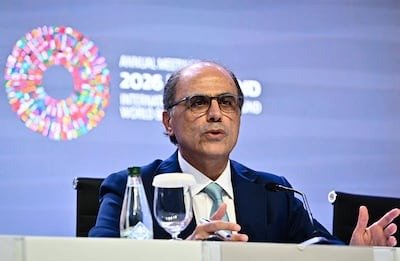
The International Monetary Fund expects the economies of the Gulf Cooperation Council to contract by 4.8% in 2026, then rebound by 9.1% in 2027. The forecasts are in the IMF’s October 2026 Regional Economic Outlook, launched in Dubai on Thursday 22 October 2026, where Jihad Azour, Director of the fund’s Middle East and Central Asia Department, presented the findings.
The 2026 figure is a sharp reversal. In April the IMF had expected the GCC to grow by 2% this year, so the new projection is a cut of 6.8 percentage points. The fund ties the downturn to the conflict, which disrupted energy production and exports across the region. Oil and gas output among the most affected exporters fell from about 33 million barrels a day in February to about 19 million in May. The GCC’s current-account surplus is forecast to narrow to 1.3% of gross domestic product in 2026, from 5% in 2025.
Saudi Arabia is projected to contract by 3.3% in 2026. The IMF’s 9.1% rebound for 2027 rests on an assumption that the conflict winds down by early 2027 and that exports of oil and gas and shipping through the Strait of Hormuz return to normal. Azour described the normalisation of oil and gas exports as the main reason for the recovery.
The open questions are whether hostilities end on the timetable the IMF assumes, how quickly Hormuz traffic recovers, and whether the rebound holds if either slips. The forecast for the UAE alone, which the fund raised for 2027, is covered in our report on the IMF’s UAE growth forecast.