Winless Run Pushes Manchester United Hierarchy Toward Leadership Change
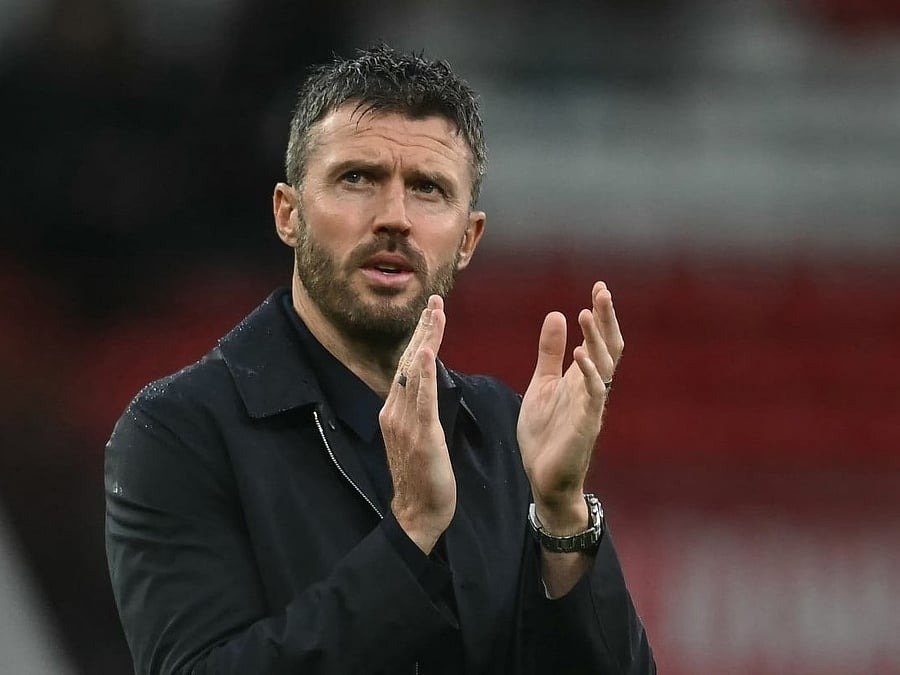
Retaining Michael Carrick after his interim spell was designed to buy administrative stability, but an eight-match winless streak across all competitions has forced Manchester United’s executive structure to re-evaluate its managerial position. A 3-0 defeat to Bournemouth at Old Trafford has exposed deep operational vulnerabilities, leaving the team hovering directly above the Premier League relegation zone and forcing director of football Jason Wilcox to assess unattached market alternatives.
The dilemma facing United’s decision-makers is not merely about dismissing a head coach who secured a permanent contract in May following a third-place finish. It is a strategic recalculation between two distinctly different structural paths: hiring a proven domestic operator accustomed to Premier League pressures, or appointing a high-profile European tactician looking to re-establish his standing.
Strategic Drivers Behind the Executive Review
The catalyst for this executive shift stems from sustained performance degradation. Despite Carrick guiding the club to a top-four finish during his temporary tenure last season, the current campaign has produced an unacceptable decline in technical metrics and results. An eight-game sequence without a victory, capped by a decisive home loss to Bournemouth, has transformed fan sentiment from supportive goodwill to active vocal dissatisfaction at Old Trafford.
In response, internal focus has shifted to Eddie Howe, who is currently available after ending a five-year stint at Newcastle United in July. Howe’s profile aligns closely with the preferences of director of football Jason Wilcox, who prioritizes direct Premier League experience and a proven record of player development.
Howe brings key operational credentials to the table:
- Unattached status, eliminating complex contract buyout negotiations.
- Proven silverware capability, having ended Newcastle’s 70-year domestic trophy drought by winning the Carabao Cup in March 2025.
- Extensive familiarity with the English top flight across multiple tenures.
Concurrently, Julian Nagelsmann remains under active consideration by United’s recruitment infrastructure. The former Bayern Munich manager was evaluated during the summer before the hierarchy elected to retain Carrick. Nagelsmann is unattached as of October 2026 following a disappointing World Cup campaign with Germany, offering a distinct European pedigree and top-tier continental experience.
Institutional and Operational Stakeholder Impact
Executive Leadership and Recruitment Infrastructure
For director of football Jason Wilcox and the broader sporting hierarchy, the immediate requirement is executing a seamless transition if a formal severance decision is taken. Re-evaluating profiles discussed during the summer, such as Nagelsmann, alongside dynamic domestic options like Howe, indicates that United’s talent acquisition team is actively contingency-planning to avoid prolonged leadership vacuums.The First-Team Squad
For the playing group, a potential managerial change signals a structural reset in tactical demands and selection criteria. After suffering back-to-back domestic setbacks and witnessing Carrick apologize to supporters post-match, the squad faces immediate pressure to adapt to potential leadership shifts while attempting to secure points in a difficult upcoming fixture window.Counter-Argument and Operational Realities
An alternative argument within the club’s leadership structure advocates for patience, pointing to Carrick’s recent track record of stabilizing the team during his interim spell. Having earned a permanent contract in May by securing third place, proponents of continuity argue that rapid managerial turnover risks destabilizing long-term squad development. However, with the club sitting just above the Premier League relegation zone and performance indicators dropping sharply, the appetite for patience among key decision-makers appears exceedingly thin.