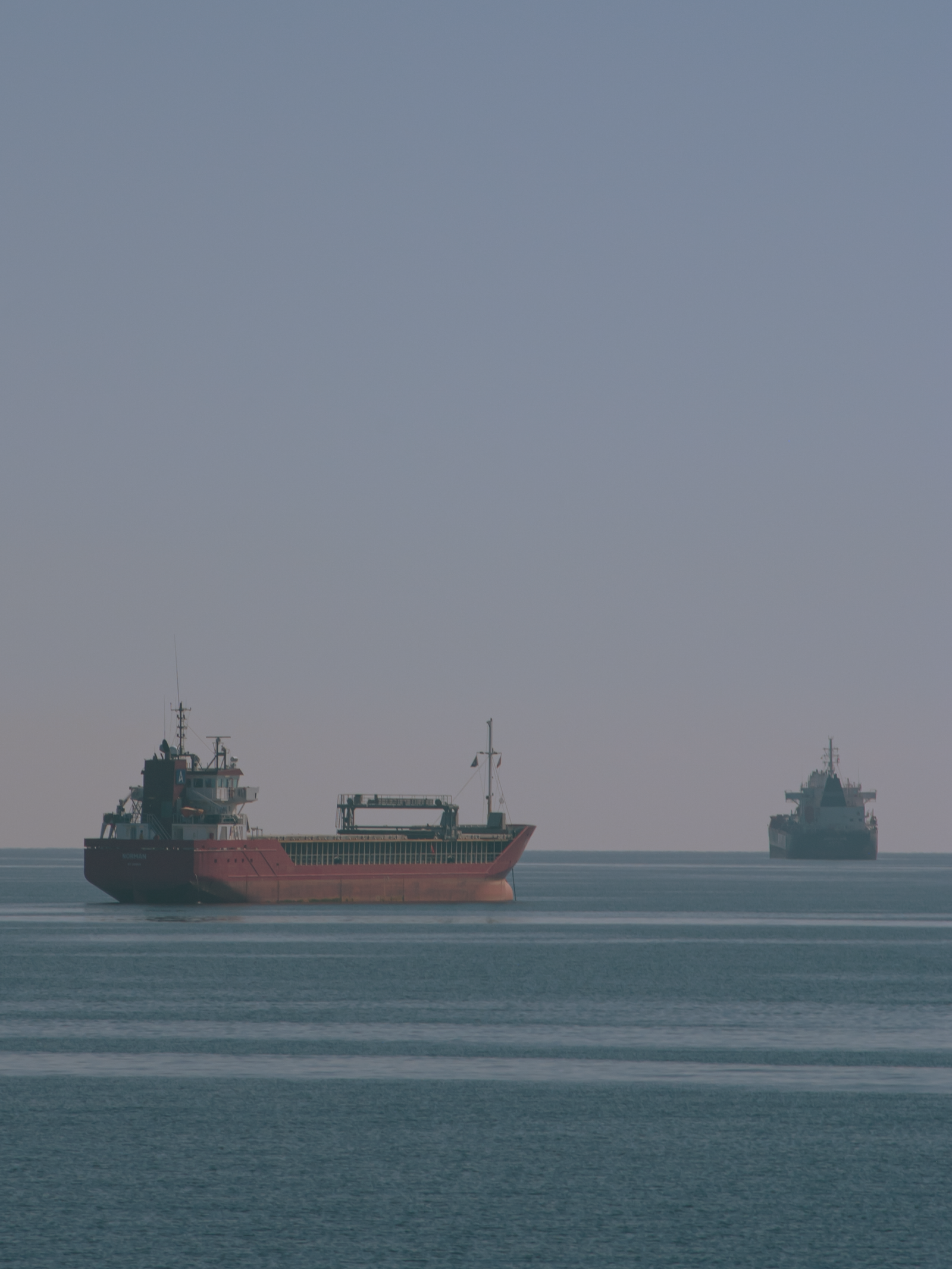
Iran, Oman Agree on Hormuz Transit Route
Iran and Oman have agreed on a route for ships transiting the Strait of Hormuz and are finalizing arrangements for jointly managing the strategic waterway, according to Iranian Foreign Ministry Spokesperson Esmaeil Baqaei. The geographical coordinates of the route have been agreed upon, and a joint statement containing the main considerations and points of agreement is in the final review and drafting stage. However, Baqaei stressed that any reopening of the strait would depend on the United States fulfilling its commitment to end its naval blockade of Iran’s ports.
The agreement would be a step towards reopening the key energy route, which has been closed since the United States and Israel launched their war against Iran on February 28. Before the war, the Strait of Hormuz carried around a fifth of the world’s oil and LNG exports, and prices have repeatedly surged since the dispute over the waterway erupted. Iran has exercised de facto control of the waterway and threatened any vessels transiting routes it deems unauthorized.
US President Donald Trump has repeatedly insisted that Tehran is keen for a deal to reopen Hormuz, but Iran has denied this and said it will instead make arrangements with its neighbor across the strait, Oman. The factors making the Strait of Hormuz insecure still exist on the part of the United States, particularly the naval blockade and other aggressive and threatening actions against Iran and its interests, according to Baqaei.
The Strait of Hormuz dispute is connected to the prior conflict between Iran and the United States, which has been escalating since the US imposed sanctions on Iran.


Emirates Travel Scam: 270,000 Cyberattacks Detected
Emirates Travel Scam: Don't Fall Prey to Fake Booking Sites
If you're planning a trip, beware of fake airline websites, fraudulent ride-hailing platforms, and deceptive booking pages designed to trick you into revealing sensitive financial information. Cybersecurity experts are warning that scammers are increasingly targeting people booking flights, hotels, and transport online, using fake websites and apps that mimic trusted travel brands to steal payment details, banking credentials, and personal information.
According to cybersecurity company Kaspersky, its security solutions detected nearly 270,000 cyberattack attempts disguised as well-known travel brands between the second quarter of 2025 and the first quarter of 2026. Emirates was the most impersonated transport brand, accounting for 61% of all transport-related phishing detections, followed by Uber at 37%. The attacks relied on fake airline websites, fraudulent ride-hailing platforms, and deceptive booking pages designed to trick users into revealing sensitive financial information.
The research found that the majority of malicious files linked to transport brands were Trojans (30.5%), followed by Trojan-Banker malware (22.5%), which is specifically designed to steal banking credentials and payment information. “The attackers are not just interested in travellers’ booking details; in many cases, they are aiming directly for their bank accounts,” Kaspersky said. Among the scams identified was a phishing campaign impersonating Irish airline Ryanair, where victims received messages claiming they were entitled to flight compensation. They were then urged to quickly submit account details or pay a small “processing fee” before the supposed offer expired.
Kaspersky said the scam relies on artificial urgency, noting that legitimate airlines do not demand upfront payments to process refunds or compensation claims. Researchers also uncovered fraudulent websites mimicking Booking.com, where unsuspecting users entered their personal and payment details believing they were confirming accommodation reservations. Victims often discovered the fraud only after arriving at their destination to find no booking had been made.
Evgeny Kuskov, Lead Security Researcher at Kaspersky, said travel brands occupy “a unique intersection of trust, urgency and payment activity”, making them particularly attractive to scammers. People searching for flights or rides often compare prices across several websites and are under pressure to complete bookings quickly, increasing the likelihood of clicking fraudulent links or fake offers, he said. With travel becoming increasingly digital, cybersecurity experts warn that vigilance online is now as essential as carrying a passport, reminding holidaymakers that a few extra seconds spent verifying a website could prevent significant financial losses and identity theft.
If you're a holidaymaker, it's essential to be cautious when booking flights, hotels, and transport online. Verify website addresses carefully before entering payment information, and be wary of heavily discounted deals or offers that demand immediate action. Use strong, unique passwords and enable multi-factor authentication. Download travel apps only from official app stores, and regularly monitor bank and credit card statements for suspicious transactions.
Here are some steps you can take to protect yourself from travel scams:
- Book flights and accommodation only through official websites or mobile apps.
- Verify website addresses carefully before entering payment information.
- Be cautious of heavily discounted deals or offers that demand immediate action.
- Use strong, unique passwords and enable multi-factor authentication.
- Download travel apps only from official app stores.
- Regularly monitor bank and credit card statements for suspicious transactions.

FIFA Infantino privatisation plan scrapped after backlash
FIFA Apologises for World Cup Privatisation Plan, Reaffirms Support for Infantino
FIFA's leadership has apologised for errors surrounding a leaked proposal to open the World Cup to private investment, which was valued at $20 billion. The proposal, called the FIFA Forward Enterprise (FFE), was scrapped after fierce backlash from European governing body UEFA, who threatened to boycott the World Cup. FIFA's leadership reaffirmed their full support for President Gianni Infantino, who has come under increasing pressure over his handling of the proposal.
FIFA's Secretary General and members of the FIFA Management Board met in Rabat, Morocco, to address the controversy, stating that "errors were also made after the proposal was leaked to media". The proposal aimed to raise up to $4.2 billion and provide each of FIFA's 211 member associations with a one-off payment of $20 million in early 2027, and increase their funding allocation for the 2027-2030 cycle from $8 million to $20 million. However, the plan was met with severe criticism, with UEFA resorting to the threat of boycotting the World Cup, prompting Infantino to withdraw the plan.
The FIFA Forward Enterprise (FFE) was proposed to run events such as the World Cup and Club World Cup, but the plan ultimately produced a furious backlash. Infantino stated that "our purpose has always been -- and will always be -- to unite and improve", and the organisation has since scrapped the private investment plan.
This development follows a prior controversy surrounding FIFA's handling of the World Cup, where UEFA's governing body had expressed concerns over the organisation's decision-making process. The scrapped privatisation plan has brought attention to the organisation's transparency and accountability, with many calling for increased oversight and reform.

Northern California Earthquakes Hit Near Covelo
Twin Earthquakes Rattle Northern California, Triggering ShakeAlert Warnings
Twin earthquakes hit Northern California on Wednesday afternoon, with the stronger quake centered about 19 miles northwest of Covelo at a shallow depth of roughly 3 miles. The US Geological Survey recorded the quakes at about 3:21 p.m. local time Wednesday, triggering ShakeAlert warnings to mobile devices in parts of Northern California. Local residents, including those in the Trinity-Mendocino county area, received these alerts, which provided crucial seconds to protect themselves before stronger shaking arrived.
The earthquakes struck in a relatively remote part of Northern California, limiting the potential for widespread damage. However, shallow earthquakes can produce noticeably stronger shaking near the epicenter than deeper events of similar magnitude. Emergency officials continue to remind residents that earthquakes can strike without warning and that the safest immediate response is to drop, cover, and hold on. The latest earthquakes add to a string of recent seismic activity in the region, including a magnitude 4.4 quake in July and a magnitude 5.6 earthquake in June.
The ShakeAlert system, which pushed alerts to mobile devices, played a crucial role in warning residents of the impending shaking. For some residents, the first warning came not from the shaking itself but from their phones. There were no immediate reports of injuries or significant damage, but the twin jolts kept residents alert in an area accustomed to living with seismic risk.
This recent seismic activity in Northern California is reminiscent of previous earthquakes in the region, such as the ones that struck in June and July. The US Geological Survey and emergency officials continue to monitor the situation, emphasizing the importance of preparedness and swift action in the event of an earthquake.
19 miles northwest of Covelo, the epicenter of the stronger earthquake, is a relatively remote area, which limited the potential damage.
The US Geological Survey's recording of the quakes at 3:21 p.m. local time Wednesday is a crucial piece of information, as it triggered the ShakeAlert warnings that helped residents prepare for the shaking.

Messi Scores 2 Goals in Inter Miami's 4-2 Win
Messi Nets 2, Inter Miami Beats San Luis 4-2
Lionel Messi scored his first two goals since the World Cup as Inter Miami beat Atlético San Luis 4-2. Messi's goals in the 11th and 44th minutes brought his total to 14 goals in 12 Leagues Cup matches, making him the career scoring leader in the tournament. Inter Miami extended its unbeaten streak to eight matches with the win.
The match at Nu Stadium was delayed 30 minutes in the second half due to lightning in the area. Telasco Segovia and defender Micael also scored for Inter Miami, while Noah Allen had three assists. Rafa Llorente scored for San Luis, which took an early lead through David Rodríguez's header.
Messi's performance marked his return to form after being held off the scoresheet against Columbus. He led Argentina to its second straight World Cup final appearance before losing to Spain and has now taken the lead in the Leagues Cup's all-time scoring list.
This win follows Inter Miami's 2-2 draw with the Columbus Crew on Saturday, where Messi played 37 minutes as a substitute. With this victory, Inter Miami solidifies its position in the Leagues Cup, and Messi continues to make history in the tournament.
The Leagues Cup has seen Messi's impressive skills before, as he led Miami to the title in 2023 and the final again last year. His consistent performance has earned him a reputation as one of the greatest players in the sport.

SpaceX Moon Impact: Photos Coming in Weeks
Moon Crater Photos: NASA's Wait Begins
The wait for photos of the Moon crater left by SpaceX's rocket impact has begun, with NASA's Lunar Reconnaissance Orbiter expected to capture before-and-after images within two weeks. On August 5, 2026, the upper stage of a SpaceX Falcon 9 rocket struck the Moon, ejecting an estimated 1,100 tonnes of lunar material. The impact was tracked by Abu Dhabi's Al Khatim Astronomical Observatory, which detected neither a flash nor visible ejecta.
The Al Khatim Astronomical Observatory, part of the International Astronomy Centre, produced the most detailed estimate of the impact, with director Mohammad Shawkat Odeh stating that the collision excavated around 450 cubic metres of lunar soil and rock. Under the Moon's weak gravity, some of the ejecta could have risen as high as three kilometres above the surface before falling back.
NASA's Lunar Reconnaissance Orbiter, which has been mapping the Moon since 2009, will be used to capture the before-and-after images of the impact site. The orbiter will have to pass over the right patch of ground, in the right lighting, at the right altitude for the resolution needed, before downlinking, processing, and comparing the images against the existing archive to confirm the new feature is the crater rather than something already there.
The Korea Pathfinder Lunar Orbiter will also look for opportunities to capture imagery of the impact site, according to a NASA spokesperson. The first pictures are expected to appear between the middle and end of August, although no specific date has been promised. Locating a crater roughly 25 metres across on a surface the size of Africa takes time, even when you know approximately where to look.
Scientists had been uncertain about what the impact would look like, with predictions ranging from a brief flash to a visible cloud of dust and rock, to nothing at all. The complication was that the rocket struck the lit side of the Moon, making any impact flash difficult or impossible to detect. However, detections by the Lowell Observatory in Flagstaff, Arizona suggest evidence of a plume, which Al Khatim is now waiting on observations from other ground-based observatories and space telescopes to confirm.
The impact of the SpaceX rocket on the Moon is a significant event, with NASA planning to collect data from the event and refine techniques for tracking objects in space. The wait for photos of the Moon crater may be long, but it will be worth it to see the aftermath of this historic event.
For those waiting for the photos, it's a matter of patience. The images will be released as soon as they are available, and they will provide a unique glimpse into the aftermath of the SpaceX rocket impact on the Moon.