(Credit - Gulf News)
Total Solar Eclipse August 12, 2026 Is Your Dress Rehearsal for 2027’s Rare Six-Minute Darkness
If you’ve ever wanted to stand inside a total solar eclipse, August 12, 2026 is the event that puts you in the right place, and sets you up for something even rarer the following year.
What Is Actually Happening on August 12, 2026
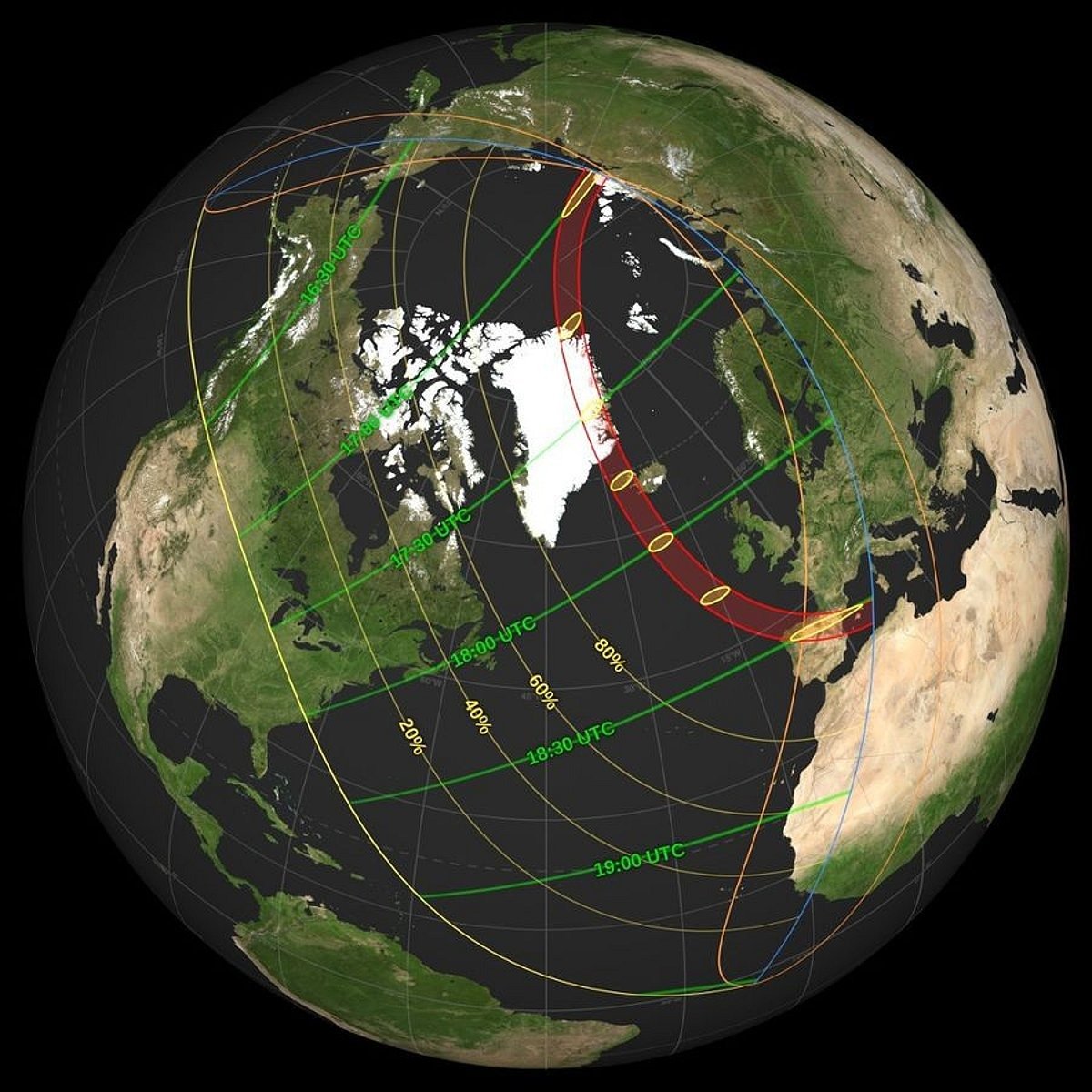
A total solar eclipse occurs when the Moon slides precisely between Earth and the Sun, casting a narrow shadow, the “path of totality“, across the surface below. Inside that path, day turns to night for a brief window. Everyone outside it sees only a partial eclipse, which, while visually interesting, is a fundamentally different experience: the sky stays bright, temperatures don’t drop, and stars don’t appear.
On August 12, 2026, that path of totality sweeps through parts of Europe and Greenland. Skywatchers positioned along the centreline will experience full darkness, while those in surrounding regions will see the Sun partially obscured. The exact duration of totality at any given point depends on where you stand within the path, closer to the centreline means longer darkness.
Why 2027 Is Already Being Circled on Astronomy Calendars
The 2026 eclipse is significant in its own right, but astronomers and travel planners are already framing it as a warm-up act. On August 2, 2027, a second total solar eclipse is expected to deliver approximately six minutes of totality at its maximum point, an unusually long duration. Most total eclipses offer two to three minutes of darkness at best, so a six-minute totality is a rare occurrence that draws both scientific observers and eclipse-chasing travellers in large numbers.
The 2026 event gives skywatchers a practical trial run: testing viewing locations, understanding logistics, and confirming that their eclipse glasses meet the required ISO certification standard, the only safe way to view the Sun outside the brief window of totality itself.
The Two Eclipses Side by Side
| Feature | August 12, 2026 Eclipse | August 2, 2027 Eclipse |
|---|---|---|
| Type | Total solar eclipse | Total solar eclipse |
| Primary viewing regions | Parts of Europe and Greenland | Path to be confirmed; highlighted for long totality |
| Maximum totality duration | Standard (minutes; location-dependent) | Approximately 6 minutes at peak |
| Rarity level | Notable regional event | Among the longer totalities of the decade |
| Planning lead time from today | ~14 months | ~26 months |
Safe Viewing: The One Rule That Does Not Bend
- Outside totality: You must use certified solar eclipse glasses or solar viewers that meet the ISO 12312-2 international safety standard. Standard sunglasses, regardless of darkness, do not protect your eyes.
- During totality only: Glasses can be removed for the brief window when the Sun is completely covered. The moment the Sun’s edge reappears, glasses go back on immediately.
- Cameras and telescopes: Require dedicated solar filters on the lens, not just eclipse glasses held in front of the eyepiece.
- Partial eclipse viewers: If you are outside the path of totality on August 12, 2026, the Sun is never fully covered, so certified filters are required for the entire event without exception.
If You’re Planning to Travel for Either Eclipse
The 2026 eclipse path covers parts of Europe and Greenland, meaning accommodation and transport along the centreline will face demand spikes as the date approaches. The 2027 eclipse, with its exceptional totality duration, is expected to generate even higher international travel volumes, eclipse tourism for long-totality events consistently sells out prime viewing locations months in advance. If 2027 is your target, the 2026 event is a useful benchmark for understanding what crowd conditions and logistics actually look like on the ground.
Next Steps for Skywatchers
1. Confirm your position in the path: Use a verified eclipse path map to check whether your planned location falls inside totality or only in the partial eclipse zone for August 12, 2026. 2. Source certified eye protection now: Look for ISO 12312-2 certified eclipse glasses from reputable optical or astronomy suppliers, not generic versions sold without certification markings. 3. Book accommodation early for centreline locations: Demand for hotels and viewpoints along the path of totality rises sharply in the months before the event. 4. Start 2027 planning in parallel: Given the six-minute totality, the August 2, 2027 eclipse is expected to be a high-demand event; early research on the confirmed path of totality will give you a significant advantage.The August 12, 2026 total solar eclipse brings a genuine totality experience to parts of Europe and Greenland, and for anyone with an eye on 2027’s rare six-minute event, it is the most useful preparation available. Safe viewing requires ISO-certified solar filters outside the totality window, with no exceptions. Two eclipses, fourteen months apart: the planning window for both is open now.