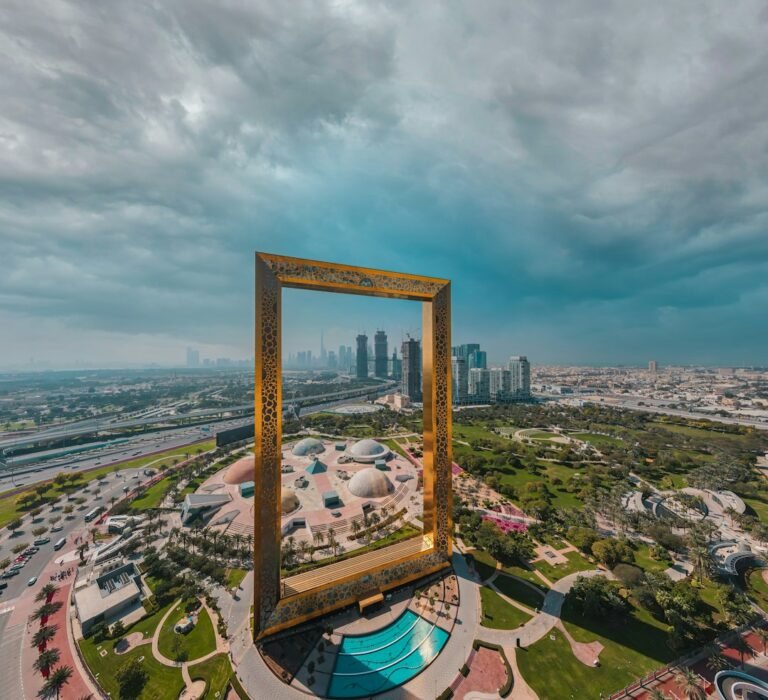
(Credit - Khaleej Times)
UAE Dirham-Backed Stablecoin DDSC Gets Central Bank Approval, Here’s What Changes for You
If you move money, settle invoices, or work in treasury or fintech in the UAE, the Central Bank of the UAE’s reported approval of a UAE dirham-backed stablecoin called DDSC, set to launch on ADI Chain, could reshape how digital payments work at an institutional level.
What Is DDSC and Why Is the Central Bank Involved?
A dirham-backed stablecoin is a digital token whose value is pegged one-to-one to the UAE dirham, meaning it doesn’t swing in price the way Bitcoin or Ether does. That stability is precisely what makes it useful for real-world payments, settlement between businesses, and programmable finance, you know exactly what it’s worth the moment you send or receive it.
The Central Bank of the UAE (CBUAE) is the regulatory authority whose approval turns a stablecoin from a speculative product into something banks, government entities, and regulated fintechs can actually integrate. DDSC is designed to run on ADI Chain, a blockchain infrastructure positioned for institutional-grade transactions, and its initial focus is on government-led and institutional use cases rather than retail crypto trading.
Before and After: What This Approval Shifts
| Dimension | Before DDSC Approval | After DDSC Approval |
|---|---|---|
| Dirham-denominated digital settlement | No CBUAE-approved on-chain dirham token existed | DDSC provides a regulated, dirham-pegged token for on-chain use |
| Institutional crypto exposure | Institutions faced regulatory uncertainty using unpegged tokens | A CBUAE-backed stablecoin offers a compliant on-chain cash equivalent |
| B2B payment rails | Cross-entity settlement relied on traditional banking infrastructure | Programmable, auditable dirham payments become possible on ADI Chain |
| Government disbursements | Digital disbursements required fiat banking channels | Tokenised, controlled disbursement flows become technically feasible |
| Volatility risk | Any on-chain dirham equivalent carried conversion or price risk | DDSC’s peg eliminates that conversion layer for dirham-denominated flows |
Who This Affects, and How
If you’re a treasury or finance professional at a UAE-based corporation or government entity, DDSC could eventually allow you to hold, transfer, and settle in dirhams entirely on-chain, without converting to a volatile crypto asset first. Think of it as a digital cash equivalent that lives on a blockchain but behaves like your bank balance.If you’re a fintech or payments company operating under a UAE licence, this is a regulatory signal worth acting on now. The CBUAE’s approval of a dirham-pegged token indicates the regulator is building the framework for stablecoin integration. Firms that begin mapping their compliance, onboarding, and API infrastructure to stablecoin rails will be better positioned when broader access opens.If you’re an individual resident using digital payment apps or crypto platforms in the UAE, DDSC is not a retail product at launch, its initial positioning is institutional and government-facing. However, as regulated stablecoin infrastructure matures, the downstream effect is typically faster, cheaper, and more transparent digital payments across the ecosystem you already use.Key Facts at a Glance
- Issuing Authority: Central Bank of the UAE (CBUAE), the sole body with authority to approve dirham-denominated digital tokens
- Token Name: DDSC, a UAE dirham-pegged stablecoin
- Blockchain Infrastructure: ADI Chain, positioned for institutional and government-grade transactions
- Primary Use Cases: Institutional settlement, government disbursements, programmable payments, and tokenised cash management
- Claim Status: The CBUAE approval is reported as of June 3, 2026, verify directly with CBUAE for official confirmation and implementation timelines
Next Steps If You Need to Act Now
1. Monitor CBUAE directly, visit the Central Bank of the UAE’s official portal for formal announcements on DDSC issuance structure, reserve transparency requirements, and redemption mechanics. No third-party summary replaces the primary regulatory text. 2. Check your institution’s digital asset policy, if you work at a bank, licensed fintech, or government-linked entity, flag this development to your compliance and treasury teams now. Onboarding requirements for regulated stablecoin use will require internal preparation. 3. Review your payments stack, fintechs and payment service providers licensed by the CBUAE should assess whether their current infrastructure can interface with ADI Chain-based tokens, and what API or custody changes that would require. 4. Watch for MOHRE and DLD signals, if DDSC expands to payroll or property settlement use cases (both areas where the UAE has been active in digital innovation), MoHRE and DLD will be the authorities to watch for sector-specific guidance.The CBUAE’s reported approval of DDSC marks a concrete step toward regulated, dirham-denominated digital settlement in the UAE, not a speculative crypto play, but an institutional infrastructure move. The real-world impact will depend on how quickly reserve rules, redemption mechanics, and onboarding requirements are published and adopted. For now, the clearest action is to watch the CBUAE’s official channels and start the internal conversation before the framework arrives at your door.
Oil Prices Near $95: What It Costs You Now
Oil Prices Near $95 Keep Fuel Costs Painful, Here's Why Your Pump Price Won't Drop Yet
If you drive, ship goods, or run any business that moves things, oil prices near $95 a barrel right now change your cost calculations for the weeks ahead. Brent crude is hovering near $95 and WTI around $92 as of June 3, 2026, with conflict involving Iran keeping traders on edge over potential disruptions to one of the world's most critical energy corridors.
Why $95 Oil Is More Than a Headline Number
Markets are not reacting to a confirmed supply outage, they are pricing in the *probability* of one. When conflict risk rises in a region that sits astride major crude export routes, traders add a geopolitical risk premium to futures contracts. That premium lifts Brent and WTI even on days when no tanker is actually delayed, because the cost of being wrong, and caught short, is enormous.
Insurance and freight rates for vessels transiting regional shipping lanes also climb during periods of elevated tension, adding a second layer of cost on top of the raw crude price. Those extra costs flow directly into the wholesale price that refiners pay, and eventually into what consumers see at the pump.
Why Your Fuel Price Stays High Even When Crude Pauses
Retail fuel prices work on a lag. Petrol stations and distributors are selling fuel refined from crude purchased days or weeks earlier at already-elevated prices. Local taxes, refinery margins, and distribution fees sit on top of that base cost and do not move in lockstep with daily crude fluctuations. The result: even if Brent dips slightly tomorrow, the price you pay today reflects yesterday's expensive barrel.
When crude holds at elevated levels across multiple trading sessions, as it has been doing, that higher input cost becomes embedded in the supply chain. Gasoline and diesel prices become "sticky," meaning they resist falling quickly even when crude edges back. A sustained Brent level near $95 also feeds into broader inflation expectations through transport and logistics costs, touching everything from supermarket deliveries to airline tickets.
Brent vs. WTI: The Two Prices Driving Global Energy Costs
| Benchmark | Current Level | Primary Market | Why It Matters to You |
|---|---|---|---|
| Brent Crude | ~$95 / barrel | Europe, Asia, Middle East | Sets the reference price for most global fuel and jet fuel contracts |
| WTI Crude | ~$92 / barrel | United States | Influences North American gasoline and diesel retail prices |
| Price Gap | ~$3 | , | Reflects regional supply/demand and transport cost differences |
What's Driving the Risk Premium Right Now
- Iran Conflict Exposure: The Middle East supplies a significant share of global crude exports; any disruption to transit routes raises immediate supply-tightening fears.
- Precautionary Stockpiling: Buyers are securing supply ahead of potential disruptions, tightening the perceived market balance even without a confirmed outage.
- Freight and Insurance Costs: Elevated regional tension pushes up shipping insurance premiums, adding cost before crude even reaches a refinery.
- Inflation Feedback Loop: Sustained crude near $95 lifts transport and logistics costs across the economy, keeping broader price pressures elevated.
What to Watch That Could Shift Prices Fast
Three signals will tell you whether this elevated price level is temporary or entrenched. First, watch for any verified change to actual export flows, a confirmed disruption would push prices sharply higher, while a de-escalation could release the risk premium quickly. Second, track global inventory data: if stockpiles start drawing down faster than expected, the market balance is genuinely tightening, not just perceived to be. Third, monitor shipping and insurance conditions on regional routes; normalising freight costs would signal that traders are becoming less worried about physical supply.
Oil prices near $95 reflect fear as much as physical shortage, traders are paying a premium for the possibility of disruption, not a confirmed one. That distinction is important: a credible de-escalation involving Iran could release that premium relatively quickly, while a confirmed supply outage would drive prices significantly higher. Until one of those outcomes becomes clear, fuel costs for consumers and transport-dependent businesses are likely to stay elevated.## FAQ

Trump Strait of Hormuz Deal Expected Within a Week
Trump Strait of Hormuz Deal Could Land Within Days as Iran Nuclear Demands Remain Unresolved
The Trump Strait of Hormuz deal is expected within a week, US President Donald Trump said on June 3, 2026, though he acknowledged key issues remain unresolved and a final decision is still pending. The outcome would directly affect tanker operators, energy buyers, and insurers exposed to one of the world's most critical maritime chokepoints.
Free Navigation Tied to Iran Abandoning Nuclear Ambitions
Trump framed the prospective agreement around two conditions: Iran allowing free navigation through the Strait of Hormuz and abandoning its nuclear ambitions. He described negotiations as close to completion without specifying which issues remain outstanding or identifying the parties involved in the talks beyond the US and Iran.
The Strait of Hormuz connects the Persian Gulf to the Gulf of Oman and serves as the primary export corridor for a significant share of the world's seaborne oil and liquefied natural gas. Any disruption to transit, whether through interdictions, vessel seizures, or the threat of military action, raises shipping insurance premiums, forces longer rerouting, and adds cost and time to supply chains globally. Even the expectation of restored passage can compress the geopolitical risk premium embedded in energy prices, though unresolved terms keep that volatility elevated for traders and shipowners.
What a Potential Reopening Means for Shipping and Energy Markets
A formal reopening agreement would signal de-escalation steps sufficient to restore predictable commercial transit for tankers and container ships. Until a final decision is confirmed, freight rates, war-risk insurance premiums, and hedging costs remain sensitive to headline risk. Shipping operators and energy procurement teams are currently navigating a window where de-escalation is priced as possible but not certain.
- Timeline: Trump said a deal is expected within one week of June 3, 2026; no binding agreement has been signed.
- Conditions stated: Iran must allow free navigation and abandon nuclear ambitions, per Trump's framing.
- Status: Final decision pending; key issues described as unresolved.
- Market exposure: Oil prices, LNG spot rates, and war-risk insurance premiums remain elevated pending confirmation.
Trump's one-week timeline puts pressure on negotiators to close outstanding gaps before markets reprice on a missed deadline. The dual conditions, nuclear concessions alongside navigation guarantees, mean the deal carries implications well beyond maritime access. Until signatures are on paper, shipowners and energy buyers face a market that can move sharply on a single statement.*Source: The National*

Oil Prices Slide After Lebanon Ceasefire Deal
Oil Prices Slide as Lebanon Ceasefire and Iran Diplomacy Drain Risk Premium from Crude
Oil prices slide on Wednesday, June 3, 2026, after a ceasefire in Lebanon reduced immediate fears of regional escalation and reports emerged of possible U.S.-Iran peace talks. Energy traders responded by unwinding risk hedges, pulling Brent crude and WTI lower as the geopolitical premium built into prices began to deflate.
How Geopolitical Risk Moves Crude, and Why It Can Reverse Fast
Oil markets routinely price in a "risk premium" when traders anticipate potential disruptions to production, shipping lanes, or energy infrastructure across the Middle East. A ceasefire involving Hezbollah in Lebanon directly reduces near-term expectations of escalation that could threaten regional transit routes or energy assets. When that threat perception falls, traders sell risk hedges, and crude benchmarks follow.
Separately, any credible signal pointing toward U.S.-Iran de-escalation carries a second layer of downward pressure. Beyond reducing conflict risk, it raises market expectations, however tentative, that Iranian barrels could eventually return in greater volume if diplomatic progress leads to eased restrictions. Reports citing former U.S. President Donald Trump in connection with a possible two-week ceasefire announcement have been flagged as unverified by The National, and traders are pricing probabilities, not confirmed outcomes. Prices can reverse sharply if ceasefire terms weaken or negotiations stall.
What This Means for Energy Buyers and Hedging Desks
The immediate practical consequence for procurement teams, fuel buyers, and corporate hedging desks is heightened short-term volatility rather than a sustained price decline. Risk can re-enter crude prices within days if diplomatic signals fade or ceasefire conditions deteriorate, meaning hedge positions locked in at current levels may need reassessment on a compressed timeline.
- Trigger: Lebanon ceasefire reduces perceived threat to regional energy infrastructure and transit routes.
- Secondary driver: Reports of possible U.S.-Iran peace talks raise expectations of reduced conflict risk and potential Iranian supply re-entry.
- Market mechanism: Traders sold geopolitical risk hedges, pushing Brent and WTI benchmarks lower.
- Verification status: Claims referencing a specific Trump-linked two-week ceasefire announcement remain unverified, per The National.
Oil markets moved lower on June 3 as two converging signals, a Lebanon ceasefire and early indications of U.S.-Iran diplomacy, reduced the risk premium traders had embedded in crude. The move reflects shifting probabilities, not confirmed supply changes, and the same geopolitical factors that pushed prices down can push them back up quickly. Energy buyers and trading desks face a narrow window to reassess positions before the diplomatic picture clarifies further.*Source: The National*

Africa Critical Minerals Drive Global Power Race
Africa Critical Minerals Are Now the World's Most Contested Supply Chain
Africa's critical minerals, cobalt, copper, lithium, and rare earths, have moved to the centre of a three-way competition between China, Gulf states, and Western powers, each racing to secure the raw materials that power batteries, electricity grids, electronics, and defence systems.
Why Infrastructure Is the Real Prize, Not Just the Mine
The strategic logic driving investment in 2026 is straightforward: a mine without a corridor is stranded. Every major external player is pairing mining access with the ports, railways, roads, and power projects needed to move ore from extraction sites to processing hubs and export terminals. Whoever finances and builds that logistics chain earns long-term commercial leverage, and reduces their own supply-chain risk at home.
China's approach has centred on large-scale infrastructure financing and construction tied directly to trade and industrial capacity. The goal is to reduce supply-chain vulnerability for Chinese manufacturers by securing upstream mineral flows before competitors can. Western partners, led by the United States, have responded by promoting alternative financing frameworks, governance standards, and supply-chain partnerships, targeting specifically the minerals most critical to the global energy transition.
Gulf Investors Are Quietly Building a Third Corridor Strategy
Gulf investors have expanded their footprint across Africa through ports, logistics networks, energy projects, and mining-linked deals. The strategic fit is clear: Africa's resource base aligns with Gulf ambitions in trade connectivity, industrial diversification, and downstream processing, giving Gulf states a role in global supply chains that goes well beyond their own hydrocarbon revenues.
- Minerals in focus: Cobalt, copper, lithium, and rare earths, all central to battery manufacturing, power grids, and defence technology.
- China's edge: Established infrastructure financing and construction capacity, with trade and industrial ties already embedded across multiple African economies.
- Western counter-strategy: Alternative financing, governance-linked partnerships, and supply-chain agreements targeting energy-transition minerals.
- Gulf positioning: Port and logistics investment, energy deals, and mining-linked financing that connects Africa's resource base to Gulf trade and processing ambitions.
What African Governments Actually Want
The framing of this competition as a binary choice between blocs misreads how most African governments are operating. Many are engaging China, Gulf investors, and Western partners simultaneously, treating each as a source of capital, technology, and market access rather than as an ideological alignment. The priorities African leaders consistently push for are jobs, government revenue, delivered infrastructure, and local value addition: processing ore domestically rather than exporting raw material at low margins.
That demand for local value addition is increasingly a deal condition, not a negotiating afterthought. Governments that can enforce it gain more from the competition; those that cannot risk locking in the same extractive dynamic that defined earlier resource booms. The country that controls the processing step, not just the mine, captures the higher-margin part of the supply chain.
The Supply-Chain Consequence for Businesses and Buyers
For procurement teams, infrastructure investors, and manufacturers dependent on critical minerals, this competition is becoming a cost-and-risk calculation as much as a geopolitical story. Contract terms, local value-add requirements, and financing conditions attached to corridor projects directly affect who secures stable offtake agreements, who gains processing capacity, and who faces logistics bottlenecks when a corridor is controlled by a rival's financing partner.
Africa holds a significant share of the world's reserves of minerals essential to the energy transition and modern defence systems, making the continent's infrastructure corridors as strategically important as the mines themselves. The competition between China, Gulf investors, and Western powers is intensifying, but African governments are increasingly setting the terms, demanding jobs, revenue, and local processing rather than simply choosing sides. For any business or government dependent on critical mineral supply chains, understanding who controls the corridor is now as important as understanding who owns the deposit.

6.1 Magnitude Earthquake Italy Shakes Calabria Coast
6.1 Magnitude Earthquake Italy: Calabria Offshore Quake Sends Tremors to Naples
A 6.1-magnitude earthquake struck off Italy's Calabria coast on June 2, 2026, shaking southern Italy and sending tremors as far north as Naples. Residents across the region felt the quake, though Italian authorities reported no major casualties or significant structural damage in the immediate aftermath.
Southern Italy's Seismic Zone Activates Again Along the Mediterranean Fault Line
The offshore location of the quake, positioned along the complex boundary where the African and Eurasian tectonic plates interact, is consistent with Calabria's long history of seismic activity. At a magnitude of 6.1, the event was strong enough to be widely felt across populated coastal and inland areas, though the absence of reported casualties suggests the quake's depth and distance from dense urban centres limited its destructive impact.
Italian civil protection authorities moved quickly to assess infrastructure, coastal zones, and critical services following the tremor. Monitoring for aftershocks, a standard and expected phase following any quake of this magnitude, remained active as of June 3, 2026. Officials have advised residents in affected areas to follow official safety guidance and report any structural concerns to local authorities.
What Residents and Travellers in Southern Italy Should Know Right Now
Anyone in or travelling to southern Italy, particularly Calabria and the Naples area, should expect the possibility of aftershocks in the coming days and monitor updates from Italy's Civil Protection Department (Dipartimento della Protezione Civile), the designated national authority for seismic emergency coordination. Transport links and public infrastructure in coastal Calabria may be subject to precautionary inspections.
- Quake Magnitude: 6.1, strong enough for widespread surface impact; depth and offshore position moderated damage
- Area Affected: Calabria coast (epicentre offshore); tremors confirmed in Naples and parts of southern Italy
- Casualties & Damage: No major casualties or significant damage reported by authorities as of June 3, 2026
- Aftershock Risk: Elevated, standard for a quake of this size; civil protection monitoring is ongoing
A 6.1-magnitude offshore quake is a significant seismic event by any measure, and southern Italy's position within the Mediterranean's active fault system means such episodes are neither rare nor predictable. Italian authorities have confirmed no major harm at this stage, but the aftershock window, typically spanning days to weeks, keeps the situation live. Residents and businesses with exposure in Calabria or Naples should stay connected to official civil protection channels for real-time updates.*Source: Gulf News / Italy Civil Protection Department (Dipartimento della Protezione Civile)*