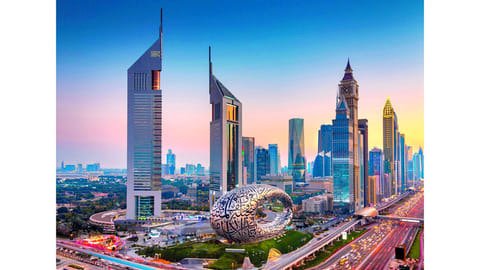
(Credit - Gulf News)
UAE Secures 9th Place Among the World’s Top 10 FDI Destinations in 2026, Here’s What It Costs You
The UAE has landed in the world’s top 10 FDI destinations in 2026, ranked 9th globally, according to Gulf News, cementing its position as the leading emerging market for investor optimism at the midpoint of this year. The ranking reflects sustained confidence from multinational firms that continue to treat Dubai and Abu Dhabi as their primary gateway into Middle East, Africa, and South Asia operations. For residents, that confidence has a direct price tag, on office rents, hiring competition, and the cost of running a small business.
Why Global Capital Keeps Choosing the UAE Over Rival Emerging Markets
The UAE’s appeal to foreign investors is not accidental, it is the product of deliberate, long-running policy choices. Modern port and airport infrastructure, globally connected financial services, and a regulatory environment built around reducing friction for foreign ownership have collectively made the country one of the most accessible places on earth to deploy capital at scale. Free zones remain a particularly powerful draw, offering fast licensing, sector-specific ecosystems, and export-oriented setups that multinationals can activate quickly.
Broader onshore reforms in recent years have also made long-term residency and business establishment more attractive for skilled professionals and entrepreneurs, widening the funnel of inbound talent and capital beyond the free zone model. The result is a compounding effect: each wave of foreign entrants creates supplier demand, hiring pressure, and commercial space absorption that feeds the next cycle of investment confidence.
What a 9th-Place FDI Ranking Translates to in Dirhams and Daily Life
Strong FDI momentum does not stay in boardrooms, it moves through the economy into hiring budgets, lease renewals, and service pricing. Technology, advanced manufacturing, logistics, financial services, and professional services are the sectors most likely to see accelerated headcount growth as new foreign entrants establish regional operations. That tightens the talent pool, which supports wage pressure in high-demand roles but also raises the cost of recruitment for existing businesses competing for the same candidates.
| FDI Driver | What It Signals | Resident Impact |
|---|---|---|
| 9th global FDI ranking (2026) | UAE leads emerging markets in investor optimism | More multinational employers entering the market, broader job options, but stiffer competition for roles |
| Free zone licensing demand | Fast-entry route for foreign firms remains active | More start-up activity and supplier opportunities for local SMEs; also more direct competitors |
| Onshore ownership reforms | Foreign firms setting up full onshore entities | Increased demand for commercial office space in established business districts, upward pressure on lease rates |
| Infrastructure & logistics strength | Warehousing and industrial zone absorption rising | Higher warehousing costs for SMEs; stronger logistics job pipeline for blue-collar and mid-skill workers |
| Investor-friendly policy environment | Regulatory friction remains low for foreign capital | Faster business formation means more service providers and consumer choices, but also faster market saturation in popular sectors |
Three Wallet Scenarios: Renter, Job-Seeker, Business Owner
🏠 If you’re a renter: Rising FDI inflows drive demand for both residential and commercial space, particularly in Dubai’s established business corridors. More foreign professionals relocating for regional HQ roles means sustained competition for mid-to-premium apartments. If your lease is up for renewal in the second half of 2026, factor in that landlord leverage is unlikely to ease while inbound corporate activity remains at this level.💼 If you’re a job-seeker: A 9th-place global FDI ranking translates directly into a wider field of potential employers. Technology, financial services, and logistics are the sectors most actively expanding headcount as foreign entrants build out regional teams. Roles requiring bilingual capability, compliance knowledge, or sector-specific technical skills are where salary negotiation leverage is strongest right now.🏢 If you own a small business: The same FDI wave that creates supplier and partnership opportunities also brings well-capitalised foreign competitors into your market faster than in previous cycles. Compliance readiness, clean financials, proper licensing, and documented processes, is now a baseline requirement for winning contracts from multinational entrants, not a differentiator. Locking in lease terms and staffing costs before the next wave of expansion announcements accelerates is a practical 2026 planning priority.- Global Rank: 9th among the world’s top 10 FDI destinations in 2026
- Emerging Market Position: Leads in investor optimism among emerging economies
- Key Drivers: Economic growth, investor-friendly policies, free zones, and modern infrastructure
- Source: Gulf News, reported June 1, 2026
- Claim Status: Unverified by an independent third-party index at time of publication
The UAE’s 9th-place global FDI ranking in 2026 is a macro signal with micro consequences, for your rent, your next salary negotiation, and your business cost base. Global capital choosing the UAE at this scale means the economy is absorbing more foreign competition, more hiring demand, and more commercial space pressure simultaneously. The residents and business owners who plan around that reality now will be better positioned than those who treat it as a headline and move on.