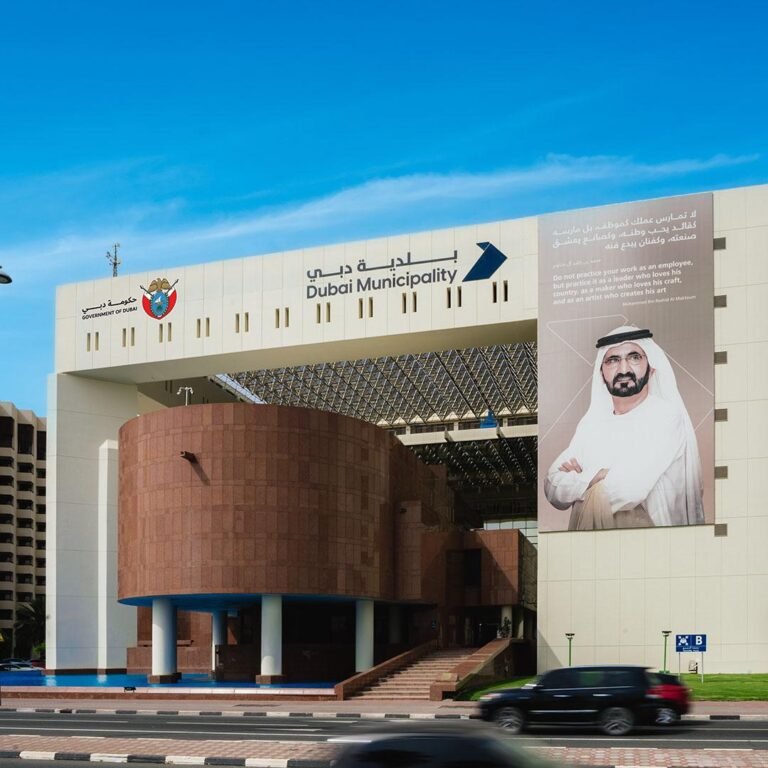
Check If You Have a UAE Travel Ban Before Heading to the Airport
If you’ve booked a flight out of the UAE and a legal or financial dispute is hanging over your head, you could be stopped at the airport. A travel ban stops you from entering, re‑entering, or exiting the country until the underlying issue is cleared. Knowing whether a ban is in place can save you embarrassment, missed flights, and extra fees.
Dubai’s quickest routes to a ban check
Dubai residents have three free options that work right away.
Call the immigration hotlines, The Federal Authority for Identity, Citizenship, Customs and Port Security (ICP) runs a 24‑hour line at 600 5222 22. A quick call can confirm whether a restriction exists and point you to the nearest ICP centre.
Dial GDRFA Dubai, The General Directorate for Identity and Foreigners Affairs (GDRFA) answers on 800 5111 around the clock. Their operators can pull your record from the central system and tell you what, if anything, is blocking your travel.
Use the Dubai Police portal, The police keep a separate criminal‑status service for financial cases. You can check online or via the Dubai Police app (available on iTunes and Google Play). Follow these steps:
- Open the Dubai Police website or app.
- Tap Services → Reports Services.
- Choose Criminal Status of Financial Cases.
- Click Access Service (top‑left).
- Enter your full name and Emirates ID number.
The portal returns a simple “clear” or “restriction” notice instantly. Police stations also handle in‑person queries; they’re open from 07:30 am to 10:00 pm.
When your case lies in another emirate
Travel bans aren’t limited to Dubai. If you have a pending matter in Abu Dhabi, Sharjah, or elsewhere, the same central system applies, but the local front‑end differs.
In practice, that means calling the ICP hotline (600 5222 22) or dropping by the nearest ICP centre. You don’t need a lawyer to get a status check, though hiring one is an option if you prefer professional assistance.
What a travel ban actually stops you from doing
A ban blocks any border crossing, by air, land, or sea. You can’t board a flight, drive out of the country, or even re‑enter if you’ve already left. The restriction stays until the underlying case is resolved, a fine is paid, or a court order is lifted.
Because the ban is enforced at the immigration checkpoint, airlines and airport staff will see the restriction in the system before you reach the gate. That’s why a pre‑flight check is essential.
No hidden fees for the check
The services listed above are free. The only cost you might incur is if you decide to retain a lawyer to handle the underlying dispute. The ban‑checking process itself carries no charge.
Quick reference checklist
- Call ICP (600 5222 22), ask for travel‑ban status.
- Call GDRFA Dubai (800 5111), same request, 24/7.
- Use Dubai Police website or app, follow the five‑step online flow.
- Visit a police station (07:30 am, 10:00 pm) if you prefer face‑to‑face.
- Drop by an ICP centre if your case may be in another emirate.
If any of these channels returns a “restriction” result, you’ll need to settle the underlying issue, pay dues, resolve the court case, or obtain a clearance order, before you can travel.
—

European Leagues Demand Gianni Infantino FIFA Exit
European Football Chief Calls for Infantino Exit Over Governance Scandals
European Leagues President Claudius Schaefer declared on Wednesday that FIFA President Gianni Infantino cannot have a future leading world soccer's governing body, citing unilateral decision-making and alleged breaches of Swiss association law. The statement directly impacts 53 professional men's and women's football leagues whose governing organizations are demanding structural governance reforms ahead of next year's FIFA presidential election.
Legal Breach Allegations and Political Scandals Threaten Infantino's Fourth-Term Bid
FIFA currently faces mounting resistance from three major confederations, Europe's UEFA, Asia's AFC, and CONCACAF, which have discussed a potential vote of no confidence after Infantino unilaterally awarded an inaugural peace prize to US President Donald Trump without Council approval and overturned a World Cup ban for American forward Folarin Balogun.
The governing body's internal rift worsened following the departure of FIFA Chief Operating Officer Kevin Lamour, alongside UEFA President Aleksander Ceferin officially ruling out a bid for the presidency.

Dolly Parton Dies at 80 After Private Cancer Battle
Country Music Icon Dolly Parton Passes Away at 80 in Nashville
Country music icon Dolly Parton died at the age of 80 at Nashville's Vanderbilt-Ingram Cancer Center following a short illness and a private cancer battle. Her team confirmed the death on Tuesday, noting she was surrounded by loved ones when she passed.
The singer's quiet illness followed a year of mourning her husband, Carl Dean, who died in March last year at 82 following an unpublicized illness. In the days before her death, Parton had pulled out of several scheduled appearances, attributing the cancellations to health concerns she acknowledged neglecting while caring for Dean during his final months.
The couple’s relationship spanned more than six decades. They met outside a Nashville laundromat in 1964 when Parton was 18, marrying two years later in 1966. While Dean managed an asphalt-paving business in Nashville and largely avoided the public eye, he heavily influenced Parton's artistic life, inspiring tracks like "Jolene" and contributing to her 2023 rock album, *Rockstar*.
In a statement issued on Tuesday, Parton’s nephew Bryan Seaver addressed her passing, describing it as a reunion with Dean, her parents, and other family members who preceded her in death.

CIA head Moscow visit sees intelligence talks without Putin
Unannounced Moscow Talks Pair CIA Chief With Russian Special Services
CIA Director John Radcliffe made an unannounced visit to Moscow on Tuesday to hold direct contacts with Russian special services. International security analysts and diplomatic channels monitored the high-level engagement as intelligence officials from both nations established direct dialogue amidst stalled diplomatic negotiations.
Kremlin confirms intelligence discussions while ruling out presidential meeting
Kremlin spokesman Dmitry Peskov confirmed on Wednesday that intelligence agency contacts took place during the visit, though Radcliffe held no meetings with Russian President Vladimir Putin. Peskov stated that Putin received a full briefing on the intelligence discussions, but the spokesman refused to clarify whether the ongoing war in Ukraine was raised during the talks.
Characterizing intelligence-level dialogue as a positive development in itself, Peskov noted that assessing how these interactions might affect broader bilateral relations remains premature. The visit makes Radcliffe one of the highest-ranking American officials to travel to Russia since 2022. Neither the White House nor the CIA issued immediate public commentary regarding the trip.
This unannounced trip marks the first visit by a CIA director to the Russian capital since November 2021, when William Burns traveled to Moscow to warn against military deployment months before Russia launched its full-scale invasion of Ukraine.

AED 1 Million Fines: Dubai Shared Housing Law Takes Effect
Subleasing Banned as Dubai Shared Housing Rules Enforce AED 1M Penalties
Dubai’s regulatory framework for shared accommodation, Law No. (4) of 2026, officially came into effect on August 26, 2026. Issued by His Highness Sheikh Mohammed bin Rashid Al Maktoum, Vice-President and Prime Minister of the UAE and Ruler of Dubai, the legislation governs how shared housing units are managed, occupied, and leased across all private development zones and free zones.
Target Audience and Coverage Exclusions
The framework directly impacts real estate developers, commercial operators, property owners, and tenants residing in shared apartments or villas. It does not apply across the board, however. The law explicitly excludes units designated for collective labour accommodation, which remain under separate regulatory oversight.
Operational Mandates, Space Limits, and Subleasing Bans
Under the operational standards enforced by Dubai Municipality, tenants are strictly prohibited from subleasing rooms, bed spaces, or partitioned sections of a housing unit to anyone. Managing shared setups now rests entirely with licensed owners and designated operators.
Property owners must obtain a municipal permit for every shared housing unit and register the property on the DLD Shared Housing Electronic Registry. Physical modifications are heavily restricted, temporary wooden and plastic partitions are illegal under the new standard.
Occupancy is also anchored to physical density rules. Every resident must be allocated a minimum of 5 square metres of habitable floor space, calculated strictly using bedroom and living room space.
Landlords and building operators have been granted a one-year transition window to adjust existing arrangements and bring non-compliant properties into alignment with the permit requirements. Any ongoing lease or operational disputes linked to these standards will flow through the Dubai Rental Disputes Centre.
Fine Schedule and Regulatory Penalties
Municipal inspectors will enforce compliance according to finalized official enforcement procedures, backing the law with substantial financial and operational penalties.
Initial violations trigger fines ranging from AED 500 to AED 500,000. If an operator or owner repeats the same violation within a one-year period, the fine doubles, reaching up to the maximum legal cap of AED 1,000,000.
Beyond monetary penalties, Dubai Municipality and partner entities can levy administrative measures depending on the severity of the breach.
| Violation Type | Penalty Structure |
|---|---|
| Standard Violation | AED 500 to AED 500,000 |
| Repeat Offence (Within 12 Months) | Fines double up to a maximum cap of AED 1,000,000 |
| Administrative Enforcement Actions | Permit cancellation, activity suspension up to 6 months, commercial licence revocation, utility service disconnection, or mandatory eviction |

UAE School Device Limits: What Changes in Core Subjects
Pen and Paper Return to UAE Classrooms Under New Device Limits
Physical books and pens are making a direct return to classrooms across the country. Starting in the 2026-2027 academic year, UAE schools will enforce a tightly regulated approach to electronic devices, pulling screens out of four core subjects: Arabic, English, mathematics, and science.
Announcing the shift during a media briefing on school readiness, Sarah bint Yousif Al Amiri, Minister of Education, explained that officials spotted clear warning signs regarding heavy screen time. Intensive use of digital platforms was taking a toll on student writing, reading, language development, and concentration, while also weakening the vital connection between thinking and writing.
This isn't a blanket ban on technology, though. Tablets and computers aren't disappearing from schools entirely; instead, the Ministry of Education is reserving them for learning activities that genuinely require them. If a digital tool adds real value for students and teachers, it stays. But for foundational subjects, paper materials take priority to reinforce core literacy and numeracy skills.
The decision didn't come out of nowhere. It builds directly on a pilot program run during the previous academic year, where a test group of students put down their screens and went back to traditional books and notebooks. According to officials, that trial paid off with measurable performance gains in certain subjects, alongside a sharp boost in student interaction and better classroom behavior.
Ultimately, the goal is smarter integration rather than sheer volume. By cutting back on constant screen use during core instruction, the ministry aims to protect student focus while keeping digital learning functional where it actually counts.