Oil Hits $93.30 as Washington Prepares Historic Iran Sanctions
Washington unveiled plans to impose the toughest economic sanctions in history against Iran, prompting sharp threats from Tehran as naval transit through the Strait of Hormuz remains heavily restricted. Regional airline operators are adjusting flight corridors while financial institutions and energy traders evaluate the fallout of mounting geopolitical friction across the Middle East.
Dubai Index Gains 0.3% as Crude Prices Ease to $93.30
Dubai’s main stock index closed up 0.3% on Friday following two consecutive losing sessions, anchored by a 3.1% surge in Emirates Integrated Telecommunications (du) and a 1.3% advance in Mashreq Bank. Despite those domestic equity gains, crude oil prices slipped 0.5% to $93.30 a barrel by 1139 GMT as investors parsed broader security risks across the Arabian Gulf. Joseph Dahrieh, managing director at Tickmill, confirmed that local equity markets remained range-bound throughout the week as traders monitored shifting energy prices and military developments.
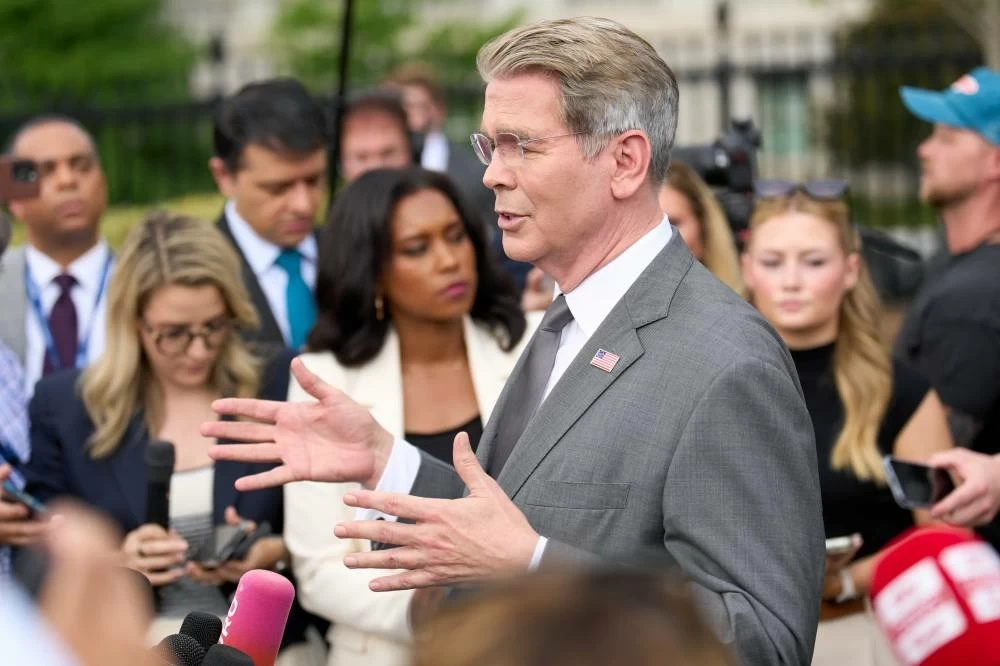
US Treasury Secretary Scott Bessent stated that the United States is finalizing its most severe sanctions regime to date against Iran, calling on international partners including Beijing to enforce the measures. Beijing rejected the pressure campaign, maintaining that unilateral sanctions will not resolve the diplomatic standoff. US Vice President JD Vance described economic leverage as Washington’s primary mechanism while acknowledging that balancing sanctions against global energy costs requires a delicate approach. Tehran condemned the planned US measures as illegal, warning that any government assisting the American sanctions strategy will be treated as an enemy state.
The economic confrontation coincides with heightened military activity across the region. The United States designated Hezbollah as an Iranian proxy, citing direct operational links to Iran’s Islamic Revolutionary Guard Corps, and announced fresh sanctions targeting the group following overnight Israeli airstrikes and artillery bombardments in southern Lebanon.
The strategic realignment occurs as the US Navy begins rotating its aircraft carriers out of the region following an extended operational deployment.