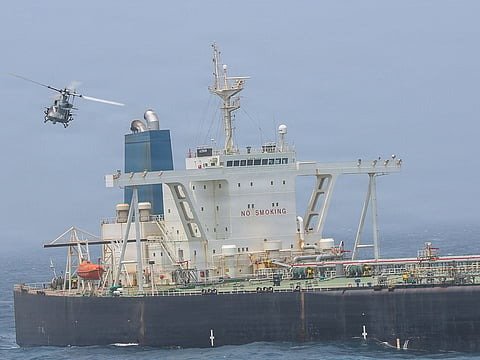
US Iran Conflict Enters New Phase After Troop Deaths
The conflict between the United States and Iran has entered a more dangerous phase, with the deaths of 16 American service members reshaping Washington’s military response and pushing the fighting further across the Middle East. US military personnel have increasingly become direct targets, regional bases are coming under attack, and hopes of reviving diplomacy are fading rapidly. The latest escalation came after two American troops were killed while defending against Iranian ballistic missile and drone attacks in Jordan, prompting the US military to launch fresh strikes against Iran’s Islamic Revolutionary Guard Corps.
The deaths mark an important turning point in the conflict, as the mounting toll among US personnel raises the political and military stakes for the Trump administration. Since fighting began on February 28, 16 American service members have been killed and more than 430 wounded. The US Central Command said the strikes were intended to “swiftly punish” the IRGC units responsible for the attack.
The conflict is no longer confined to maritime attacks or airstrikes inside Iran, with the war spreading across the Gulf as diplomacy fades and retaliation intensifies. The strategic waterway of the Strait of Hormuz, through which around a fifth of the world’s oil passes, has been a key focal point, but the latest developments suggest the conflict is expanding beyond this area.
The escalation of the conflict has significant implications for regional stability and civilian populations, as the US and Iran engage in a cycle of retaliation and escalation. The situation continues to deteriorate, with no clear end in sight, as the international community watches with concern the unfolding events in the Middle East.
This latest development is connected to the prior escalation of US-Iran tensions in the region, which has been building for months. The conflict has now entered a new phase, with the US and Iran locked in a cycle of violence and retaliation, and the international community calling for restraint and diplomacy to resolve the crisis.

UAE public holiday law may bring August long weekend
UAE Public Holiday Could Bring 3-Day Weekend in August
The UAE's public holiday transfer rule could bring a welcome three-day weekend in August for residents, with the Prophet Muhammad's Birthday potentially being moved to Monday, August 24. This shift, if approved, would create a long weekend, as the regular weekend would precede the holiday. The move is part of a 2025 Cabinet Resolution that allows certain public holidays to be transferred to the beginning or end of the week to create longer breaks, aiming to improve workplace well-being and support workforce planning.
Potential Impact on Residents and Employers
The potential three-day weekend would fall during the final week of the school summer break, with the 2026-27 academic year set to begin on August 31. This could provide a well-timed break for families before the new school year commences. Employers should retain flexible rosters until federal authorities publish the confirmed holiday date, as the transfer is not automatic and requires an official decision.The UAE's public holiday calendar includes the Prophet Muhammad's Birthday, but the final date and any change to the holiday will only be confirmed through an official announcement. Residents are advised to stay updated with the latest news for confirmation on the holiday dates.
How the Holiday Transfer Rule Works
The UAE Cabinet can move certain public holidays that fall during the week to the beginning or end of the week to create longer breaks. Such transfers are not automatic and require an official decision. According to the 2025 Cabinet Resolution, public holidays, except for Eid, can be moved to the beginning or end of the week. This rule is designed to provide more flexible and longer breaks for residents, enhancing their work-life balance.The potential long weekend in August is subject to official confirmation, but if approved, it would undoubtedly be a welcome break for UAE residents. As the summer heat continues, the possibility of an extended weekend is a positive note, offering residents a chance to relax, travel, or spend quality time with family before the new school year begins.

Emiratisation Drives UAE Private Sector Growth
Emiratis in Private Sector Hit 190,000
The number of Emiratis working in the private sector in the United Arab Emirates has exceeded 190,000 across nearly 32,000 establishments in the first half of 2026, according to the Ministry of Human Resources and Emiratisation (MoHRE). Local Emirati workers are increasingly being employed in the private sector, with this milestone highlighting the sector's growing commitment to national talent and the effectiveness of Emiratisation policies.
Emiratisation efforts have led to a significant increase in the number of Emiratis in the private sector, with nearly 32,000 establishments now employing over 190,000 Emirati workers. This development highlights the private sector's role in supporting the UAE's economic diversification and promoting Emirati participation in the workforce.
The Ministry of Human Resources and Emiratisation's report for the first half of 2026 confirms the progress made in Emiratisation, with the private sector demonstrating its capacity to absorb and retain national talent. This trend is expected to continue, driven by the UAE's strategic initiatives to enhance Emirati employment opportunities and develop a more inclusive and diverse workforce.
In the context of the UAE's broader economic strategy, this milestone reflects the country's efforts to promote economic growth, diversification, and sustainable development, as seen in previous initiatives such as the UAE's Vision 2021, which aimed to increase the number of Emiratis in the private sector.

UAE flight cancellations hit Kuwait routes
UAE Airlines Cancel Kuwait Flights Amid Tensions
Etihad Airways, Emirates, Air Arabia, and flydubai have cancelled flights to Kuwait as Gulf tensions disrupt UAE operations. Etihad has extended the suspension of selected Kuwait services until July 24, 2026. Passengers travelling between the UAE and Kuwait face disruption due to the cancellations, which were prompted by operational reasons amid heightened regional tensions.
The latest cancellations come after Iranian military strikes targeted US facilities in Kuwait and Bahrain, leading airlines to adjust their operations. Etihad Airways said flights EY653 and EY654 between Abu Dhabi's Zayed International Airport and Kuwait International Airport have been cancelled until July 24, 2026. Emirates has also cancelled flight EK857 from Dubai to Kuwait.
Kuwait International Airport had resumed operations on June 1, 2026, following a phased reopening plan, but the current tensions have led to further disruptions. The airlines have urged affected passengers to ensure their contact details are updated to receive the latest flight information.
This development is linked to the earlier announcement of US global travel caution issued in response to the escalating tensions in the region.

Dubai Smart Gates Eligibility Check
Skip Dubai Airport Queues with Smart Gates Eligibility Check
Travellers arriving at or departing from Dubai International Airport (DXB) can now check their eligibility for Smart Gates online before flying. The Smart Gates PreCheck tool allows passengers to scan their passports and confirm access to biometric gates, reducing immigration waiting times.
To check eligibility, travellers can use the Smart Gates PreCheck tool, which is accessible online. This tool takes less than a minute to complete and reveals whether passengers can skip traditional passport control queues and use biometric gates.
The General Directorate of Residency and Foreigners Affairs (GDRFA) Dubai has introduced this service to help travellers avoid traditional queues and utilize the expanding biometric border technology for faster processing. With this tool, passengers can clear immigration in just a few seconds.
| Category | Details |
|---|---|
| Eligibility Check | Smart Gates PreCheck tool |
| Processing Time | <td Less than a minute
Required documents for the Smart Gates PreCheck tool include:
- A valid passport
- Access the Smart Gates PreCheck tool online.
- Scan your passport using the tool.
- Confirm your eligibility for Smart Gates.
Last updated: July 20, 2026

Dubai Airport capacity near full
Dubai Airports Defy Regional Tensions, Operate Near Full Capacity
Dubai International Airport, a major hub in the UAE, is operating near full capacity despite the ongoing regional conflict. According to Paul Griffiths, CEO of Dubai Airports, the airport has maintained strong passenger traffic, with airlines rerouting flights and Emirates offsetting some foreign carrier shortfalls.
The airport's resilience can be attributed to its effective management and the increased capacity provided by Emirates airline. As a result, Dubai Airport's operations have not been significantly impacted by the regional tensions, and it continues to serve as a major transit point for travelers.
The strong passenger traffic at Dubai Airport reflects the UAE's aviation infrastructure and its ability to adapt to challenging situations. With Emirates playing a crucial role in offsetting the shortfalls of foreign carriers, the airport has been able to maintain its operations and provide a seamless travel experience for passengers.
The fact that Dubai Airport is operating near full capacity is a positive sign for the UAE's economy, which relies heavily on tourism and travel. The airport's ability to withstand regional tensions and maintain its operations is a reflection of the country's strong aviation infrastructure and its commitment to providing a world-class travel experience.
Regarding the Dubai Economic Agenda D33, the airport's resilience and ability to operate near full capacity is a significant achievement. The agenda aims to make Dubai a leading hub for trade, tourism, and investment, and the airport's performance is a key indicator of the city's progress towards this goal.
As the regional situation continues to evolve, it is likely that Dubai Airport will remain a critical transit point for travelers. With its strong infrastructure and effective management, the airport is well-equipped to handle the challenges posed by regional tensions and continue to operate near full capacity.