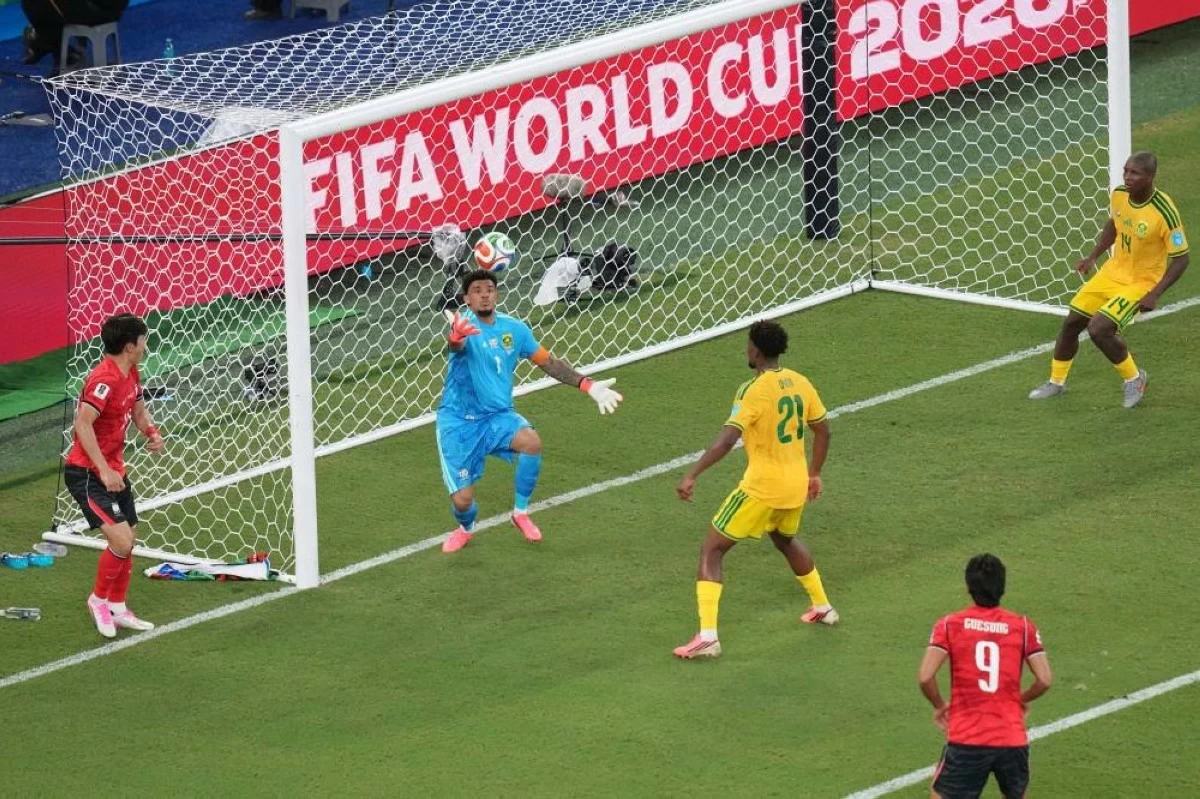
What is offside in football is the question that echoes through living rooms, sports bars, and stadium stands every time a goal celebration dies mid-roar. With the 2026 FIFA World Cup drawing billions of viewers into matches where a single VAR review can overturn a goal and swing a tournament, understanding the offside rule is no longer optional for anyone watching seriously. The call is fast, the lines are thin, and the stakes are real.
The Short Version
- A player is offside if, at the exact moment a teammate plays the ball, they are closer to the opponents’ goal line than both the ball and the second-last defender.
- Being in an offside position is not automatically a foul — it only becomes an offence if the player actively participates in play by receiving the ball, interfering with an opponent, or gaining an advantage.
- Offside cannot be called directly from a goal kick, throw-in, or corner kick under the Laws of the Game.
- VAR, and in some competitions semi-automated offside systems, can review tight calls using calibrated lines and player-tracking data to confirm or overturn decisions.
The Offside Rule in Football, Broken Down Simply
The rule hinges on a single frozen moment: the instant a teammate’s foot, head, or body makes contact with the ball to play it forward. At that exact frame in time, the position of every attacking player is assessed. If an attacker is closer to the opponents’ goal line than both the ball and the second-last opponent, they are in an offside position.
The second-last opponent is the key phrase most casual viewers miss. The goalkeeper typically occupies the last defensive position, so the second-last opponent is usually the deepest outfield defender. A player level with that defender is onside. Level counts as safe.
Critically, being in an offside position is not itself the offence. The offence is triggered only when that player becomes involved in active play: receiving the pass, challenging for the ball, or gaining a clear advantage from their position. An attacker lurking beyond the last defender who never touches the ball and plays no part in the move has committed no foul.
Where Most Viewers Get the Offside Call Wrong
The single most common source of confusion is timing. Offside is judged when the ball is played, not when it arrives. A striker can sprint from an onside position into an offside position after the pass is released and still be perfectly legal, because the snapshot that counts was taken at the moment of the kick.
Three specific situations also catch viewers off guard. A player cannot be offside directly from a goal kick, a throw-in, or a corner kick. Those restarts reset the offside clock entirely, which is why attackers can stand on the goal line during a corner without any flag being raised.
The reason the rule exists at all traces back to a practice known as goal-hanging, where attackers would simply station themselves permanently near the opponent’s goal waiting for a long ball. Without the offside law, defensive shape would collapse and the game would reduce to a contest of who could park the most players closest to goal. FIFA‘s Laws of the Game codify the rule to preserve competitive balance and reward coordinated attacking movement over static positioning.
VAR and Semi-Automated Offside Technology at the World Cup
At major tournaments, Video Assistant Referee systems give match officials a second look at offside decisions that are too close to call in real time. Reviewers draw calibrated lines across the frame to determine whether any part of an attacker’s body that can legally score a goal, an arm does not count, was beyond the second-last defender at the moment of the pass.
Some competitions have introduced semi-automated offside systems that use multiple cameras and player-tracking data to generate a three-dimensional model of player positions, reducing the time spent drawing lines manually and standardizing the process. Whether the 2026 World Cup has introduced specific new technology or rule amendments beyond what was in place at the previous tournament should be confirmed against FIFA‘s official competition regulations and match protocols, as those details remain subject to official verification.
What is not in dispute is the practical effect on viewers. A goal can stand for two minutes of celebration before a VAR review strips it away. Understanding that the review is checking a single frozen frame, not the full sequence of play, makes the wait and the outcome far easier to follow.
A Quick Reference: The Offside Rule at a Glance
| Scenario | Offside Called? |
|---|---|
| Attacker beyond second-last defender when pass is played, receives ball | Yes |
| Attacker level with second-last defender when pass is played | No (onside) |
| Attacker in offside position but does not touch or influence play | No offence |
| Attacker offside at moment of pass, but ball comes from a corner kick | No (corner restarts exempt) |
| Attacker offside at moment of pass, but ball comes from a throw-in | No (throw-in restarts exempt) |
| Attacker offside at moment of pass, but ball comes from a goal kick | No (goal kick restarts exempt) |
The table above covers the scenarios that generate the most debate during live broadcasts. Bookmark it before the next match and the flag, or the absence of one, will make immediate sense.
For the 2026 FIFA World Cup, offside decisions are determined using semi-automated offside technology that tracks player positions to help officials judge tight calls more quickly and consistently.
💡 Frequently Asked Questions
Can a player be offside in their own half of the pitch?
No. A player in their own half of the field cannot be in an offside position, regardless of where the defenders are standing. The offside rule only applies in the opponents’ half.
Does the whole body have to be offside, or just part of it?
Any part of the body that can legally score a goal counts for the offside assessment. That includes the head, torso, and legs, but not the arms. If even a shoulder is beyond the second-last defender at the moment the ball is played, the player is in an offside position.
What happens after a VAR offside review overturns a goal?
The goal is disallowed and play restarts with an indirect free kick awarded to the defending team from the position where the offside player was standing when the ball was played to them.


flydubai best connectivity award won for third time
flydubai Wins Best Connectivity Award for Third Time
The recent win of flydubai as the "Airline with the Best Connectivity in the Middle East" for the third time at the Business Traveller Middle East Awards 2026 highlights the airline's commitment to providing seamless travel experiences across the region. This award, voted by the public and readers of Business Traveller Middle East magazine, recognizes flydubai's expanding network and its role in linking Dubai to a wider set of regional and international cities. For corporate travel managers and procurement teams, this kind of recognition can influence preferred-carrier decisions, especially where network breadth, flight timing, and fewer-stop itineraries reduce total trip cost and employee downtime.
The award signals that flydubai is likely to continue its network growth, which could translate into new routes, added frequencies, or schedule optimization for key business corridors. This is particularly significant for Dubai-based travelers and companies, as it highlights flydubai's role in providing more direct routes, convenient departure times, and competitive fares, especially on underserved markets.
The award cited flydubai’s expanding network and continued launch of new routes as key factors underpinning its connectivity recognition in 2026.

Dubai Metro Expansion: Blue Line, Gold Line Routes
Dubai Metro Expansion: How Blue and Gold Lines Will Change Your Commute
If you're a daily commuter in Dubai, you're likely aware of the city's ongoing efforts to expand its Metro network. The latest development is the introduction of the Blue Line, a 14-station corridor scheduled to open in 2029, and the Gold Line, announced in 2026, which is planned to open in 2032. These new lines will connect key areas across the city, reshaping peak-hour demand on existing Red and Green interchanges.
For residents and businesses, the new lines will bring about significant changes to their daily commute. The Blue Line, with its 14 stations, will provide easier access to various parts of the city, while the Gold Line will further extend rail connectivity to major districts. As the city grows, the expansion of the Metro network is crucial to improve connectivity between key areas.
The Roads and Transport Authority (RTA) is leading the expansion efforts, following a staged delivery cycle that includes corridor planning, station-area design, procurement, and phased construction. With the Blue Line slated for 2029 and the Gold Line targeted for 2032, residents can expect multi-year construction impacts near worksites first, followed by network rebalancing once interchanges and new station nodes open.
Residents who live near the future station locations can expect significant changes to their daily commute. The new lines will bring about increased connectivity, making it easier to travel across the city. However, it's essential to plan ahead, considering the potential construction impacts and changes to bus feeder routes, park-and-ride usage, and taxi demand.
Businesses, too, will be affected by the new lines. The increased connectivity will bring about new opportunities for growth, but it's crucial to plan ahead, considering the potential changes to commuter catchments, new station-area footfall, and demand for feeder buses, parking, and last-mile services.
To stay ahead of the curve, it's essential to plan around the 2029 timeline and consider the potential impacts of the new lines on your daily commute and business operations. The RTA's expansion plans will undoubtedly bring about significant changes to the city's transportation environment, and being prepared is key to navigating these changes.
Here are the key takeaways from the Dubai Metro expansion plans:
- The Blue Line will have 14 stations and is scheduled to open in 2029.
- The Gold Line, announced in 2026, is planned to open in 2032.
- The new lines will connect key areas across the city, improving connectivity and reshaping peak-hour demand on existing Red and Green interchanges.
- Residents and businesses can expect multi-year construction impacts near worksites first, followed by network rebalancing once interchanges and new station nodes open.

Etihad Rail Passenger Services Launch Abu Dhabi–Fujairah Route on June 30
Etihad Rail passenger services will begin running between Abu Dhabi and Fujairah on June 30, 2026, five days from today, opening the UAE's first scheduled intercity rail corridor and giving residents an alternative to the roughly two-hour road journey across the Hajar Mountains. The operator has also confirmed that the full UAE passenger rail network will officially launch on September 30, 2026, setting a hard deadline for broader inter-emirate coverage that will reshape how millions of people move between the country's seven emirates.At a Glance: Etihad Rail Passenger Services
- Etihad Rail launches the Abu Dhabi–Fujairah passenger route on June 30, 2026, marking the start of scheduled intercity rail travel in the UAE.
- The full UAE passenger rail network is set to officially launch on September 30, 2026, expanding coverage beyond the initial corridor.
- The Abu Dhabi–Fujairah route is the first passenger corridor to go live under a phased rollout strategy, with the capital linked directly to the east coast.
- Ticket pricing, exact station stops, and timetable details have not yet been publicly confirmed by Etihad Rail ahead of the June 30 start date.
From Freight Corridors to Passenger Rail: The Strategic Shift
Etihad Rail spent years building its national network as a freight-first operation, moving industrial cargo across the country before a single passenger boarded. The June 30 launch flips that logic. Abu Dhabi to Fujairah is not a random first choice: the route connects the federal capital to the UAE's east coast, a corridor that sees heavy weekend leisure traffic and significant commercial movement between the two regions. Residents who currently drive that stretch, often sitting through mountain-road congestion on Thursday evenings and Friday mornings, will have a rail option within the week.The September 30 full-network launch date carries equal weight. Once additional routes come online, the rail system is expected to integrate with local transit networks, which could alter demand patterns on long-distance road travel during peak periods. For logistics operators and tourism businesses along the east coast, that September milestone is the more consequential one: it signals when rail-driven passenger volumes could start affecting staffing, capacity planning, and road-freight scheduling in a sustained way.Etihad Rail's September Network Launch: What Comes Next
The phased approach gives Etihad Rail three months between the Abu Dhabi–Fujairah corridor opening and the full network going live. That window is likely to be used for operational calibration, timetable finalisation, and potential announcements on fares and additional stops. Residents and businesses planning around the September 30 date should watch for those details, since route availability and ticketing structures will determine how quickly rail displaces private car travel on intercity journeys.Public transport in the UAE has historically been concentrated in urban metro systems, with no equivalent for inter-emirate distances. The Abu Dhabi–Fujairah train changes that baseline.| Milestone | Date | Route / Scope |
|---|---|---|
| First passenger services begin | June 30, 2026 | Abu Dhabi – Fujairah |
| Full UAE passenger rail network launch | September 30, 2026 | National network, all confirmed routes |
UAE Expands Visa-On-Arrival Eligibility
UAE Visa On Arrival Update: What You Need to Know
If you're planning a trip to the UAE, you'll be pleased to know that the country has expanded its visa-on-arrival programme to include eligible passport holders from six additional countries who meet residency requirements. This update is positioned as a travel-easing measure for 2026, alongside reminders that visa validity rules and travel advisories should be checked before flying.
The expansion described is tied to a visa-on-arrival pathway that typically applies only to specific passport holders and, in some cases, to travellers who can prove valid residency in certain third countries. Travellers should expect airline check-in staff to verify eligibility before boarding, including passport validity and any required proof of residency status.
For Filipino travellers, the visa-on-arrival stay period is 14 days, while other nationalities may have different stay periods. It's essential to note that visa durations and validity windows are not the same thing - for example, a 30-day visa may be valid for 40 days.
Travellers from the six additional eligible countries who meet the residency requirements can now enjoy a more streamlined travel experience. However, it's crucial to confirm the latest rules through official UAE immigration guidance before departure, as requirements can differ by nationality and carrier.
Here are the next steps to take:
- Check the official UAE ICP website for the latest visa-on-arrival eligibility criteria and requirements.
- Verify your passport validity and ensure you have the required proof of residency status.
- Confirm your travel details, including onward/return travel arrangements, before checking in for your flight.

Dubai Visa Status Check Online Guide
Check Your UAE Visa Status Online in Minutes
This guide is for UAE visa applicants who want to check their visa status online using the GDRFA Dubai and ICA portals. By following these steps, you can confirm your visa status and validity before traveling to the UAE.
| Portal | Description |
|---|---|
| GDRFA Dubai | For Dubai-issued entry permits and residency-related file checks |
The required documents for checking your UAE visa status online include:
- Passport number
- Nationality
- Date of birth
- Visit the GDRFA Dubai or ICA portal website.
- Enter your passport number and other required details.
- Review the returned record for your visa status and validity dates.
- Cross-check the results with your visa/entry permit PDF or stamp/permit number, if available.