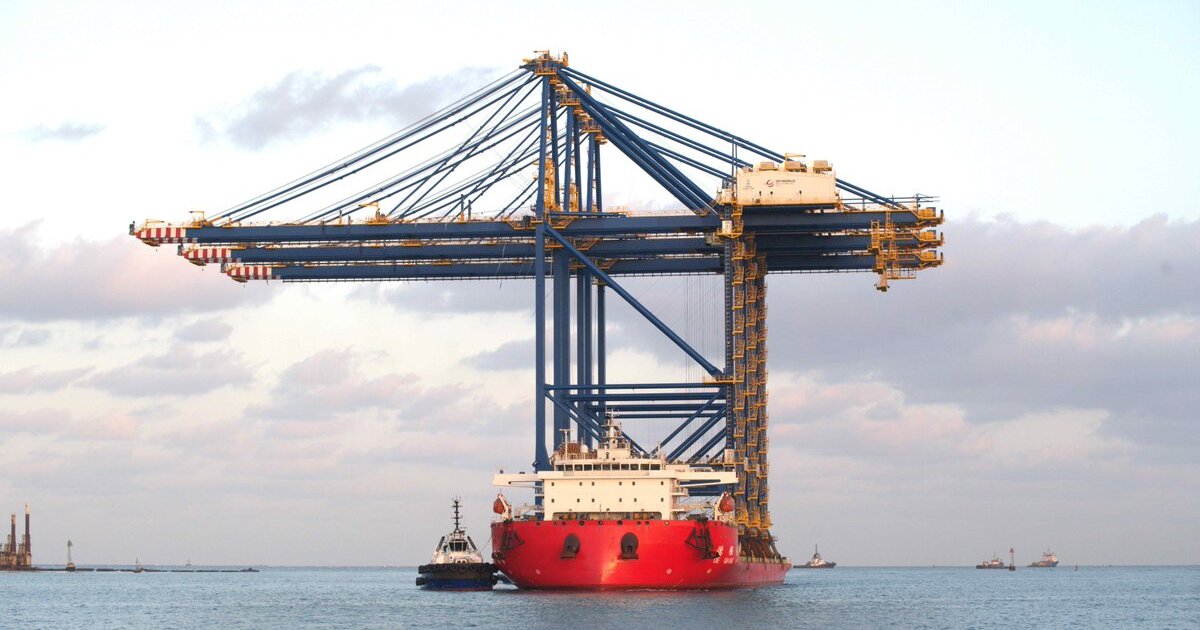
If you live in the UAE, you might not think a crane in Jeddah has anything to do with your weekly grocery run, your next online order, or your company’s restocking schedule. But the DP World Jeddah terminal sits on one of the busiest East to West trade corridors, and what happens at Jeddah Islamic Port can ripple across Red Sea shipping routes that feed into Gulf feeder networks and regional hubs.
The three new semi-automated quay cranes are part of a larger $800 million modernization program at DP World’s Jeddah Islamic Port terminal
Quick Overview
- DP World installed three semi-automated quay cranes at its container terminal at Jeddah Islamic Port, Jeddah, Saudi Arabia.
- Each crane is a 65-tonne quay crane, built to handle the world’s largest container ships with faster, more precise ship-to-shore moves.
- The cranes are expected to boost berth productivity and help the terminal serve multiple vessels simultaneously on major Red Sea shipping routes.
- For UAE supply chains, smoother Red Sea trade flows can support steadier delivery schedules and fewer congestion-driven delays.
DP World has installed three new semi-automated quay cranes at its container terminal at Jeddah Islamic Port in Jeddah, Saudi Arabia. The upgrade is designed to lift container terminal capacity and improve handling efficiency for ultra-large container ships. Each crane can lift up to 65 tonnes, and DP World says the new equipment is expected to raise berth productivity and help the terminal serve multiple vessels on major shipping routes at the same time.
Real talk for UAE residents and businesses: faster ship-to-shore handling at a significant Red Sea gateway can result in fewer scheduling issues when vessels arrive simultaneously, and more predictable delivery times for importers, retailers, and manufacturers across the GCC. While it is not a direct promise of cheaper freight in the immediate future, it represents the type of Ports and Logistics investment that can reduce the likelihood of delays escalating into prolonged disruptions.
Local trade environment
Jeddah Islamic Port is an important entry point on the Red Sea for Saudi Arabia’s imports, exports, and transfers. It is located on major routes connecting Asia, Europe, and the Middle East. This is significant for UAE households and businesses because maritime trade doesn’t move neatly between countries. Cargo often uses a combination of mainline services and smaller links that connect the Red Sea with the Arabian Gulf, affecting the availability and timing of everything from consumer goods to industrial supplies.
When a major Red Sea port operates efficiently, it positively impacts the entire supply chain. Conversely, inefficiencies can cause delays in schedules, equipment availability, and onward connections. This is why upgrades at Jeddah Islamic Port are closely monitored beyond Saudi Arabia.
Why cranes are important in simple terms
Quay cranes are the main machines that move containers on and off ships. They control how quickly containers are unloaded and loaded. If you’re not familiar with shipping, imagine them as the checkout counters of a port. Better equipment, when used effectively, can speed up the process.
DP World’s three new semi-automated quay cranes are designed to improve speed, accuracy, and safety. This means ships can be loaded and unloaded faster. Shipping companies value this because time spent at the dock costs money, and dependable port operations affect their decisions on where to stop and how to schedule their routes.
Red Sea resilience and why it is on everyone’s radar
The Red Sea is now a key area for trade, with shipping companies keeping a close eye on how much they can handle, how reliable they are, and how crowded it gets. When ports can manage many large ships arriving at once, the system is less likely to get stuck. This is where better efficiency at the docks becomes important. It helps prevent small delays from causing missed connections and cargo not being shipped.
For UAE importers and retailers, consistent service can aid in planning. For manufacturers, it means fewer unexpected issues with incoming materials. For consumers, it results in fewer “delayed” notifications and less frustration from out-of-stock items when supply chains are tight.
GCC maritime trade and the competitive knock-on effect
Port automation and capacity upgrades are part of a larger effort to update logistics and boost non-oil growth. As Saudi Arabia’s logistics sector grows on the Red Sea, competition among GCC gateways may increase. This competition often benefits customers with improved service quality, faster cargo handling, and more integrated options across the region.
DP World’s actions in Jeddah follow a clear plan: invest in equipment for very large container ships, improve terminal efficiency, and make the port more appealing for major services. For GCC maritime trade, this can provide more dependable routing choices and better network flexibility.
Numbers at a glance
| Item | What was installed / capability | Where it applies |
|---|---|---|
| New ship-to-shore cranes | 3 semi-automated quay cranes | DP World container terminal, Jeddah Islamic Port, Jeddah |
| Lift capacity per crane | Up to 65 tonnes | Handling containers for ultra-large container ships |
| Operational goal | Higher berth productivity and ability to serve multiple vessels simultaneously | Major Red Sea shipping routes |
What this changes for businesses and shoppers in the UAE
Before: When large ships arrive at the same time, terminals can become overwhelmed. If unloading slows down, schedules can be delayed, affecting connections and local distribution plans.
After: With three more semi-automated cranes, DP World is setting up the Jeddah terminal to move containers faster and manage more work at the dock. The goal is to reduce delays during busy times and improve the ability to handle several ships on important routes.
This does not mean every shipment will arrive sooner. Weather, network issues, and carrier choices still affect delivery times. However, in ports and port automation, having extra capacity at key points can make the entire system more reliable.
What to watch next
The true measure will be operational performance, including berth productivity during peak calls, vessel turnaround time, and the terminal’s ability to handle multiple vessels without queues. Currently, the facts are clear. DP World has introduced three semi-automated quay cranes at Jeddah Islamic Port, each capable of lifting up to 65 tonnes, with the objective of enhancing container terminal capacity and efficiency for the largest ships on Red Sea trade routes.