
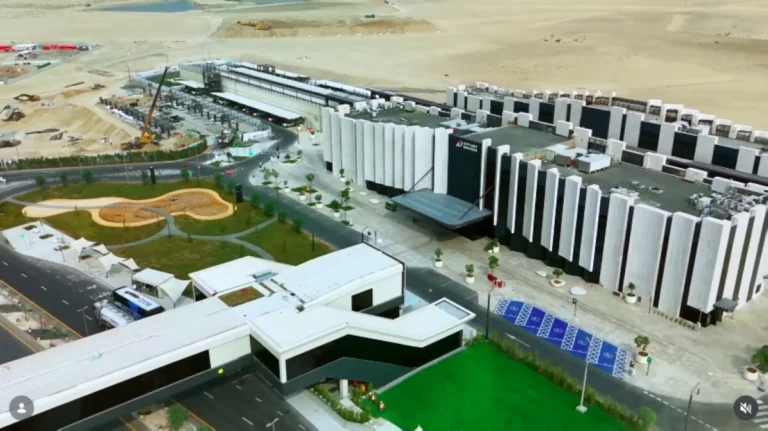
(Credit - RTA)
RTA AI Programme With University of Birmingham Sets Dubai’s Public Services on a Two-Year AI Countdown
The RTA AI Programme, launched by Dubai‘s Roads and Transport Authority in Q4 2025, signals a concrete shift in how one of the emirate’s largest public agencies plans to run its operations, and residents who rely on RTA services daily will feel the downstream effects as AI-enabled workflows begin replacing manual processes across the board.
What the RTA, University of Birmingham Partnership Actually Does
The collaboration pairs RTA employees with structured AI training delivered in partnership with the University of Birmingham, one of the UK’s leading research universities. The programme is designed to build practical AI capability inside RTA, not just theoretical awareness, so that staff can embed digital tools directly into institutional operations, from transport planning to customer service functions.
This is not a standalone training exercise. RTA has explicitly tied the programme to the Government of Dubai’s broader directive to transition public agencies toward self-executing, AI-led operations within the next two years, meaning by mid-2028 at the latest, the expectation is that AI-powered decision-making becomes standard across key government workflows, not optional.
Why This Reshapes Daily Service Expectations for UAE Residents
For anyone who uses Nol cards, books driving tests, registers a vehicle, or interacts with RTA’s customer service channels, the practical implication is faster turnaround times, more automated query resolution, and better forecasting of service demand, all outcomes that follow when an organisation builds genuine internal AI capability rather than outsourcing it. RTA serves millions of daily touchpoints across Dubai’s road, metro, bus, and marine transport networks, so efficiency gains at the institutional level translate directly into reduced wait times and more consistent service delivery for residents and commuters.
- Programme Launch Window: Q4 2025 (October, December 2025), now active
- Academic Partner: University of Birmingham
- Primary Beneficiaries: RTA employees across institutional operations
- Government Alignment: Dubai’s directive to achieve AI-led, self-executing government operations within two years
Who Feels This, and How
If you’re an RTA employee, this programme is a direct career development opportunity. The authority is investing in AI literacy at the workforce level, which means staff in planning, operations, customer experience, and infrastructure roles can expect structured exposure to AI tools that will increasingly shape how their day-to-day responsibilities are defined and measured.If you’re a daily commuter or RTA service user, the change is less immediate but more lasting. As trained staff apply AI-driven solutions across RTA’s service areas, expect incremental improvements in app responsiveness, predictive maintenance on infrastructure, and smarter traffic and transport management, the kind of upgrades that don’t arrive with a press release but accumulate into a noticeably smoother experience over 12 to 24 months.If you’re a vendor, technology integrator, or transport operator working with RTA, this signals a clear procurement and partnership direction. RTA is building internal AI competency, which means future tenders and service contracts will increasingly require AI-ready solutions, governance frameworks, and delivery teams that can operate within an AI-led institutional environment.Your Next Steps
1. RTA service users: Monitor the official RTA app and rta.ae for announcements on AI-enhanced service features as the programme’s outputs begin rolling into public-facing operations. 2. Vendors and technology partners: Review RTA’s procurement portal at rta.ae for updated tender requirements that may reflect AI-readiness criteria as the programme matures. 3. Government employees at other Dubai agencies: Track the Smart Dubai and Dubai Digital Authority portals for parallel upskilling initiatives, as RTA’s programme sits within a wider government-wide AI transition directive. 4. Job seekers targeting RTA: Factor AI literacy and familiarity with machine learning tools into your skills profile, RTA’s training investment signals that these competencies will carry weight in future hiring and internal promotion decisions.Dubai’s RTA has moved AI training from aspiration to structured delivery, anchoring it to a government-wide two-year deadline for AI-led operations. For residents, that means smarter public services are on a defined timeline, not an open-ended promise. The University of Birmingham partnership gives the programme academic rigour, but the real test will be how quickly trained staff translate classroom capability into measurable service improvements on the ground.

Netflix New Board Chair Search Begins as Hastings Exits
Netflix New Board Chair Search Opens as Reed Hastings Exits in June 2026
Netflix's new board chair search is now formally underway after co-founder and chairman Reed Hastings confirmed his departure from the company's board of directors, effective June 2026, to concentrate on philanthropic work.
A Founder's Final Exit: From CEO to Chairman to the Door
Hastings' board exit completes a two-stage withdrawal from Netflix's operational and governance structure. He stepped back from the CEO role in 2023, transitioning to the chairman's seat, a position he now vacates entirely. The Netflix board of directors, based at the company's headquarters in Los Gatos, California, will conduct the search for a successor chair.
The board chair role carries weight beyond ceremony. The chair sets board agendas, manages the cadence of governance, and functions as the primary institutional check on the CEO and executive team. In practice, the incoming chair will determine how assertively the board engages on capital allocation, content spending discipline, and strategic pivots, all pressure points in a streaming sector facing intense competition and evolving monetisation models including advertising tiers and password-sharing enforcement.
What This Transition Signals to Investors and Industry Partners
Founder departures from boards are closely tracked by institutional investors because they typically mark a shift from founder-led governance to a more conventional institutional model. That shift can alter risk tolerance, the pace of strategic decision-making, and the board's posture toward executive accountability. For Netflix, a company that has navigated subscriber volatility, a pivot to ad-supported tiers, and sustained high content expenditure, the identity and profile of the next chair will be read as a signal of the board's strategic direction.
- Departure Timing: June 2026, completing a governance transition that began with the 2023 CEO handover.
- Reason for Exit: Hastings is redirecting focus toward philanthropy, consistent with his prior public commitments in that space.
- Chair Search Status: The Netflix board of directors has confirmed it will seek a new chairman; no successor has been named as of June 6, 2026.
- Operational Continuity: Day-to-day management remains with the existing CEO and executive leadership team; the chair transition affects governance oversight, not operations.
Reed Hastings built Netflix from a DVD-by-mail startup into the world's dominant streaming platform, and his board exit marks the end of direct founder influence over its governance. The incoming chair will inherit a company that is profitable and globally scaled, but operating in a market where strategic discipline and board-level accountability are under constant investor scrutiny. Who the Netflix board selects next will say as much about the company's next chapter as any content slate or pricing decision.
UAE Ebola Travel Advisory: Visa Suspension Starts Now
UAE Ebola Travel Advisory Triggers Immediate Visa Suspension, Here's What Changes for You Today
If you're planning to travel abroad or sponsor a visa for someone from an Ebola-affected country, the UAE Ebola travel advisory issued today, June 6, 2026, changes everything about how you need to plan the next few weeks.
What Just Changed: Before and After at a Glance
| Area | Before June 6, 2026 | From June 6, 2026 |
|---|---|---|
| Visas for Ebola-affected country nationals | Processed under standard rules | Suspended with immediate effect |
| Travel guidance for UAE residents going abroad | General health advice | Five specific safety steps now in force |
| Symptom reporting obligation | Informal / self-managed | Seek medical advice promptly if unwell post-travel |
| Border screening posture | Routine | Heightened; entry controls tightened |
Breaking Down Who This Hits, and How
If you're a UAE resident planning international travel, the updated advisory asks you to follow five key safety steps before and during your trip. While the full list of steps comes from UAE authorities as reported by Gulf News, the core logic is straightforward: avoid direct contact with bodily fluids of any potentially infected person, maintain strict hand hygiene, steer clear of high-risk environments in affected areas, monitor your own health closely during and after travel, and, critically, seek medical assessment immediately if you develop fever or any compatible symptoms after returning. Do not wait it out at home.If you're a national of an Ebola-affected country holding a UAE visa application in progress, that application is now suspended as of today. This is not a processing delay, it is a suspension, meaning the clock has stopped until further notice. Employers, recruitment agencies, and families mid-way through sponsorship paperwork need to pause and await a formal update from the UAE's immigration authority before proceeding.If you're an employer, HR manager, or travel coordinator sending staff to or through regions currently classified as Ebola-affected, today's advisory creates an immediate duty-of-care obligation. Any itinerary touching affected countries should be reviewed now. Airlines and travel agents booking routes through those regions may face additional compliance checks at the ticketing and boarding stage.If you've recently returned from an Ebola-affected country and feel unwell, do not dismiss symptoms as ordinary travel fatigue. Ebola's early presentation, fever, fatigue, muscle pain, can overlap with common illnesses, but the risk calculus is different when you've been in an affected area. The advisory is explicit: get medical advice fast.Key Facts at a Glance
- Effective Date: June 6, 2026, the visa suspension and updated advisory are active now.
- Who Issued It: UAE authorities, as reported by Gulf News.
- Visa Impact: Nationals from Ebola-affected countries cannot currently obtain UAE visas; existing applications in process are suspended.
- Five Safety Steps: Outlined for UAE residents traveling internationally, covering contact avoidance, hygiene, high-risk area awareness, symptom monitoring, and prompt medical escalation.
- Transmission Reminder: Ebola spreads through direct contact with bodily fluids of an infected person or contaminated materials, not airborne transmission.
Your Next Steps, Right Now
1. Check your travel destination's status via the ICP (Federal Authority for Identity, Citizenship, Customs and Port Security) portal at icp.gov.ae, confirm whether your destination or transit point falls under the affected-country classification before booking or flying.2. If you are sponsoring a visa for a national from a potentially affected country, log in to the ICP smart services portal and check application status. Do not assume processing is continuing, contact ICP directly for clarification on suspended cases.3. Employers with staff in affected regions should update internal travel policies immediately and document the risk assessment. MoHRE (mohre.gov.ae) guidance on employer duty of care during health emergencies is the relevant reference point for labour compliance questions.4. If you feel unwell after recent travel, call the DHA (Dubai Health Authority) health information line or visit the DHA app (available on iOS and Android) to access a symptom checker and get directed to the appropriate facility. Do not self-diagnose and delay.5. Monitor official updates, the advisory landscape can shift quickly as outbreak status changes. Bookmark Gulf News health coverage and the ICP announcements page for real-time changes to the visa suspension scope.The UAE's updated Ebola travel advisory is a live, operational directive, not background guidance, and the visa suspension that came with it took effect the moment it was announced on June 6, 2026. Whether you're a traveller, a sponsor, or an employer, the window to act is now, not after your next scheduled trip review. Stay informed through ICP and DHA official channels, and treat any post-travel symptoms as a medical priority, not an inconvenience.## Frequently Asked Questions

Philippine Embassy Abu Dhabi Closed June 27: What to Know
Philippine Embassy Abu Dhabi Closed June 27, Here's What Filipino Residents Need to Sort Before Then
The Philippine Embassy in Abu Dhabi will be closed on June 27 for a holiday observance, pausing all regular consular counter services for the day, and if you have a passport renewal, document notarisation, or civil registry filing lined up, now is the time to move your schedule around it.
One Day Off the Calendar, But the Queue Doesn't Stop
The embassy has confirmed the June 27 closure and advised the public to monitor its official channels for updates. Regular consular services are set to resume the next business day, June 30, 2026, though anyone with a tight travel window or an employer deadline should factor in the likelihood of a heavier-than-usual queue on resumption day.
Embassy holiday closures typically pause all walk-in counter services and scheduled appointments in one go. That covers passport renewals, document legalisation and notarisation, civil registry filings, and travel-related paperwork. Emergency assistance channels may remain available depending on the mission's own protocol, but the embassy has not confirmed that detail in this announcement, so do not assume it. Check the Philippine Embassy Abu Dhabi's official advisory directly before making any plans.
How This Lands for OFWs and Employers Across Abu Dhabi
For the roughly 700,000-strong Filipino community across the UAE, a significant portion of whom are based in Abu Dhabi, a single-day closure can create a ripple effect that stretches well beyond 24 hours. PROs and HR teams processing employment-linked documents, onboarding paperwork, or travel clearances should build at least a two-business-day buffer around June 27 to absorb the backlog that typically builds up after any embassy closure.
- Closure Date: June 27, 2026 (holiday observance)
- Services Paused: All regular consular counter services, passport renewals, notarials, civil registry, document legalisation
- Resumption: Next business day (June 30, 2026)
- What to Do: Check the Philippine Embassy Abu Dhabi's official announcements before travelling to the mission; reschedule or confirm any existing appointments
The Philippine Embassy in Abu Dhabi's June 27 closure is a one-day pause, but for residents with time-sensitive documents, the real cost is the queue that builds up on either side of it. If your passport, notarial, or travel paperwork has a hard deadline in late June or early July, get it in before the 27th or plan for June 30 with extra time to spare. Always verify directly with the embassy's official channels, no third-party source, including this one, replaces a confirmed appointment or an official advisory.

Hungary work visa halt: 3 nations affected
Hungary Work Visa Halt Cuts Off Three Nationalities, Here's What Changes Today
If you are a citizen of Armenia, the Philippines, or Georgia planning to work in Hungary, the Hungary work visa halt that took effect on June 6, 2026 stops new applications in their tracks, and you need to know exactly where you stand right now.
What Just Changed, and What Stayed the Same
Hungary's government introduced new foreign-labor regulations that immediately suspend the issuance of fresh work visas for Armenian, Filipino, and Georgian nationals. The policy targets new applicants only; workers already employed in Hungary under a valid permit retain the right to file for an extension under the updated framework. There is no grace period for new applications, the cutoff is today.
The rationale is straightforward: Hungary is tightening control over third-country labor inflows. For employers who have been recruiting from these three markets, the disruption is immediate, open roles cannot be filled through these nationality pipelines until further notice, and any recruitment process that had not reached the visa-issuance stage before June 6 is now stalled.
Before vs. After: How the Rules Have Shifted
| Situation | Before June 6, 2026 | From June 6, 2026 |
|---|---|---|
| New work visa, Armenian national | Eligible to apply | Halted, no new issuance |
| New work visa, Filipino national | Eligible to apply | Halted, no new issuance |
| New work visa, Georgian national | Eligible to apply | Halted, no new issuance |
| Extension, existing worker (all 3 nationalities) | Eligible | Still eligible, extensions permitted |
| Employer hiring new staff from these countries | Standard recruitment pipeline | Immediate disruption, no new visa route |
Who This Hits Hardest, Broken Down by Situation
If you're a Filipino, Armenian, or Georgian national outside Hungary looking for work there, your application pathway is closed as of today. There is no workaround through a standard work visa. Your next step is to monitor whether Hungary opens any alternative legal channels or lifts the halt, but no timeline for that has been confirmed.If you're already working in Hungary on a valid permit from one of these three countries, you are not being expelled or immediately affected. You can still apply for a renewal when your current permit approaches expiry. Act early, prepare your extension filing well within the permitted renewal window and ensure your employer's sponsorship documentation is current and complete.If you're an employer or HR manager who relies on talent from Armenia, the Philippines, or Georgia, your sourcing strategy needs an immediate pivot. Recruitment pipelines for new hires from these nationalities are blocked, meaning you face longer lead times, higher compliance scrutiny on renewals for existing staff, and a need to explore alternative labor markets or internal mobility options now.Key Facts at a Glance
- Effective Date: June 6, 2026, no grace period for new applicants.
- Affected Nationalities: Citizens of Armenia, the Philippines, and Georgia.
- Extensions: Existing workers in Hungary from these countries remain eligible to renew their permits.
- Reason: New Hungarian government regulations aimed at controlling foreign labor inflows.
Your Next Steps, Numbered and Actionable
1. Check your application status immediately. If you submitted a work visa application before June 6, 2026, confirm with the relevant Hungarian immigration authority whether it was received and logged prior to the cutoff, timing of receipt may determine eligibility. 2. If already in Hungary, prepare your extension filing early. Do not wait until your permit's final weeks. Gather employer sponsorship documents, contract continuity evidence, and any supporting compliance paperwork now. 3. Employers: audit your workforce now. Identify all Armenian, Filipino, and Georgian nationals on your payroll, note their permit expiry dates, and begin renewal processes ahead of schedule to avoid gaps in legal work authorization. 4. Monitor official Hungarian immigration channels. The halt is tied to new government regulations; any amendment, exemption category, or lifting of the restriction will be announced through official Hungarian government publications, check these regularly if you are planning future applications.Hungary's work visa halt for Armenia, the Philippines, and Georgia is effective immediately, new applicants have no current legal route, while existing workers retain the right to extend. Employers dependent on these talent pools face real disruption to hiring plans and must rethink sourcing strategies now. The single most important action for anyone already in Hungary on a permit from these countries is to begin the extension process early, before the window tightens further.

Dubai International Airport AI Security Scanners Go Live
Dubai International Airport AI Security Scanners and Biometric Corridors Are Live, Here's What Changes at the Checkpoint This Summer
If you're flying through Dubai International Airport this summer, the AI-powered security scanners and a new AI immigration corridor now active at DXB change how fast, and how smoothly, you move from kerb to gate.
What's Actually New at DXB Right Now
Dubai International Airport has introduced AI-powered security scanners alongside a dedicated AI immigration corridor, both designed to increase the number of passengers processed per lane during the summer peak. The upgrade puts DXB in step with similar rollouts already underway at airports in Doha, Riyadh, Abu Dhabi and Muscat, a region-wide push to modernise passenger journeys as tourism volumes climb.
The operational logic is straightforward: AI-assisted screening reduces the need for manual document handoffs, while automated identity verification at immigration matches your face to your passport without a human officer handling the document at every step. The result, in theory, is a more predictable queue and fewer secondary-screening delays, provided your documents and carry-on comply cleanly with existing rules.
Before and After: What the Upgrade Means at Each Checkpoint
| Checkpoint | Before | After |
|---|---|---|
| Security scanning | Manual X-ray review, officer-led bag checks | AI-assisted scanner analysis; faster tray-to-tray throughput |
| Immigration processing | Officer-reviewed passport at each desk | AI immigration corridor with automated face-to-passport matching |
| Queue predictability | Variable; dependent on officer availability | Higher throughput per lane; reduced bottleneck risk at peak hours |
| Secondary screening risk | Triggered by manual flag | Triggered by AI mismatch, stricter on document and face consistency |
| Regional parity | DXB ahead of some peers | Now aligned with Doha, Riyadh, Abu Dhabi and Muscat |
How This Plays Out for Different Travellers
If you're a frequent flyer on a UAE residence visa, the AI immigration corridor is the change you'll notice most. Automated face-to-passport matching means less time standing at a manned desk, but it also means any discrepancy between your travel document photo and your current appearance (new beard, glasses, significant change since your last renewal) is more likely to trigger a secondary check. Keep your documents current and your General Directorate of Residency and Foreigners Affairs (GDRFA Dubai) records up to date.
If you're a tourist arriving on a visit visa, the AI corridor processes your entry faster than a traditional manned queue, particularly during the summer surge window when DXB handles some of its highest daily passenger volumes. The trade-off: the system is less forgiving of document irregularities that a human officer might resolve with a quick question, so ensure your passport has at least six months' validity and your entry purpose matches your visa category.
If you're a UAE national using an e-gate, the AI-enhanced scanning layer at security is the more relevant change. Carry-on compliance, liquids rules, prohibited items, is enforced with greater consistency when AI flags anomalies in the scanner image, so a borderline item that may have passed before is more likely to be pulled for inspection now.
- Effective date: Live at Dubai International Airport as of 6 June 2026
- Operator: Dubai International Airport (DXB)
- Technology scope: AI-powered security scanners and AI immigration corridor
- Regional peers: Similar systems active or rolling out in Doha, Riyadh, Abu Dhabi and Muscat
Your Next Steps Before You Fly
1. Check your travel document validity via the ICP (Federal Authority for Identity, Citizenship, Customs and Port Security) smart app, confirm your Emirates ID and passport details match exactly what the AI system will scan at immigration. 2. Verify your visa status through the GDRFA Dubai smart app (Dubai residents) or the ICP portal (federal visa holders) before travel to avoid any mismatch that triggers secondary screening. 3. Review carry-on rules on the Dubai Airports website before packing, AI scanner consistency means borderline items are flagged more reliably than before. 4. Arrive with standard lead time, the new system is designed to reduce queues, but during the first weeks of a technology rollout, allow your usual buffer in case lanes are being calibrated. 5. No new app or registration is required for the AI immigration corridor based on current information, the system works from your existing biometric travel document.Dubai International Airport's AI security scanners and AI immigration corridor are live now, ahead of the summer travel peak. The upgrade speeds up processing for compliant travellers but tightens the margin for document or carry-on irregularities, so the best preparation is simply making sure your paperwork is in order before you reach the checkpoint. DXB now joins Doha, Riyadh, Abu Dhabi and Muscat in operating next-generation screening, signalling that AI-assisted passenger processing is becoming the regional standard rather than the exception.