RTA finishes 726 modern bus shelters rollout
Dubai’s Roads and Transport Authority (RTA) has completed the installation of 726 modern bus shelters across key areas of the emirate. The upgrade matters for daily commuters because better waiting facilities and clearer route access can make public transport more comfortable, safer, and easier to use in Dubai’s heat and busy travel corridors.
RTA said the shelters have been distributed across Dubai as part of its push to improve service quality and operational efficiency in the public bus network. The authority added that the bus system supported by these stops serves more than 192 million riders annually, with some shelters acting as high-demand connection points linked to more than 10 bus routes.
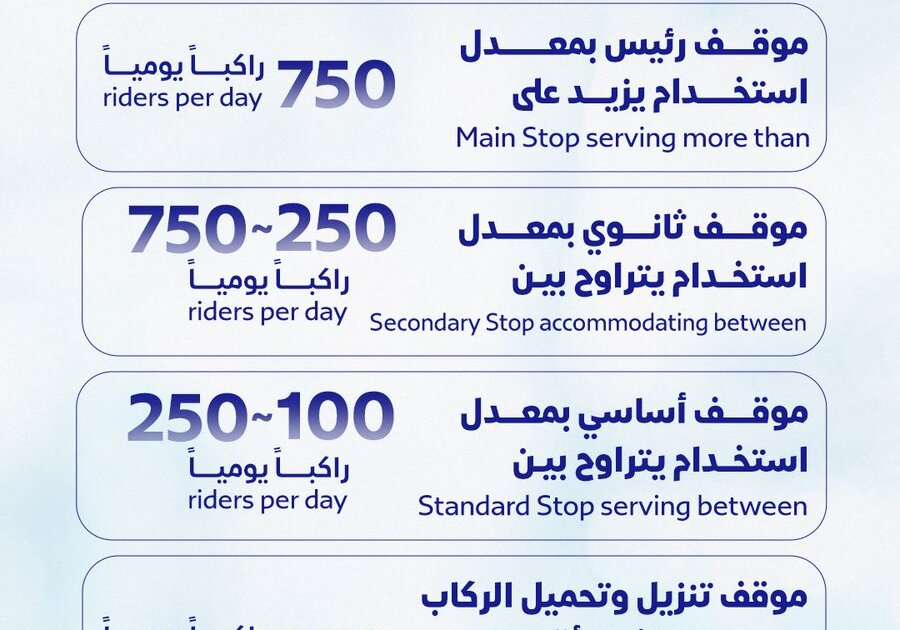
The project is designed around usage levels, with RTA categorising shelters into seven models based on demand at each stop. The approach targets stronger infrastructure at the busiest locations—where multiple routes meet and passenger movement is highest—while maintaining coverage across the wider network, including residential districts that feed into metro and tram stations.
For Dubai residents and workers, the biggest day-to-day impact is at high-traffic stops that function like mini interchanges. When a single stop connects more than 10 routes, clearer stop facilities and better organisation can support smoother boarding and transfers, helping the network run more consistently and making it easier to choose buses for first- and last-mile trips instead of short car journeys.
A common scenario is a commuter travelling from a residential area to a metro station using a feeder bus, then switching to another bus route after work. At multi-route stops, upgraded shelters can reduce confusion about where to wait and which service to board, especially during peak hours and late evenings.
- Project owner: Dubai Roads and Transport Authority (RTA)
- What was completed: Installation of 726 modern bus shelters across Dubai
- Network scale cited by RTA: More than 192 million riders annually
- Operational detail: Some shelters connect to more than 10 bus routes
Check your nearest stop details and route options on RTA’s official channels before you travel, especially if you use multi-route shelters for transfers.
e& money launches digital gold buy/sell in UAE with SafeGold
e& money adds in-app digital gold in UAE
e& money has launched a digital gold buy-and-sell service in the UAE with SafeGold, allowing users to trade 24K gold (99.99% purity) directly inside the e& money app. The move matters for residents because it brings a low entry point — from AED 10 — into a familiar wallet app, with options to redeem gold when needed.
The new e& money digital gold feature is being rolled out UAE-wide and is positioned as a small-ticket way to build gold holdings without buying a full bar or coin upfront. e& money said customers can buy, sell and redeem 24K (99.99% purity) gold through the app, starting from AED 10.
The service works as an app-based gold holding recorded in small amounts, rather than requiring a large one-time purchase. SafeGold supports the back-end side of the product, including secure storage and delivery support for customers who choose redemption, while e& money provides the in-app experience for buying and selling.
For UAE consumers, the biggest impact is convenience and accessibility. Gold is a common savings and gifting choice across the Emirates, and an AED 10 starting point makes it easier for younger earners and first-time investors to build a regular habit, while still dealing in bullion-grade 24K purity.
A typical use case is a resident setting aside small amounts weekly inside the app, then selling instantly back into cash when they need liquidity, or choosing redemption when they want physical gold. Users should still confirm the app's pricing method, any spreads or charges, and the redemption terms before placing their first order.
- Service: Digital gold buy, sell and redemption inside the e& money app
- Partners: e& money (fintech arm of e&) and SafeGold
- Gold purity: 24K (99.99% purity)
- Minimum start: AED 10
Check the e& money app's disclosures for pricing, redemption conditions, and any delivery-related terms before you buy or redeem gold.

Dubai Municipality completes Phase 1 of Al Quoz Creative Zone sewerage project
Al Quoz gets major sewerage and drainage upgrade
Dubai Municipality has successfully completed Phase 1 of the Al Quoz Creative Zone sewerage project, providing upgraded sewerage and stormwater infrastructure in one of Dubai’s busiest industrial and creative hubs. This milestone is significant for businesses and daily commuters in Al Quoz, as enhanced drainage and utility capacity minimize disruptions during heavy rainfall and support growth across hundreds of plots.
Dubai Municipality said Phase 1 of the Sewerage and Stormwater Network Development Project in Al Quoz Creative Zone was delivered at a cost of Dh250 million as part of a wider Dh500 million programme to upgrade wastewater and rainwater infrastructure in the district.
The Dubai Municipality stormwater and sewerage network is designed to serve Al Quoz Industrial Areas 1, 2, 3, and 4, along with the corridor between Sheikh Zayed Road and Al Khail Road. This upgraded system aims to improve sewerage and stormwater management in Al Quoz, minimizing disruptions during heavy rainfall and enhancing service reliability for businesses throughout the area.
In Al Quoz, where warehouses, logistics yards, workshops, and creative spaces coexist, the upgraded drainage system enhances business continuity and public health. Improved stormwater management reduces surface water pooling, preventing delivery delays, protecting stock in ground-floor units, and ensuring easy access for staff and customers throughout this extensive industrial area.
A typical impact is evident during heavy rain: enhanced drainage capacity keeps internal roads and entry points to industrial plots accessible, minimizing downtime for loading bays and last-mile movements between Sheikh Zayed Road and Al Khail Road. For tenants and landlords, more reliable utilities facilitate smoother planning of expansions without service interruptions.
Al Quoz Creative Zone sewerage project:
| Item | Confirmed detail |
|---|---|
| Phase 1 cost | AED250 million |
| Total project investment | AED500 million |
| Coverage area | 1,600 hectares |
| Plots covered | More than 1,507 plots |
| Areas served | Al Quoz Industrial Areas 1–4 and the corridor between Sheikh Zayed Road and Al Khail Road |
| Phase 1 completion | April 2026 |
- Project: Sewerage and Stormwater Network Development Project in Al Quoz Creative Zone
- Delivered by: Dubai Municipality
- Goal: An integrated, adaptable and sustainable sewerage and stormwater system
- Service footprint: Al Quoz Industrial 1–4 plus the Sheikh Zayed Road–Al Khail Road corridor, covering 1,600 hectares and 1,507+ plots
The Al Quoz sewerage and stormwater upgrade is positioned as infrastructure support for the Al Quoz Creative Zone’s integrated urban model, aligning utilities with the district’s industrial-and-creative mix.

UAE fuel Prices Next Month: The global signals that usually shape the petrol and diesel price
As April moves into its second half, attention in the UAE turns to a regular monthly event: the UAE Fuel Price Committee’s update of petrol and diesel prices for the next month. For families, this affects weekly budgets and school trips. For businesses, it changes transport costs, delivery prices, and daily inflation calculations. Fuel prices at stations across the Emirates are linked to global oil markets, especially Brent crude and refined fuel prices, with local distribution and operating costs added.
The April 2026 increase was driven by stronger global oil markets and elevated regional risks, as shipping and insurance costs rose due to tensions impacting Sea routes and broader security concerns in the Middle East.
The UAE Fuel Price Committee raised fuel prices for April 2026. Diesel saw the biggest increase compared to other fuels. The committee said the price rise is due to changes in the global oil market and aims to keep local prices in line with world trends.
Throughout April, market signals influencing UAE fuel prices next month are closely monitored, with the last one to two weeks holding particular significance as price averages and market sentiment stabilize. This is why global energy market data releases, OPEC+ announcements, and shipping risks near the Red Sea and Strait of Hormuz can suddenly have a direct impact on residents in Abu Dhabi, Dubai, Sharjah, and beyond.
What You Need to Know Before the Upcoming UAE fuel Prices Next Month Reset
- UAE fuel prices monthly updates tend to follow global crude and refined product pricing, with local distribution costs and policy settings affecting the final pump price.
- Brent crude price trends are important, but petrol and diesel prices can diverge when refined product crack spreads change, particularly shifts in the gasoline crack spread and diesel crack spread.
- OPEC+ production cuts, compliance levels, and any reintroduction of barrels can swiftly alter supply expectations, impacting oil prices and regional wholesale fuel costs.
- Geopolitical tensions along Red Sea routes and the Strait of Hormuz can increase shipping costs by adding risk premiums to freight rates, insurance, and market sentiment.
How the UAE Petrol and Diesel Price Update Works Explained
The UAE petrol and diesel prices are usually updated monthly for the upcoming month. The committee’s decisions primarily consider global crude oil and refined product benchmarks, followed by local factors like distribution and station operating costs. Additionally, policy settings play a key role in determining how global price changes are reflected at the pump.
UAE Fuel Price Committee: "UAE fuel prices are usually updated monthly and generally reflect changes in global oil and refined product markets."
This explains why Emirates fuel prices can fluctuate even when local driving habits remain unchanged. Fuel costs are influenced by global factors, and the UAE is integrated within the worldwide pricing system for oil and refined fuels.
Refined Fuel Markets: Understanding the Difference Between Petrol and Diesel
Drivers often assume petrol and diesel prices move together, but that is not always the case. The difference lies in refined product cracks, a term used to describe refining margins and the specific supply-demand dynamics for each fuel. Gasoline and diesel crack spreads can widen or narrow depending on refinery production levels, outages, and shifting demand patterns. This can cause petrol prices to rise while diesel prices fall, or vice versa, even when Brent crude remains stable.
OPEC+ Supply Policy: Key Meeting Highlights Shaping Market Expectations
OPEC+ decisions quickly affect how people expect future supply to look with just one announcement. Traders watch production goals, how well members follow them, and if any previously held-back oil will return. Talk of production cuts can make people expect less supply, while talk of more output can make them expect more. These expectations can change prices even before oil is sold, which then affects the monthly update of UAE fuel prices.
Geopolitics and Shipping: Navigating Risks in the Red Sea and Strait of Hormuz Routes
Energy markets factor in risk when shipping routes become less predictable. Disruptions or rerouting around the Red Sea and Suez Canal can increase freight and insurance costs while extending delivery times. Additionally, the Strait of Hormuz is closely monitored due to the significant volume of energy passing through this critical chokepoint. Even without physical supply interruptions, risk premiums can raise benchmark prices and impact final delivery costs.
Refinery Shutdowns and Repairs: The Primary Reason for Pump Replacements
Refinery outages can restrict the supply of gasoline and diesel, even when crude oil is abundant. Seasonal maintenance often amplifies this effect when several facilities reduce output simultaneously. When capacity limits are reached, prices for refined products can surge, reflecting in the next UAE petrol or diesel price update, even if Brent crude prices remain unchanged.
Global Demand Seasonality: Trends in Driving, Industry, and Travel Cycles
Demand fluctuates throughout the year. Seasonal driving increases gasoline consumption during peak travel periods. Diesel and gasoil demand varies with industrial activity, freight movement, and heating requirements in colder regions. Aviation and travel cycles also influence refinery economics and product balances. These variations are important because they affect the availability of specific products, impacting crack spreads and wholesale price benchmarks.
Inventories, Economic Data, and the US Dollar: Key Numbers That Can Influence Market Sentiment
Weekly inventory reports can rapidly influence prices, particularly when they contain unexpected data. The US Energy Information Administration (EIA) weekly inventory figures are closely monitored to assess near-term supply and demand dynamics. Additionally, the International Energy Agency (IEA) oil market report provides valuable insights into broader supply and demand forecasts.
Macro conditions are equally important. Markets respond to growth forecasts, inflation data, and interest rate signals, especially those from the Federal Reserve. Since oil is priced in US dollars (USD) and the UAE dirham is pegged to the USD, the strength of the US dollar impacts global pricing dynamics and risk appetite in energy markets. While the peg minimizes daily currency fluctuations for residents, it does not shield the UAE from global pricing trends driven by the US dollar.
Quick Reference: The Signals and Their Typical Market Movements
| Signal | What it is | Why UAE motorists and businesses watch it |
|---|---|---|
| Brent crude price | Global crude benchmark | Sets the tone for wholesale fuel costs that feed into Emirates fuel prices |
| Refined product cracks | Refining margins and product tightness | Explains why Petrol and Diesel can move differently in the same month |
| Gasoline crack spread | Gasoline margin versus crude | Often tracks the pressure behind the UAE petrol price update |
| Diesel crack spread | Diesel or gasoil margin versus crude | Often tracks the pressure behind the UAE diesel price update |
| OPEC+ supply policy | Targets, compliance, cuts or returns | Moves supply expectations that can reprice Oil quickly |
| Shipping costs Red Sea and Suez Canal | Freight, insurance, rerouting | Can lift delivered costs and add risk premia in Energy Markets |
| Strait of Hormuz risk | Chokepoint risk premium | Can move sentiment and pricing even without an actual disruption |
| IEA oil market report | Monthly market balance and forecasts | Shapes expectations for global oil demand and supply |
| EIA weekly inventories | High frequency stock data | Can trigger short term price swings that influence monthly averages |
| US dollar strength and AED-USD peg | Dollar pricing and UAE currency link | Influences global pricing behaviour and imported Inflation dynamics |
| Refinery outages | Unplanned shutdowns and constraints | Can tighten gasoline or gasoil prices even if Brent is stable |
| Seasonal driving demand | Shifts in consumption patterns | Can lift gasoline benchmarks and widen crack spreads |
Budget and Pricing Effects in the Emirates
For consumers, the best way to interpret the next update is to separate crude oil from refined products. If Brent crude prices are shifting but crack spreads remain stable, petrol and diesel prices are likely to move together. However, if refined product benchmarks tighten, petrol and diesel prices may diverge even when crude prices are steady. For businesses that price deliveries, transportation, or services, the monthly reset is crucial because it can rapidly alter transport costs, which in turn can contribute to broader inflationary pressures.
In the final days of April, the key indicators to watch are the direction of Brent crude, the performance of gasoline and gasoil benchmarks, and any changes in risk related to shipping routes. These factors, along with OPEC+ announcements and unexpected inventory changes, typically account for the majority of fluctuations in UAE fuel prices for the following month.

Proud of UAE campaign appears on phone networks across UAE
Why your phone says 'Proud of UAE'
Residents all across the entire UAE witnessed their mobile network label change to display the phrase 'Proud of UAE' this April, as an integral part of a comprehensive nationwide campaign designed to boost and celebrate national pride throughout the country.
The 'Proud of UAE' campaign, launched by His Highness Sheikh Mohammed bin Rashid Al Maktoum, aims to inspire unity and active participation, encouraging everyone to proudly display the UAE flag.
Across the UAE, residents and organisations visibly participated in the ‘Proud of UAE’ initiative by displaying the national flag and sharing pride-themed messages in homes, streets and public spaces.
In April 2026, mobile users across the UAE noticed their network labels displaying ‘Proud of UAE,’ showcasing a unified national pride message through telecom identifiers. In the UAE, telecom network names can be temporarily customized to broadcast nationwide public-awareness campaigns. During this period, several handsets featured ‘Proud of UAE’ as their carrier name, reflecting a coordinated effort to promote national pride.
Across the emirates, the campaign also creates a shared national moment that can lift engagement around community activity tied to national identity and the UAE flag.
- What changed: The network name on many phones now displays 'Proud of UAE'.
- What it means: A nationwide unity and national-pride campaign encouraging participation, including displaying the UAE flag.
The 2026 ‘Proud of UAE’ campaign encouraged citizens and residents to express their pride in the nation through iconic symbols, especially the UAE flag, paired with messages celebrating unity and a deep sense of belonging. Launched by His Highness Sheikh Mohammed bin Rashid Al Maktoum, the initiative inspired people across the country to proudly display UAE flags and share heartfelt messages of national pride in a unified celebration of togetherness.

Aani instant payments UAE tops 12.5 million users, merchants hit 774,000
Aani crosses 12.5 million users in UAE
Aani, the UAE's national instant payments platform, has exceeded 12.5 million users, according to Al Etihad Payments, a subsidiary of the Central Bank of the UAE (CBUAE). This milestone highlights the growing adoption of real-time bank transfers as a mainstream method for payments and receipts across the country.
Al Etihad Payments reported that recent operational data reveals a rapid increase in usage, with transfers rising sixfold and merchant adoption expanding to 774,000 across the UAE. This update highlights Aani as a rapidly growing component of the nation's essential payments infrastructure, alongside cards and digital wallets.
Aani facilitates near real-time money transfers that occur directly between bank accounts, significantly reducing the delays and friction often associated with traditional bank transfer methods. Functioning as national payment rails under the oversight of a Central Bank-linked entity, this innovative platform is purposefully designed to scale effortlessly across a wide range of banks and merchants, all operating on a unified and standardized network infrastructure.
For the UAE economy, a broader adoption of Aani instant payments accelerates the transition to a more digital, cash-light market, particularly in high-frequency sectors like groceries, food and beverage, delivery, and everyday services. For SMEs, faster settlements enhance cash flow visibility and minimize manual reconciliation efforts by ensuring payments arrive promptly and reliably.
For consumers, the key change is significant: as more locations now accept account-to-account payments, allowing transfers to be completed in seconds instead of waiting for processing times. As more merchants adopt this system, instant payments become increasingly valuable beyond person-to-person transfers, gradually replacing cash for everyday purchases.
- Platform: Aani, the UAE's national instant payments platform
- Announced by: Al Etihad Payments (subsidiary of the Central Bank of the UAE)
- Latest user milestone: 12.5 million users
- Network scale: Transfers up sixfold; 774,000 merchants on the network
Aani now serves 774,000 merchants across the UAE, expanding instant payments beyond person-to-person transfers into everyday retail and services.
Check with your bank's app or digital banking channels to see how Aani instant payments are enabled and where you can use them for transfers and merchant payments.