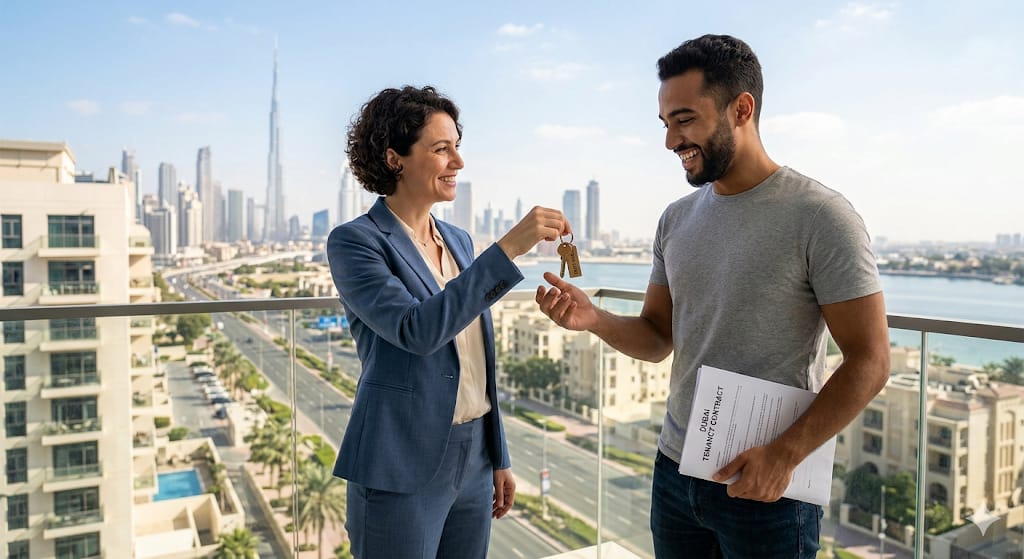
Dubai tenants gain leverage as rent growth cools
Across Dubai neighborhoods, from Jumeirah Village Circle (JVC) to Dubai Marina, tenants renewing Ejari-registered leases in 2026 are more confident as annual rent growth slows to about 4-6%. This change helps tenants get lower renewal rates or better terms by using the RERA Rental Index and similar listings to negotiate with landlords.
Effects on Dubai Tenancy Renewals and Payment Conditions
At renewal, the legal benchmark continues to be the Dubai Land Department’s RERA Rental Index, which landlords and tenants rely on to assess any proposed rent increases for units in areas like Business Bay, Downtown Dubai, and Al Barsha. Tenants can enhance their negotiation position by providing comparable listings—matching tower, layout, view, and parking allocation—from current offers and recent transactions, then requesting a revised proposal that aligns with the index level for that specific unit type.
Negotiations in Dubai often cover more than just rent. They also include cheque payment plans and cash-flow terms, especially for tenants using post-dated cheques from local banks. In buildings managed by top operators in Dubai Hills Estate and JLT, tenants often trade a faster renewal decision and good payment history for fewer cheques, a set renewal date, or a written promise on maintenance response times.
Inclusions are a secondary consideration. Tenants often negotiate items such as parking, repainting, cleaning, minor repairs, and appliance replacements. These agreements are documented in the tenancy addendum attached to the Ejari record. Utilities and cooling services vary by community—for example, DEWA handles electricity and water, while district cooling is common in areas like Dubai Marina and JBR. Tenants should ensure they clearly understand who is responsible for each cost before signing the lease.
Policy debates on rent caps and the shift to monthly rent payments are actively shaping housing discussions in Dubai. These talks are already impacting lease renewals in Deira, Bur Dubai, and newer freehold developments along Sheikh Zayed Road. Tenants seeking greater flexibility prefer payment schedules that align with their salary cycles. Meanwhile, landlords provide more favorable terms for longer lease commitments and emphasize clear documentation to guarantee price stability.
Quick Guide to Dubai Rent Negotiations
- Primary benchmark: RERA Rental Index for renewal increase positioning.
- Contract system: Ejari registration governs most long-term residential leases in Dubai.
- Negotiation targets: Rent, number of cheques, inclusions (parking/painting/cleaning), maintenance commitments.
- Market signal (2026): Annual rental growth running about 4–6%.
- Payment trend: Monthly rent payments are under active discussion as a market shift.
In June 2026, the Dubai Land Department launched Flexi Rent, letting tenants pay in monthly, quarterly, or semi-annual instalments instead of the traditional one lump sum. This is optional, not a blanket mandate: landlords have to opt in, and post-dated cheques remain fully valid where they haven’t. Third-party platforms like Keyper (via Property Finder) offer a similar model on select listings.
The appeal is matching rent payments to salary schedules and easing the upfront burden of multiple-cheque requirements, but it isn’t automatically cheaper: a monthly structure is a cash-flow convenience, not a discount on rent, and some landlords price it slightly higher to offset the certainty they lose compared to post-dated cheques.
Check the RERA Rental Index HERE before you reply to a renewal notice, then send your landlord a single counteroffer that bundles rent, cheque count, and written inclusions, and file the agreed terms into the Ejari renewal so the building management in your community enforces them.