(Credit - travelsdubai.com)
Dubai Airport Streamlines Entry with New Smart Gates Verification Tool
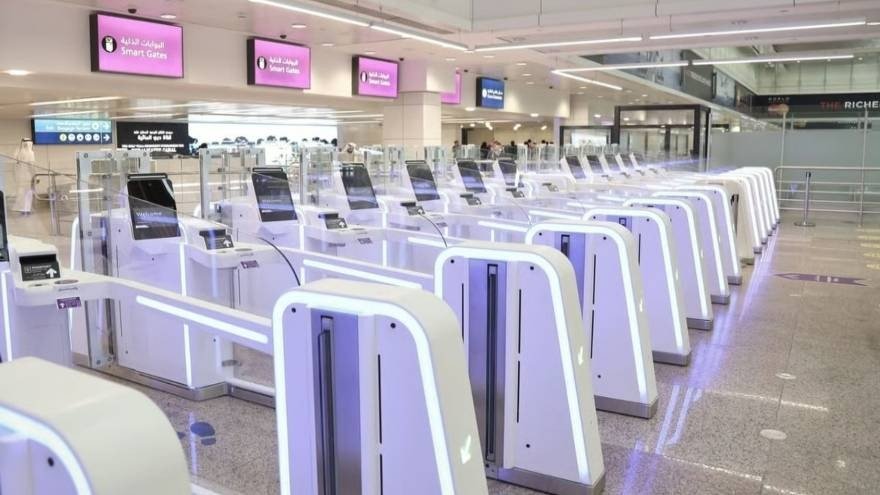
Dubai International Airport has introduced a new verification system to check Smart Gates eligibility before passengers reach immigration. This move aims to prevent delays for travelers who do not meet Smart Gate requirements, streamlining entry procedures for all.
The new tool is part of Dubai Airport\’s efforts to enhance the travel experience and reduce wait times. By verifying Smart Gates access before immigration, the airport can redirect passengers who are not eligible to use the Smart Gates, ensuring a smoother and more efficient process for those who are.
This development is expected to have a positive impact on travelers, particularly those who frequently use Dubai International Airport. With the new verification system in place, passengers can expect a more streamlined and efficient entry process, reducing the likelihood of delays and congestion at immigration.
The introduction of this new tool is a significant step forward in Dubai Airport\’s efforts to improve the overall travel experience. As the airport continues to grow and expand, the implementation of innovative solutions like this verification system will be crucial in maintaining high standards of efficiency and customer satisfaction.
In line with Dubai\’s vision for a seamless and efficient travel experience, this new verification system reflects the airport\’s commitment to innovation and customer-centricity. As the travel industry continues to evolve, Dubai International Airport is at the forefront, leveraging technology to enhance the travel experience and set new standards for airports around the world.

Vietnam Plans Social Media Ban for Under-16s
Under-16s Face Social Media Posting Ban in Vietnam
Vietnam is planning to force social media platforms to ban users under 16 from posting content, commenting, or reacting to posts. The draft decree, reviewed by Reuters, aims to ensure children use social media in an age-appropriate environment and protect them from inappropriate risks. This move aligns with a growing international effort by governments to enhance online safety and protect children's mental health.
The proposed rules would require social media accounts belonging to children under 16 to be registered using the information of a parent or legal guardian, who would be responsible for supervising the content viewed and the amount of time spent on the platforms. Social media companies would also have to use technical measures to identify child users and ensure age-appropriate content distribution. The draft decree also requires platforms to provide the highest level of privacy protection for child accounts and to proactively detect, warn, and block access to content related to violence, pornography, gambling, drugs, suicide, and other harmful material.
Deputy Culture Minister Phan Tam stated that the primary objective is not to ban or excessively restrict children's access to social media but to ensure they are placed in an age-appropriate environment and protected from inappropriate risks. This proposal reflects growing concern among governments worldwide about online safety and the impact of social media and harmful content on children's mental health. Other countries, such as France and Australia, have also imposed bans or restrictions on social media access for minors.
To comply with the proposed rules, parents or legal guardians of children under 16 will need to register their child's social media accounts using their own information. They will be responsible for supervising the content viewed and the amount of time spent on the platforms. Social media companies will need to implement technical measures to identify child users and ensure age-appropriate content distribution.
The proposed restrictions on online gaming for minors are also part of the draft decree. While the exact details of these restrictions are not specified, they aim to limit the amount of time minors spend on online gaming platforms.
| Category | Restriction |
|---|---|
| Social Media Posting | Under-16s banned from posting, commenting, or reacting |
| Account Registration | Parent or legal guardian must register child's account |
| Content Supervision | Parent or legal guardian responsible for supervising content viewed |
| Online Gaming | Restrictions proposed, but exact details not specified |

China Landslide Death Toll Rises to 11
Landslide in China Claims 11 Lives, 50 Still Missing
The death toll from a landslide in southwestern China's Chongqing Municipality has risen to 11, with rescuers still searching for 50 missing people in the rubble, where there are "no signs of life", according to Pengshui authorities. Rescuers have been deployed to the scene in Pengshui County, where the landslide swept away several residential buildings at the foot of a mountain and along a riverbank, injuring 10 people.
Specialist teams are continuing to carry out the search for remains in a scientific and orderly manner, working round the clock, despite the challenging conditions due to the massive volume of the landslide debris and poor stability of the slopes. The disaster occurred less than two weeks after another landslide in northwestern Gansu province buried 33 people and left 21 dead.
The landslide in Pengshui County is the latest in a series of natural disasters to affect China, with hundreds of rescue workers deployed to the scene to search for survivors. The authorities have reported that rescue efforts have been exceptionally challenging, with no signs of life detected in the rubble.
In the aftermath of the landslide, the focus remains on searching for the missing and providing aid to those affected. The incident serves as a reminder of the devastating impact of natural disasters and the importance of rescue efforts in saving lives.
Pengshui authorities had previously reported eight dead and 34 missing, but the death toll has since risen to 11, with 50 people still unaccounted for. The search operations continue, with specialist teams working to locate the missing and provide support to those affected by the disaster.

Hormuz Tanker Crossings Hit 2-Month Low
Hormuz Tanker Traffic Plummets to 2-Month Low
2-Month Low: According to maritime data sources, tanker crossings through the Strait of Hormuz have fallen to their lowest level in more than two months. This decline indicates a significant shift in global oil supply chain strategies amid ongoing regional tensions.
The impact of this decline on oil supply chains is substantial, as companies are rethinking their strategies and potentially rerouting due to the associated risks in the Strait of Hormuz. The crisis has forced a re-evaluation of supply chains, leading to a decrease in tanker crossings.
| Category | Impact |
|---|---|
| Tanker Crossings | Fell to lowest level in over 2 months |
| Oil Supply Chains | Companies rethinking strategies, potentially rerouting |
| Regional Tensions | Associated risks contributing to decline in tanker crossings |
For businesses and entrepreneurs involved in the oil trade, this decline in tanker crossings may lead to increased costs and logistical challenges. As companies adapt to the new reality, they may need to explore alternative routes or strategies to mitigate the risks associated with the Strait of Hormuz.
The decline in tanker crossings is a consequence of the ongoing regional tensions, which have created an uncertain environment for oil trade. As the situation continues to evolve, it is essential for businesses to stay informed and adapt their strategies to navigate the changing environment.

US Imposes 10-12.5% Tariffs on 60 Countries
60 Countries Hit with US Tariffs Over Forced Labor
The US has imposed new tariffs on imports from 60 trading partners, including the United Arab Emirates, in a bid to combat forced labor in global supply chains. The move, announced under Section 301 of the Trade Act of 1974, affects 99.4% of US imports from the targeted economies and is expected to impact hundreds of billions of dollars in global trade.
The new framework imposes a 10% tariff on 17 trading partners that have adopted or committed to adopt stronger measures prohibiting imports linked to forced labor. The remaining economies, including major US allies such as the Philippines, China, Australia, Brazil, Thailand, and Vietnam, will face a 12.5% tariff on covered imports. The tariffs reflect each country's efforts to prevent goods produced with forced labor from entering global supply chains.
The affected countries include Algeria, Angola, Argentina, Australia, Bahrain, Bangladesh, Brazil, Cambodia, Canada, Chile, China, Colombia, Costa Rica, Dominican Republic, Ecuador, Egypt, El Salvador, European Union, Guatemala, Guyana, Honduras, Hong Kong, India, Indonesia, Iraq, Israel, Japan, Jordan, Kazakhstan, Kuwait, Libya, Malaysia, Mexico, Morocco, New Zealand, Nicaragua, Nigeria, Norway, Oman, Pakistan, Peru, Philippines, Qatar, Russia, Saudi Arabia, Singapore, South Africa, South Korea, Sri Lanka, Switzerland, Taiwan, Thailand, Trinidad and Tobago, Türkiye, United Arab Emirates, United Kingdom, Uruguay, Venezuela, and Vietnam.
To comply with the new tariffs, businesses and traders must ensure that their supply chains are free from forced labor. This may involve conducting due diligence on their suppliers, implementing measures to prevent forced labor, and reporting on their efforts to the US authorities. The US Trade Representative, Jamieson Greer, has stated that the tariffs are aimed at encouraging countries to strengthen measures against forced labor in their supply chains.
The tariffs are expected to prompt renewed negotiations between Washington and several affected economies. The move is part of the Trump administration's broader trade agenda, which has increasingly linked market access to labor standards, supply-chain security, and broader geopolitical objectives.
| Country | Tariff Rate |
|---|---|
| 17 trading partners (including UAE) | 10% |
| Remaining economies (including China, Australia, Brazil) | 12.5% |

Europe wildfires force 10,000 evacuations
10,000 Flee as Europe Wildfires Merge Outside Madrid
Thousands of people have been forced to evacuate their homes in Europe due to deadly wildfires, with over 10,000 people evacuated in the Madrid region alone. The Spanish government has declared a national emergency in the region, the first ever issued over a wildfire in Spain, which has opened up federal funding to tackle the crisis. Residents in Aldea de Fresno, a town west of Madrid, have been ordered to leave as emergency services battle the rapidly spreading blazes.
The national emergency declaration has allowed for federal funding to be allocated to tackle the crisis, as both France and Spain seek help from the European Union. The World Weather Attribution group has stated that the blazes are breaking out faster due to climate change caused by the burning of oil, coal, and gas, with European droughts becoming more severe.
The fires have damaged a massive area of forest, forcing around 50,000 people to flee in 2022. This year, tens of thousands of people have fled wildfires in southwest France by car and boat, with French authorities ordering the total evacuation of the Cap Ferret peninsula. At least three firefighters have died as southern Europe faces another wave of extreme heat.
The situation is being closely monitored, with the European Union providing support to affected regions. The Spanish government's declaration of a national emergency highlights the severity of the situation, as the country struggles to contain the rapidly spreading wildfires.