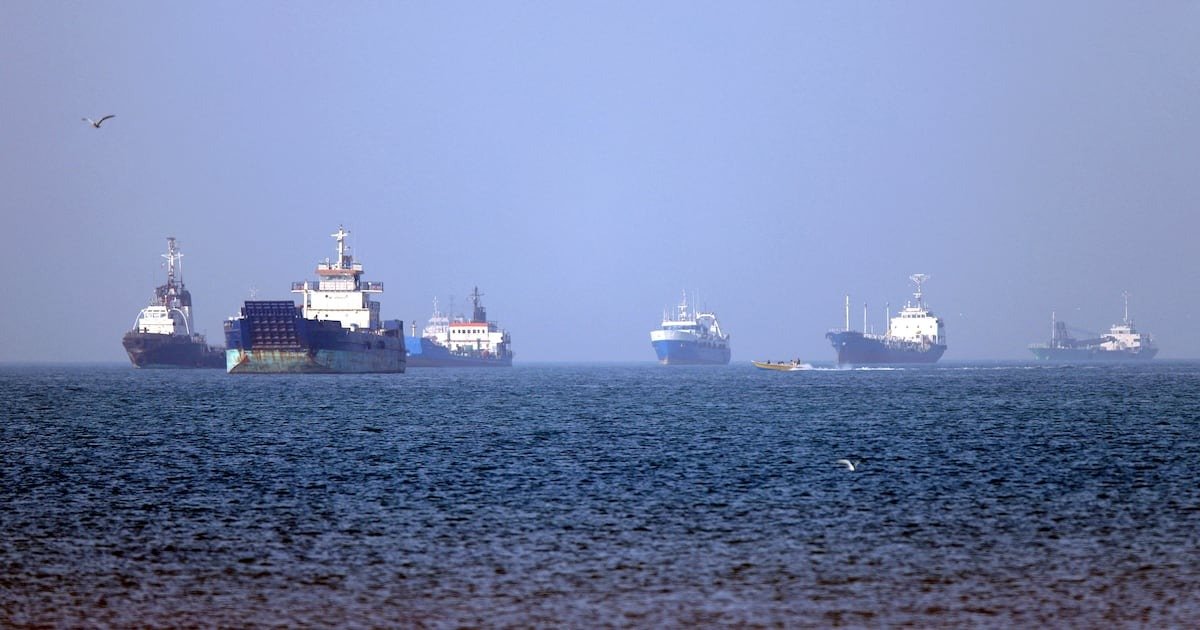
(Credit - The National)
Oil Prices Near $100: Gulf Attacks Are Repricing Global Supply Risk
Oil prices near $100 per barrel is no longer a tail risk, it is the direction markets are moving as of June 4, 2026, with fresh attacks in the Persian Gulf injecting a hard geopolitical risk premium into Brent and WTI crude and simultaneously complicating the already fragile architecture of US-Iran negotiations.
The Chess Move: This Isn’t Just a Price Spike, It’s a Structural Repricing
The global oil market isn’t just reacting to headlines. It is recalibrating the probability that Persian Gulf waterways, through which a substantial share of globally traded crude and refined products flows, could face sustained disruption. The $100 threshold is functioning as a psychological and technical marker that signals traders are no longer treating Gulf security incidents as isolated noise.When attacks occur near or within Gulf shipping corridors, the immediate market response follows a documented pattern: tanker war-risk insurance premiums rise, loading schedules at export terminals face delays, and vessels are rerouted, all of which tighten prompt physical supply even before a single barrel is actually lost. The risk premium baked into the price reflects that probability, not a confirmed outage.Driver 1, Geopolitical Risk: The Gulf Attack Premium
The Persian Gulf remains the single most consequential chokepoint in global energy logistics. Any credible security incident along its shipping lanes triggers an immediate repricing of physical delivery risk. The attacks reported as of June 4, 2026 have done precisely that, raising the perceived probability of supply outages, higher freight costs, and reduced effective export capacity from regional terminals. Traders do not wait for confirmed disruption; they price the risk of it.Driver 2, Diplomatic Deterioration: US-Iran Negotiations Under Strain
The second force amplifying price pressure is the condition of US-Iran talks. When negotiations appear stable, markets factor in the possibility of Iranian barrels returning to or remaining in global supply chains, which acts as a soft ceiling on prices. When those talks deteriorate, or when attacks in the Gulf signal that de-escalation is not holding, markets price in the reverse: stricter sanctions enforcement, reduced Iranian export flows, and the risk of retaliatory actions targeting regional energy infrastructure. That dynamic is active now, and it is compounding the physical risk premium with a diplomatic uncertainty premium.Driver 3, Shipping Economics: The Hidden Transmission Mechanism
The least visible but most immediate transmission channel from Gulf tension to global consumers runs through tanker markets. War-risk insurance surcharges on vessels transiting affected waters can rise sharply within hours of a security incident. Those costs are passed through freight rates to refiners, and ultimately to refined product prices at the pump and in airline fuel contracts. This mechanism operates independently of whether crude prices themselves sustain their move toward $100, meaning downstream cost pressure can materialise even if the headline price retreats.The Ripple Effect: Three Groups Watching Closely
Energy-intensive industries, airlines, logistics operators, and heavy manufacturers, face the most direct near-term exposure. Fuel hedging decisions made weeks ago are now being stress-tested against a price trajectory that has shifted materially. Those without forward cover are absorbing higher input costs in real time, while those with hedges are watching their coverage windows narrow.Shipping and freight operators are caught between rising war-risk insurance premiums and pressure from cargo clients to hold rates steady. Vessels transiting Gulf waters are already subject to elevated insurance costs; if the security situation persists, rerouting decisions, adding days and fuel burn to voyages, become economically rational, further tightening effective supply availability.Sovereign energy producers and OPEC+ members face a more complex calculation. Higher prices improve fiscal positions in the short term, but sustained volatility at or near $100 historically accelerates demand-side responses, efficiency investment, fuel switching, and political pressure for strategic petroleum reserve releases, that can erode the price floor over a longer horizon. The spare capacity held by key producers becomes a critical variable in whether the market views the current move as self-correcting or self-reinforcing.The Contrarian View
The strongest counter-argument is that geopolitical risk premiums in oil markets are historically short-lived when physical supply is not actually interrupted. If the Gulf attacks do not translate into confirmed, sustained disruption to export volumes, and if US-Iran negotiations stabilise rather than collapse, the current move toward $100 could prove to be sentiment-driven rather than fundamentals-driven, and vulnerable to a sharp reversal once diplomatic signals improve or inventory data shows no material tightening. Markets have priced in Gulf crises before and corrected quickly when the feared supply shock failed to materialise.- Price Direction: Brent crude moving toward $100 per barrel as of June 4, 2026
- Primary Trigger: Fresh attacks in the Persian Gulf raising supply and shipping disruption risk
- Compounding Factor: Strained US-Iran negotiations removing a soft price ceiling from Iranian supply expectations
- Key Signals to Watch: Tanker war-risk insurance rates, official shipping security statements, sanctions enforcement posture, and weekly inventory data
Oil prices near $100 reflect a market that is simultaneously pricing physical supply risk and diplomatic breakdown risk, two forces that are currently reinforcing each other. The Persian Gulf’s role as the world’s most critical energy corridor means even limited incidents carry outsized price consequences. Whether this move sustains or reverses depends on whether the security situation stabilises and whether US-Iran talks find traction, neither of which is currently signalled.

UAE flight cancellations hit Kuwait routes
UAE Airlines Cancel Kuwait Flights Amid Tensions
Etihad Airways, Emirates, Air Arabia, and flydubai have cancelled flights to Kuwait as Gulf tensions disrupt UAE operations. Etihad has extended the suspension of selected Kuwait services until July 24, 2026. Passengers travelling between the UAE and Kuwait face disruption due to the cancellations, which were prompted by operational reasons amid heightened regional tensions.
The latest cancellations come after Iranian military strikes targeted US facilities in Kuwait and Bahrain, leading airlines to adjust their operations. Etihad Airways said flights EY653 and EY654 between Abu Dhabi's Zayed International Airport and Kuwait International Airport have been cancelled until July 24, 2026. Emirates has also cancelled flight EK857 from Dubai to Kuwait.
Kuwait International Airport had resumed operations on June 1, 2026, following a phased reopening plan, but the current tensions have led to further disruptions. The airlines have urged affected passengers to ensure their contact details are updated to receive the latest flight information.
This development is linked to the earlier announcement of US global travel caution issued in response to the escalating tensions in the region.

Dubai Smart Gates Eligibility Check
Skip Dubai Airport Queues with Smart Gates Eligibility Check
Travellers arriving at or departing from Dubai International Airport (DXB) can now check their eligibility for Smart Gates online before flying. The Smart Gates PreCheck tool allows passengers to scan their passports and confirm access to biometric gates, reducing immigration waiting times.
To check eligibility, travellers can use the Smart Gates PreCheck tool, which is accessible online. This tool takes less than a minute to complete and reveals whether passengers can skip traditional passport control queues and use biometric gates.
The General Directorate of Residency and Foreigners Affairs (GDRFA) Dubai has introduced this service to help travellers avoid traditional queues and utilize the expanding biometric border technology for faster processing. With this tool, passengers can clear immigration in just a few seconds.
| Category | Details |
|---|---|
| Eligibility Check | Smart Gates PreCheck tool |
| Processing Time | <td Less than a minute
Required documents for the Smart Gates PreCheck tool include:
- A valid passport
- Access the Smart Gates PreCheck tool online.
- Scan your passport using the tool.
- Confirm your eligibility for Smart Gates.
Last updated: July 20, 2026

Dubai Airport capacity near full
Dubai Airports Defy Regional Tensions, Operate Near Full Capacity
Dubai International Airport, a major hub in the UAE, is operating near full capacity despite the ongoing regional conflict. According to Paul Griffiths, CEO of Dubai Airports, the airport has maintained strong passenger traffic, with airlines rerouting flights and Emirates offsetting some foreign carrier shortfalls.
The airport's resilience can be attributed to its effective management and the increased capacity provided by Emirates airline. As a result, Dubai Airport's operations have not been significantly impacted by the regional tensions, and it continues to serve as a major transit point for travelers.
The strong passenger traffic at Dubai Airport reflects the UAE's aviation infrastructure and its ability to adapt to challenging situations. With Emirates playing a crucial role in offsetting the shortfalls of foreign carriers, the airport has been able to maintain its operations and provide a seamless travel experience for passengers.
The fact that Dubai Airport is operating near full capacity is a positive sign for the UAE's economy, which relies heavily on tourism and travel. The airport's ability to withstand regional tensions and maintain its operations is a reflection of the country's strong aviation infrastructure and its commitment to providing a world-class travel experience.
Regarding the Dubai Economic Agenda D33, the airport's resilience and ability to operate near full capacity is a significant achievement. The agenda aims to make Dubai a leading hub for trade, tourism, and investment, and the airport's performance is a key indicator of the city's progress towards this goal.
As the regional situation continues to evolve, it is likely that Dubai Airport will remain a critical transit point for travelers. With its strong infrastructure and effective management, the airport is well-equipped to handle the challenges posed by regional tensions and continue to operate near full capacity.

US visa UAE: Students face appointment crisis
UAE Students Face US Visa Appointment Crisis
The US Embassy Abu Dhabi and US Consulate General Dubai are among the diplomatic posts affected by the limited routine visa operations in the region. UAE-based families are struggling to secure US visa appointments for university students, with high denial rates and canceled appointments. The situation remains fluid, with the US State Department advising Americans to depart several Middle Eastern countries due to serious safety risks.
US Visa Appointment Challenges for UAE Students
UAE students heading to US universities face significant challenges in securing US visa appointments. Denial rates for US Student visas have been high, with education experts citing documentation gaps, weak preparation, and unclear intent as common pitfalls. The US Embassy Abu Dhabi and US Consulate General Dubai have limited routine visa operations, and applicants are advised to check the official embassy websites daily for rescheduling guidance.
The US State Department has issued a travel advisory, urging Americans to depart several Middle Eastern countries, including the UAE, due to safety risks. This has resulted in canceled routine visa appointments and delays in visa processing. Airspace closures and flight suspensions are also limiting travel across the region, making it difficult for students to attend their visa interviews.
Impact on UAE Students and Families
The limited visa operations and high denial rates are causing significant disruptions for UAE students and families. Many students are facing uncertainty about their ability to attend their chosen universities in the US, and families are struggling to secure appointments for their children. The situation is further complicated by the requirement for students to apply for their visas in the country where they live, making it difficult for those who have already made travel arrangements.
Next Steps for UAE Students and Families
UAE students and families affected by the visa appointment crisis can check the official US Embassy and Consulate websites for updates on visa operations and rescheduling guidance. They can also consider seeking guidance from education experts and immigration lawyers to help navigate the complex visa application process. Additionally, students can review the interview wait times for the location where they will apply and plan accordingly.
The US State Department's advisory to Americans to depart several Middle Eastern countries has significant implications for US visa operations in the region. The limited routine visa operations and high denial rates are causing disruptions for UAE students and families, and it is essential for them to stay informed about the latest developments and seek guidance from relevant authorities.

UAE Events Visit Visa Explained
How to Apply for UAE Events Visit Visa
If you're planning to attend a conference, exhibition, or festival in the UAE, you may be eligible for the country's specialized Events Visit Visa. The General Directorate of Identity and Foreigners Affairs (GDRFA Dubai) has clarified the rules and application process for this dedicated entry permit.
The Events Visit Visa is a temporary entry permit that allows international visitors to attend or participate in economic, cultural, educational, sporting, religious, and community events across the UAE. It is intended for participants, exhibitors, and visitors attending conferences, summits, international exhibitions, conventions, and cultural, sports, and entertainment festivals. The visa is linked to approved events, with organizers required to obtain the necessary approvals and submit details of the event, including the number of expected international participants.
The organiser-led application process requires the hosting entity to apply for an approved participant quota, specifying the expected number of attendees. Once the quota is approved, organizers can sponsor visa applications for invited guests traveling to the UAE. Applicants must submit a sponsorship letter from the organizer outlining the nature of the event and its duration, along with other supporting documents. The visa caters to a wide range of events, including international conferences and corporate summits, trade exhibitions and business conventions, cultural, entertainment, and sports festivals, educational forums and academic gatherings, community programs and public events, and religious and economic meetings.
For event organizers, the process begins with obtaining the necessary approvals and submitting event details to the GDRFA Dubai. This includes specifying the expected number of international participants. Once approved, organizers can then sponsor visa applications for their invited guests. For international visitors, the application process involves submitting a sponsorship letter from the event organizer, along with other required documents.
Here are the steps to apply for the UAE Events Visit Visa:
- Check if the event you are attending is approved by the GDRFA Dubai.
- Obtain a sponsorship letter from the event organizer, outlining the nature of the event and its duration.
- Submit the sponsorship letter and other supporting documents to the GDRFA Dubai.
- Wait for the visa application to be processed and approved.