Ending $3.8B US Military Aid Marks a Turning Point for Israel
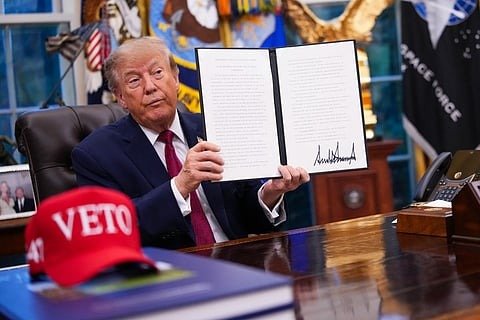
Prime Minister Benjamin Netanyahu’s personal alignment with Donald Trump has hit a hard political ceiling, with bilateral dynamics pivoting sharply as a Democratic-led Congress takes shape in Washington. Donald Trump agreed with Netanyahu to wind down the $3.8 billion in annual US military aid by the end of this year, tying the decision directly to shifting domestic political currents in the United States.
The confluence of protracted military campaigns in Gaza and against Iran has altered how mainstream American voters view the alliance, breaking a decades-long bipartisan consensus. Amit Segal, a journalist with close proximity to Netanyahu, characterized the American political shift as a catastrophe for the current administration. Eli Kowaz, senior policy director at the Economic Cooperation Foundation, noted that Netanyahu’s personal bet on Trump came with a clear expiration date, exposing a deeper structural friction in US-Israel ties beyond partisan lines. Vice President JD Vance pointed to altering the relationship with Israel and ending the Iran war as key adjustments needed to win back disaffected voters.
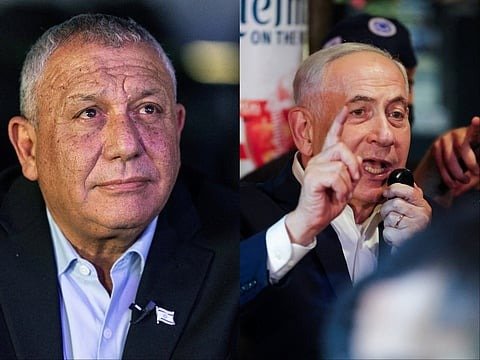
For Israel’s domestic political environment, the diplomatic friction has scrambled the opposition calculus. Gadi Eisenkot, a former military chief attempting to form a coalition to oust Netanyahu, has positioned himself to repair relations by emphasizing liberal values and constructive engagement with Trump. Yair Golan, leading the left-wing faction within Eisenkot’s bloc, attacked Netanyahu’s strategy for fostering what he termed a destructive narrative of eternal war and authoritarian rule. Meanwhile, military analysts like former defence ministry researcher Ehud Eilam point out that while Israel retains its own domestic arms industry and an edge against non-state actors like Hamas and Hezbollah, losing American assistance will force a pivot toward cheaper artillery and less sophisticated munitions, thereby amplifying civilian casualty risks.
While critics within the new Congress, including progressive senator-elect Abdul El-Sayed, characterize the devastation in Gaza in stark terms, an assertion entirely rejected by Israel, the policy shift reflects a fundamental recalibration of Washington’s foreign commitments. Yet, as Tel Aviv University US expert Yael Sternhell observes, a mere cosmetic charm offensive by a new Israeli premier will not suffice; restoring operational leverage requires sweeping policy overhauls, particularly regarding West Bank settler violence where extremist elements have attacked Palestinians with virtual impunity.