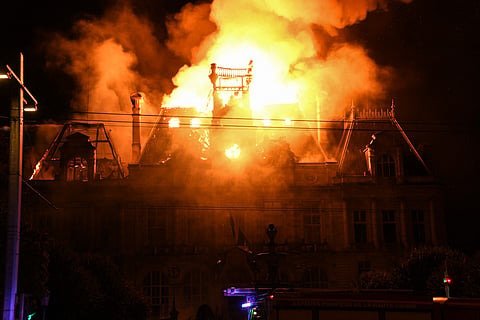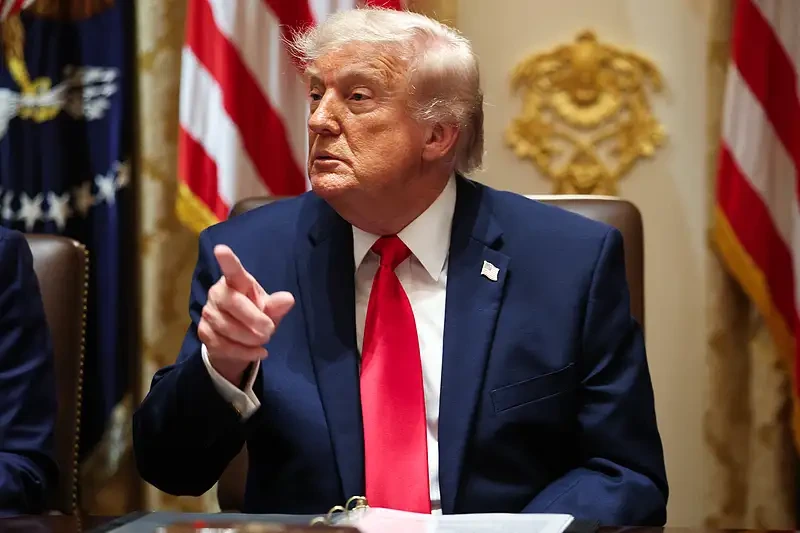
(Credit - Khaleej Times)
US-Iran Ceasefire Is Real, But It Doesn’t Mean the Middle East Stopped Fighting
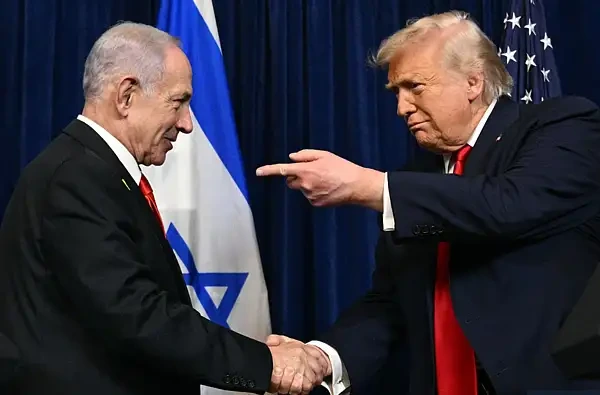
If you assumed a US-Iran ceasefire meant the guns went quiet across the entire Middle East, this changes everything. As of June 5, 2026, regional attacks are continuing on multiple fronts, including along the Israel-Hezbollah line, and Donald Trump himself has acknowledged that the word “ceasefire” can mean different things depending on where you are.
What Trump Actually Said, and Why It Explains the Confusion
Trump clarified publicly that the scope and definition of a ceasefire can vary by region. That single statement unlocks a lot: it signals that the US-Iran understanding is not a blanket, theatre-wide halt to hostilities, but something narrower, likely limited by geography, target set, or time window. Each party can claim it is complying while pointing to the other’s actions as violations, because the terms themselves are not uniformly defined or publicly codified.
This ambiguity is not accidental. Ceasefires between states, even when genuine at the leadership level, rarely bind allied militias or armed groups operating across borders. Where command-and-control is decentralised, local commanders may continue operations to preserve deterrence, respond to prior strikes, or simply because they were never formally included in the agreement.
Why Proxy Groups Keep Fighting After State-Level Deals
Iran-linked networks operate across multiple theatres simultaneously. A political signal from Tehran does not automatically translate into a stand-down order for every affiliated group in Lebanon, Syria, Iraq, or Yemen. Retaliation cycles already in motion can continue independently, especially when local actors have their own strategic interests that predate, and outlast, any bilateral US-Iran framework.
The Israel-Hezbollah front is a clear example. Tensions there are shaped by their own logic: prior strikes, deterrence calculations, and domestic political pressures on both sides. A US-Iran pause does not reset that clock. This is what analysts call “spillover risk”, a de-escalation in one channel that leaves other channels fully active.
The Core Problem: No Verification, No Enforcement, No Agreed Red Lines
- Ceasefire scope: Appears limited, not a comprehensive, theatre-wide halt across all Iran-linked fronts
- Proxy groups: Not automatically bound by state-level agreements, particularly where command structures are decentralised
- Trump’s position: Publicly acknowledged that ceasefire definitions differ by region, confirming the framework is uneven
- Israel-Hezbollah: Clashes continuing independently of the US-Iran understanding as of June 5, 2026
Without verification mechanisms, clear enforcement, and mutually agreed red lines, ceasefires in complex multi-actor environments tend to be fragile and unevenly observed. Low trust between parties also increases the likelihood of pre-emptive strikes and rapid counterstrikes, each side acting on the assumption the other is not genuinely complying.
The US-Iran ceasefire is a real diplomatic signal, but it was never designed to, and does not, cover every armed actor aligned with Tehran across the region. Trump’s own clarification confirms the framework is geographically and operationally limited. Until verification mechanisms and agreed red lines are in place, the risk of escalation on parallel fronts, including the Israel-Hezbollah theatre, remains live.## FAQ
FIFA World Cup 2026 Dates, Groups & Full Schedule
FIFA World Cup 2026 Dates Are Set: 48 Teams, 104 Matches and a New Jersey Final
If you're planning to watch, travel to, or simply follow the FIFA World Cup 2026 dates from June 11 to July 19, the expanded format changes almost everything you thought you knew about the tournament's rhythm, length, and structure.
What's Actually Different This Time Around
For the first time in men's World Cup history, 48 teams will compete, up from the 32-team field that ran from 1998 through 2022. That single structural change pushes the total match count from 64 to 104, stretches the tournament calendar to 38 days, and spreads fixtures across 16 host cities in three countries: the United States, Mexico, and Canada.
The U.S. opens the tournament against South Africa, giving the host nation the first kick of a competition that closes with the final at the New York/New Jersey metro area, cementing that region as the tournament's global focal point for its last week of play.
The Format Shift at a Glance
| Feature | 1998, 2022 Format | 2026 Format |
|---|---|---|
| Number of teams | 32 | 48 |
| Total matches | 64 | 104 |
| Tournament length | ~32 days | 38 days (June 11, July 19) |
| Host nations | 1 (typically) | 3 (USA, Mexico, Canada) |
| Host cities | Up to 12 | 16 |
| Final venue | Varies | New Jersey, United States |
| Opening match | Host vs. opponent | USA vs. South Africa |
What This Means for Fans Planning to Attend
The tri-nation hosting model is the biggest logistical shift for travelling supporters. Unlike a single-country tournament where fans can base themselves in one city and manage short domestic transfers, the 2026 edition requires cross-border planning, flights, visas, and accommodation across the U.S., Mexico, and Canada may all come into play depending on which teams you're following through the group stage and into the knockouts.
With 104 matches spread across 16 cities, the group stage alone will be longer and more spread out than any previous edition. Rest days between matches for individual teams will vary by city assignment, meaning travel fatigue is a real factor for fans tracking a single nation across multiple venues.
Key Tournament Milestones
- Tournament opens: June 11, 2026, USA vs. South Africa
- Group stage window: Runs across the first weeks of the tournament, covering all 48 teams in an expanded group format
- Knockout rounds: Progress through the expanded bracket following the group stage
- World Cup Final: July 19, 2026, New Jersey (New York/New Jersey metro area)
- Total duration: 38 days across three countries
- Host cities: 16 cities across the United States, Mexico, and Canada
The FIFA World Cup 2026 is the largest men's World Cup ever staged, 48 teams, 104 matches, and a 38-day window that demands more planning from fans than any previous edition. The final lands in New Jersey on July 19, making the New York metro area the tournament's closing stage. Whether you're booking flights, setting up a viewing schedule, or tracking your national team's path through the bracket, the expanded format means more matches, more travel complexity, and a longer run to the trophy.## FAQ

FIFA World Cup Match Balls: 1930 to 2026
FIFA World Cup Match Balls Have Gone From Laced Leather to Smart Tech, Here's Every Major Shift Since 1930
If you've ever wondered why FIFA World Cup match balls look and behave so differently from one tournament to the next, the answer stretches back 96 years of materials science, broadcast demands, and on-field performance engineering.
From Stitched Panels to Sensor-Embedded Spheres: How the Ball Changed the Game
The earliest World Cup balls, used at the 1930 tournament in Uruguay, were stitched leather with a lace-up closure. That lace wasn't decorative: it sealed the inner bladder, but it also created an unpredictable contact point that could affect a player's strike and, in wet conditions, the ball absorbed water and grew noticeably heavier during a match. Heading one of those late in a game was a different physical experience entirely compared to what players deal with today.
The shift away from leather panels and toward synthetic materials accelerated through the mid-20th century. The most culturally iconic moment in ball design came with the black-and-white geometric Telstar era, a design built specifically for television visibility, so home audiences watching on black-and-white sets could track the ball clearly. That single design decision shows how broadcast technology, not just football physics, shaped the equipment. Later decades brought standardised panel geometry, improved water resistance, and thermally bonded (rather than stitched) seams, each change altering how the ball curves, dips, and responds to pace.
The 2026 Trionda: Three Countries, One Ball, Embedded Technology
The 2026 FIFA World Cup ball is named Trionda, and its design concept is directly tied to the tournament's structure: three host countries are represented through three colours worked into the ball's visual identity. Beyond aesthetics, the Trionda is described as incorporating smart technology, the continuation of a trend toward sensor-embedded match balls that support officiating systems and real-time ball-tracking data. For players and coaching staff, that means the ball is no longer just a playing surface; it's a data point.
- 1930 ball: Stitched leather, lace-up closure, absorbed water, unpredictable flight in wet conditions
- Telstar era: Black-and-white geometric panels, designed for television visibility on monochrome broadcasts
- Modern era: Thermally bonded synthetic panels, consistent water resistance, engineered aerodynamics
- Trionda (2026): Three host-country colours, smart/sensor technology embedded for tracking and officiating support
Why Ball Design Is a Competitive Variable, Not Just a Branding Exercise
Each new World Cup ball introduces slightly different flight and touch characteristics, panel count, surface texture, and bonding method all influence how the ball moves through the air and off the boot. Goalkeepers and set-piece specialists in particular adapt their technique to each tournament ball during pre-tournament training. The shift to sensor integration in recent tournaments adds another layer: ball-tracking data now feeds directly into semi-automated offside systems used by FIFA, meaning the ball's internal technology is part of the officiating infrastructure, not separate from it.
Ninety-six years of World Cup football have been played with equipment that kept changing underneath the players' feet, from waterlogged leather in 1930 to a smart, three-coloured sphere in 2026. The Trionda represents the point where ball design, national branding, and match data converge in a single object. Whether you're watching from a stadium in the United States, Canada, or Mexico this summer, the ball doing the travelling is doing more work than any previous World Cup ball in history.

Albay Earthquake 5.4 Strikes Philippines at Night
Albay Earthquake 5.4 Shakes Bicol Region Late at Night With No Immediate Casualties Reported
A 5.4-magnitude earthquake struck Albay province in the Philippines late on June 5, 2026, sending tremors across the Bicol Region. Residents in the affected area felt the quake, though authorities had not confirmed significant damage or injuries in their initial assessments.
Philippine Seismic Monitors Track Albay Tremor as Authorities Begin Ground Checks
The Philippines' position on the Pacific Ring of Fire makes seismic events of this scale a recurring reality. A mid-5 magnitude quake can be felt across a wide radius and carries the potential for localised structural stress, particularly in older buildings or areas close to the epicentre. The depth of the quake and its proximity to population centres are key factors that shape the damage picture, details that typically emerge in the hours following the initial event.
Standard post-quake protocol in the Philippines involves rapid checks of critical infrastructure, bridges, roads, power lines, and hospitals, alongside felt-intensity reports from local disaster risk reduction offices. Aftershocks are common in the 24 to 72 hours following a tremor of this magnitude, and monitoring agencies track these closely to determine whether the initial quake was a foreshock to a larger event or the main shock itself.
What Residents and Authorities Are Watching in the Hours Ahead
For people in Albay and surrounding Bicol Region communities, the immediate priority is assessing structural safety before re-entering buildings, particularly those constructed before modern seismic codes. Local disaster offices are expected to release updated situation reports as ground assessments are completed and residents file impact reports.
- Magnitude: 5.4, widely felt, capable of localised damage depending on depth and building stock
- Timing: Late night on June 5, 2026, when most residents were indoors
- Initial damage report: No significant damage or injuries confirmed in early official updates
- Aftershock risk: Standard advisory applies, smaller tremors are expected in the hours and days that follow
A 5.4-magnitude earthquake struck Albay, Philippines late on June 5, 2026, with no major casualties or structural damage confirmed in early reports. Authorities are conducting ground assessments across the Bicol Region as the situation continues to develop. Residents are advised to stay alert to aftershock advisories and follow guidance from local disaster risk reduction offices.*Source: Gulf News / PHIVOLCS monitoring updates*
336 Fake Domains World Cup Tickets: UAE Scam Alert
336 Fake Domains Are Hunting World Cup Ticket Buyers, UAE Experts Issue Urgent Warning
More than 336 fake domains targeting fans searching for World Cup 2026 tickets have been flagged by UAE cybersecurity experts, with fraudsters deploying lookalike websites designed to drain bank accounts and harvest personal data before the tournament even kicks off.
## The Rumour Circulating Right NowPeople are saying: *"There are over 336 fake domains being used to scam fans looking for World Cup tickets."*This claim is spreading across social media and messaging apps in the UAE as demand for FIFA World Cup 2026 tickets builds ahead of the tournament.## Here's What UAE Cybersecurity Experts and Khaleej Times Actually ReportThe warning, published on June 5, 2026, by Khaleej Times, citing UAE cybersecurity experts, confirms the 336-plus fake domain figure is real and actively circulating. Separately, the FBI has issued its own caution about fake FIFA-style websites, signalling this is a coordinated, cross-border fraud push rather than isolated opportunism.Confidence Score: Partially Verified, The 336-domain figure originates from UAE cybersecurity expert analysis reported by Khaleej Times. The underlying threat is independently corroborated by FBI warnings. No single UAE government authority such as the Telecommunications and Digital Government Regulatory Authority (TDRA) or Dubai Police Cybercrime Unit has been cited as the primary source of the domain count itself.## How the Scam Actually WorksFraudsters register domains that closely mimic official FIFA ticketing pages, think extra hyphens, swapped letters, or added words in the URL. They then push victims through cloned checkout flows that capture card numbers, passport data, and one-time passwords (OTPs). Many campaigns go further, buying paid search ads so fake sites appear above legitimate results, and deploying "limited seats" countdown timers to pressure buyers into skipping basic checks.The timing is deliberate. Major tournaments create predictable demand spikes months before kickoff. Scammers register domains early, build apparent credibility over time, and are fully operational by the time fan urgency peaks.## What This Means for UAE ResidentsFor fans in the UAE, the risk runs beyond losing ticket money. Sharing passport details or OTPs with a fraudulent site opens the door to identity theft and unauthorised banking transactions, both reportable to Dubai Police's cybercrime unit and the Central Bank of the UAE if payment fraud occurs. The TDRA also operates channels for reporting suspicious domains targeting UAE residents.- Only trusted channel: Purchase tickets exclusively through FIFA's official ticketing platform and verified partners, no third-party links, DMs, or unfamiliar ads.
- Domain check: Scrutinise the full URL spelling, including hyphens and extra words. HTTPS alone does not confirm a site is legitimate.
- Never share OTPs: No legitimate ticketing platform will ask you to share a one-time password with a person or chat agent to "confirm" a purchase.
- Report suspicious sites: UAE residents can flag fraudulent domains to Dubai Police's cybercrime portal or contact the Central Bank of the UAE if a payment has already been processed.
The 336-plus fake domain figure reported by UAE cybersecurity experts is credible and independently supported by FBI warnings about fake FIFA-style websites, this is not a social media exaggeration. Scammers are combining phishing, payment redirection, and identity theft into multi-step operations that look convincingly official. The only safe route to World Cup 2026 tickets is FIFA's own verified ticketing channel, every other shortcut carries real financial and personal risk.## The VerdictBuying a World Cup 2026 ticket from any site other than FIFA's official platform right now means navigating a minefield of 336-plus confirmed fake domains built specifically to steal your money and identity.
RTA Traffic Changes Za'abeel: New Bridges Open
RTA Traffic Changes Za'abeel: New Bridges Open at Trade Centre Roundabout to Cut Congestion
RTA traffic changes in Za'abeel took effect today, June 5, as Dubai's Roads and Transport Authority opened new bridge links at the Trade Centre Roundabout and adjusted traffic movements to ease one of central Dubai's most pressured junctions.
What's Changed at Trade Centre Roundabout, and Why It Affects Your Drive Today
The Trade Centre Roundabout sits at the crossroads of several major central Dubai corridors, funnelling traffic between Sheikh Zayed Road, Al Wasl Road, and the broader Za'abeel district. RTA's development works have introduced new bridge infrastructure to redistribute vehicle volumes away from the roundabout itself, reducing conflict points where merging traffic typically causes peak-hour bottlenecks.
With the new bridge links now operational, lane allocations and approach movements around the junction have been adjusted. Drivers who use this route daily, whether commuting from Za'abeel toward DIFC, cutting through toward World Trade Centre, or heading south on Sheikh Zayed Road, should expect their familiar entry and exit points to look different. RTA has posted directional signage throughout the area to guide motorists through the revised layout during the adjustment period.
How Za'abeel Commuters, School Runs, and Deliveries Are Affected
Dubai's Roads and Transport Authority has urged all road users to follow the new directional signs and plan journeys in advance while traffic patterns settle around the upgraded junction. For residents in Za'abeel, Al Wasl, and the Trade Centre area, the practical advice is straightforward: add buffer time to morning and evening commutes for the next several days, check RTA's official channels before heading out, and avoid assuming your usual lane sequence still applies at the roundabout approaches.
- Effective Date: June 5, 2026, changes are live now
- New Infrastructure: New bridge links opened as part of Trade Centre Roundabout development works
- Driver Action Required: Follow posted directional signage; pre-plan journeys during the adjustment period
- Project Goal: Reduce travel time, cut conflict points, and improve road safety at the junction
Further phased changes are typical in major junction upgrades of this scale. RTA has not confirmed a completion timeline publicly, so additional temporary diversions or new movement openings may follow as construction progresses. Motorists with regular delivery routes or school-run schedules through the Trade Centre Roundabout area should flag the changes to drivers and update routing apps accordingly.
Dubai's Roads and Transport Authority has opened new bridges and restructured traffic movements at the Trade Centre Roundabout in Za'abeel, effective June 5. Drivers should follow RTA's directional signage and build extra time into journeys while the new layout beds in. Further phased changes are possible as the wider junction development continues.Big Picture: The Trade Centre Roundabout upgrade aligns with Dubai 2040 Urban Master Plan targets to improve connectivity between central business corridors and reduce road congestion across the emirate's high-density zones.