
Manage Dubai Police traffic fines with easy instalment options
If you’re a motorist in Dubai, it’s essential to manage your traffic fines responsibly to avoid increased financial obligations and legal procedures. The General Department of Traffic at Dubai Police recently organised an awareness workshop for over 70 employees of the Dubai Department of Economy and Tourism, highlighting the importance of dealing with traffic fines responsibly. The workshop introduced participants to Dubai Police’s smart payment channels and available fine instalment options, providing greater flexibility in managing financial obligations.
The instalment options and 24/7 digital payment channels can help drivers manage their fines more easily. Colonel Talal Abdullah Al Mansouri, Director of the Traffic Education Department, explained that customers can access these services through the Dubai Police smart app, website, self-service kiosks, and Smart Police Stations (SPS). This provides customers with secure access to services around the clock, making it easier to pay traffic fines and avoid accumulation.
The workshop also addressed road safety, particularly the use of bicycles and e-scooters. Participants received guidance on traffic rules, designated routes, and the importance of complying with safety requirements and wearing protective equipment. Additionally, participants were introduced to Dubai Police‘s traffic safety platform, Aman Roads, which offers regularly updated road safety content, traffic advice, and awareness campaigns.
The Dubai Police’s efforts to promote responsible fine management and raise awareness of smart traffic services are part of their ongoing efforts to strengthen traffic awareness across different segments of society. By utilising the available instalment options and digital payment channels, motorists can avoid the accumulation of traffic fines and contribute to improving road safety in Dubai.
As part of Dubai’s strategic development plans, the Dubai Police’s initiatives support the emirate’s vision for a safe and efficient transportation system. However, no specific targets or deadlines from these plans are directly applicable to this initiative.

Dubai Airport's Red Carpet Smart Tunnel: Passport-Free Immigration
Walk Through Dubai Airport Without a Passport: Red Carpet Smart Tunnel Explained
If you're a frequent traveler through Dubai International Airport, you might be interested to know that there's a way to pass through immigration without ever having to show your passport. The Red Carpet Smart Tunnel, located in Terminal 3, is an AI-powered biometric service that allows eligible travelers to clear immigration in just a few seconds. Developed by the General Directorate of Identity and Foreigners Affairs (GDRFA) in partnership with Dubai Airports, this innovative service is making travel experiences easier and faster for thousands of people.
The Red Carpet Smart Tunnel is a first-of-its-kind smart service that uses artificial intelligence and biometric technology to process travelers automatically as they walk through the corridor. With this system, travelers don't need to stop, stand still, or present any documents, making it a seamless and efficient way to clear immigration. In its first year of operation, nearly 800,000 people have used the service, according to the GDRFA.
The Red Carpet initiative supports the goals of the Dubai Economic Agenda D33, which aims to make Dubai the world's best city to live in, work, and visit, through excellence in digital infrastructure and AI-driven government services. This project has already gained recognition, winning the Distinguished Innovation by Public Sector, Global Distinguished Innovator (GDI) Awards 2025, presented by the US-based Global Innovation Institute (GInI).
For UAE citizens and residents who are registered with the GDRFA, using the Red Carpet Smart Tunnel is as simple as walking through the designated corridor. The biometric service processes individual travelers and groups automatically, eliminating the need for travel document touchpoints and accelerating airport throughput. With a processing time of just 3.4 seconds, this service is not only convenient but also highly efficient.
As Dubai continues to advance its digital infrastructure and AI-driven government services, innovations like the Red Carpet Smart Tunnel are making a significant impact on the travel experience. Whether you're a frequent traveler or just passing through Dubai International Airport, this service is definitely worth checking out.

Dubai Police Clearance Certificate Online
Digital Police Clearance Now Available
The Dubai Police has made it easier for residents and applicants to obtain a Police Clearance Certificate, also known as a Good Conduct Certificate, without having to visit a physical police station. This can be done through the Dubai Police app, website, Dubai Now, Smart Police Stations (SPS), or by calling 901. The certificate is a crucial document for various official procedures, including employment, travel, and residency visa processing.
For those looking to apply for a Police Clearance Certificate, the process can be initiated online. Applicants will need to provide required documents, such as their Emirates ID, passport copy, and personal details. AmerCenters can assist with the application process, including preparing the necessary documents, verifying UAE Pass credentials, and submitting the application through official portals.
The digital Police Clearance Certificate is generally accepted by UAE authorities when issued through official government platforms. However, if the certificate is issued outside the UAE, attestation may still be required before it can be used for visa processing. AmerCenters can help applicants navigate the process and ensure that their applications are complete and accurate to avoid unnecessary delays.
The UAE government's Zero Bureaucracy initiative aims to make government services more accessible and efficient. The digital issuance of Police Clearance Certificates is a significant step towards achieving this goal. With the help of AmerCenters, applicants can ensure that their applications are processed quickly and efficiently, reducing the risk of delays or rejection.
In 2026, a Police Clearance Certificate is a mandatory requirement for various purposes, including visa applications. The certificate is used as part of background verification to confirm that the applicant meets the required security and conduct standards. To apply for a Police Clearance Certificate, applicants will need to provide a clear passport copy, current UAE visa or visit visa details, and Emirates ID copy if they currently have or previously had UAE residency.

UAE Visa Fee Repayment Prohibited
AED 0: Your Visa Fee Repayment Rights
The UAE Labour Law, specifically Article 6(4) of Federal Decree-Law No. 33 of 2021, prohibits private sector employers from passing on the cost of recruitment, including visa fees, to employees. This means that if you resign within a year of joining your company, your employer cannot require you to repay your visa costs. Mohamed Elmasry, Senior Associate at Al Suwaidi and Company Advocates and Legal Consultants, confirms that any contract clause requiring workers to repay visa expenses is legally null and void under Article 65(3) of the law.
This protection applies to all private sector employees in the UAE, regardless of their nationality or visa type. The law is clear: employers cannot charge workers recruitment or employment costs, whether directly or indirectly. If an employee leaves an organisation during their probation period, the new employer may be required to compensate the former employer, but the employee is not liable for visa fees.
If your contract states that you have to pay for the visa fees, it is considered void, as it violates the Articles of the UAE Labour Law. You do not have to worry about paying back your visa fees if you resign within a year. Any attempt by your employer to deduct visa fees from your salary would be an illegal salary deduction, which can be reported to the Ministry of Human Resources and Emiratization (MOHRE).
To ensure you are aware of your rights, it is essential to understand the UAE Labour Law and its provisions. If you have any concerns or questions, you can reach out to MOHRE or consult with a legal expert.
Here is a summary of the key points:
| Category | Provision |
|---|---|
| Visa Fee Repayment | Prohibited by UAE Labour Law |
| Contract Clauses | Void if requiring visa fee repayment |
| Probation Period | Cannot extend beyond 6 months |

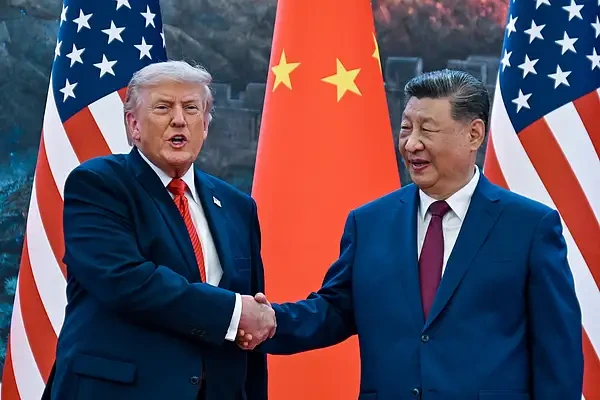
Trump, Iran Locked in Strait of Hormuz Standoff
Hormuz Showdown: Trump's Clock Ticking Faster?
The conflict between the US and Iran over the Strait of Hormuz has evolved into a strategic battle of clocks, with Washington betting economic pressure will force Tehran to compromise while Iran calculates that US political pressures, dwindling munitions, and rising energy costs will force President Trump to seek an exit first. This standoff is not just about military power, but about which side can outlast the other. The US is counting on sanctions, a maritime blockade, and months of military pressure to weaken Iran's economy, while Iran is leveraging its control over the Strait of Hormuz to pressure the US into offering a favorable exit.
The drivers behind this standoff are economic and geopolitical. The US is facing growing public frustration with the war, pressure on Patriot and THAAD missile stocks, and higher petrol and energy prices. According to CNN, average US petrol prices are back above $4 a gallon, creating a domestic political problem for Trump. On the other hand, Iran is withstanding the effects of sanctions, the US blockade, and damage inflicted during months of conflict. However, Tehran's strategy is hardly risk-free, and the country must navigate the risks of renewed US strikes, pressure to restore normal trade, and the need to compensate for the war and sanctions relief.
The stakeholders affected by this conflict are numerous. The US midterm elections are approaching, and Trump's political timetable is a critical factor in the standoff. The conflict is also affecting the global energy market, with the Strait of Hormuz being one of the world's most important energy routes. Iran's control over the strait has become a valuable leverage point, allowing the country to exert pressure on the US. Meanwhile, the US is trying to maintain its military commitments elsewhere while expending expensive weapons and resources on Iran.
The strongest counter-argument to the US position is that Iran may be able to outlast the US, given the country's ability to withstand economic pressure and its leverage over the Strait of Hormuz. According to CNN political and national security analyst David Sanger, Iran's leaders sense that Trump wants a way out of the conflict, and the US is "running out of munitions," options, and patience. This perception could help explain why Tehran has little incentive to quickly accept a compromise over Hormuz. Instead, Iran has hardened its conditions for fully reopening the strait, demanding measures including an end to the US maritime blockade, withdrawal of American forces from the region, compensation for the war and sanctions relief.

Colombia earthquake: 7.4 magnitude quake hits
7.4 Magnitude Earthquake Strikes Colombia and Ecuador
A 7.4-magnitude earthquake struck western Colombia on Monday, August 10, 2026, shaking wide areas of the country and neighbouring Ecuador, prompting residents to evacuate homes, offices, and other buildings. The earthquake's epicentre was located near San José del Palmar in western Colombia, approximately 400 kilometres west of Bogotá, according to the United States Geological Survey (USGS) and Colombia's geological authorities.
The tremor was felt across large parts of Colombia and in neighbouring Ecuador, causing people to leave buildings as a precaution. No immediate reports of injuries, fatalities, or significant damage were issued by authorities. Emergency services and government agencies continued to assess the impact of the earthquake and monitor the situation in affected areas.
The earthquake occurred at a relatively deep depth, which may have helped limit the extent of surface damage. Government workers and residents in Panama City also felt the earthquake, with many standing outside their office buildings as a precaution.
This earthquake is reminiscent of previous seismic events in the region, such as the ones reported in recent years, which have highlighted the importance of disaster preparedness and emergency response planning.