MoFA condemns UAE embassy Damascus attack and attempted vandalism
UAE embassy Damascus attack was condemned by the UAE Ministry of Foreign Affairs (MoFA) on Saturday, April 4, 2026, after riots, attempted vandalism, and attacks targeted the UAE Embassy in Damascus and the residence of the Head of Mission in Syria.
MoFA said the United Arab Emirates “strongly condemned and denounced” the incidents, and reaffirmed the UAE’s “categorical rejection and condemnation” of acts that target diplomatic premises and UAE national symbols, according to the ministry’s published statement dated 04/4/2026.
Under the Vienna Convention on Diplomatic Relations (1961), host authorities have defined obligations to protect diplomatic missions and residences from intrusion and damage; MoFA’s statement positions the Damascus incident as a diplomatic protection issue, not only a local security event.
Quick Intel
- Date: MoFA statement published Saturday, April 4, 2026, covering riots, attempted vandalism, and attacks in Damascus, Syria.
- Targets: The UAE Embassy in Damascus and the Head of Mission’s residence were named as the locations targeted.
- Legal frame: The Vienna Convention (1961) sets host-state duties to protect embassies, diplomatic residences, personnel, and national symbols.
- Resident impact: If security restrictions tighten after 04/4/2026, expect slower in-person processing and stricter access controls for consular visits tied to Syria-linked paperwork.
The incident involved confirmed acts of vandalism, not merely attempted damage, alongside the riots that targeted the diplomatic premises.
Beyond mere condemnation, the UAE’s Ministry of Foreign Affairs has emphatically called for accountability from the host authorities regarding the attacks on its diplomatic mission and the Head of Mission’s residence in Damascus.

Also ReadUAE Fuel Prices Drop for July 2026
Dubai Police warn slime microwave challenge is unsafe
Why the ‘Slime in Microwave’ Trend Is a Hazard, Not a Home Experiment
People are saying the viral “slime in microwave” challenge is safe to try at home.
Here's what Dubai Police actually says.
Dubai Police issued a public warning on 4 July 2026, stating that the trend can cause serious burns, ignite fires and damage property. The force emphasized that microwaves heat mixtures unevenly, creating sudden steam bursts or container explosions. Parents were specifically urged to talk to children about the danger and to prevent them from copying the stunt. The advisory also highlighted that injuries from such experiments often require emergency medical attention and can overwhelm local fire services.
Confidence Score: False, the claim that the challenge is safe is directly contradicted by the Dubai Police warning, which labels the activity hazardous.
The rumor that the slime‑in‑microwave stunt poses no risk is untrue. The police’s explicit language, “burn and fire risks” and “serious injuries”, leaves no room for ambiguity. No evidence from the authority suggests any safety measures that would make the experiment permissible in a typical household kitchen. Consequently, anyone attempting the challenge is exposing themselves and their home to preventable harm.
The viral slime‑in‑microwave challenge is not safe to try at home.

Lionel Messi 20th World Cup goal lifts Golden Boot lead
Messi's 20th World Cup strike crowns him Golden Boot frontrunner
Lionel Messi netted his 20th World Cup goal on July 4, 2026, during the 2026 FIFA World Cup. The tally propels Argentina’s captain to the top of the tournament’s Golden Boot race.
The strike extended his scoring run to eight straight matches and eclipsed Miroslav Klose’s all‑time World Cup tally.
Messi’s 20th World Cup goal puts him ahead in the Golden Boot standings. Kylian Mbappé and Erling Haaland were next in the Golden Boot standings with six goals each as of July 3, 2026, trailing Messi’s tournament-leading total.

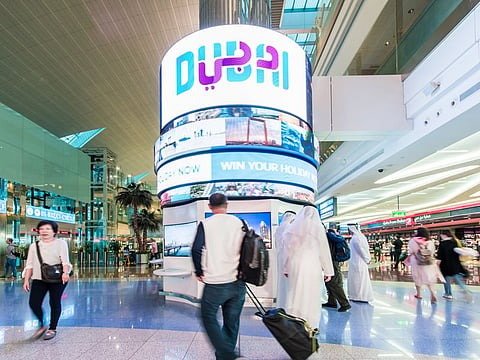
Emirates urges early arrival at DXB July 3‑5
DXB faces heavy traffic July 3‑5; Emirates tells flyers to add three‑hour buffer
Dubai International Airport (DXB) will see a surge of passengers from July 3‑5, 2026.
Longer queues and tighter gate cut‑offs at DXB terminals
The advisory reflects Dubai’s broader effort to keep airport flow smooth during seasonal travel spikes.

Dubai Customs Foil Pregabalin Smuggling Attempt
Dubai Authorities Thwart Pregabalin Smuggling Attempt
Dubai Customs and Dubai Police seized 278,850 Pregabalin pills in the initial smuggling attempt, according to official details of the joint operation, a controlled substance, weighing around 200 kg. The operation resulted in the arrest of a four-member gang, underscoring the authorities' ongoing efforts in border-security and anti-narcotics enforcement.
The seizure of 278,850 pregabalin tablets is a significant blow to drug trafficking networks in the UAE. Dubai Customs and Dubai Police have been working together to identify and intercept shipments of controlled substances, and this operation reflects their effective collaboration.
Dubai Customs and Dubai Police's joint operation is part of a broader effort to protect the community from the harm caused by controlled substances. Pregabalin is treated as a controlled substance in the UAE, and trafficking cases are typically handled as serious narcotics/controlled-medicine offenses.
The authorities' actions have prevented the diversion of these pills into local distribution markets, reducing the risk of harm linked to their misuse. This operation demonstrates the commitment of Dubai Customs and Dubai Police to enforcing border security and anti-narcotics laws, ensuring the safety and well-being of the community.
Officials said the joint operation reinforced Dubai’s leadership in border security and efforts to counter smuggling and protect the community.
The 200kg shipment of pregabalin pills was seized in a joint operation, resulting in the arrest of a four-member gang. This operation is a significant achievement for Dubai Customs and Dubai Police, demonstrating their effectiveness in identifying and intercepting shipments of controlled substances.

Emirates ID: Risks You Should Know Before You Share
Protect Your Emirates ID: The Hidden Dangers of Routine Sharing
As a resident in the UAE, you're likely familiar with the importance of your Emirates ID. However, a common habit among residents - sending Emirates ID copies for routine requests - can increase your exposure to identity theft and fraud. Authorities are warning against this practice, especially when sharing ID copies over WhatsApp or email.
The warning focuses on the potential risks of sharing Emirates ID copies, which can be stored, forwarded, or reused without the holder's knowledge. Emirates ID is a high-trust identifier used across many verification flows, and if misused, it can enable impersonation attempts, fraudulent account creation, unauthorized service sign-ups, or social-engineering scams.
Residents are advised to verify whether the request is mandatory and whether the recipient is authorized. It's recommended to prefer official portals or in-person verification when possible, avoid sending ID images over informal channels like WhatsApp, and limit exposure by sharing only what is necessary for the stated purpose. Red flags include requests from unverified numbers or emails, pressure to share immediately, unclear purpose for collection, or businesses that cannot explain how the data will be stored and protected.
For those who have already shared their Emirates ID copies, it's essential to be vigilant and monitor their accounts and personal data for any suspicious activity. If you suspect that your Emirates ID has been misused, you should report it to the relevant authorities immediately.
In the UAE, residents can take steps to protect their Emirates ID data by being cautious when sharing their ID copies. By being aware of the potential risks and taking the necessary precautions, residents can reduce their exposure to identity theft and fraud.
To protect your Emirates ID data, follow these best practices:
- Verify the recipient's authenticity before sharing your ID copy.
- Use official portals or in-person verification when possible.
- Avoid sending ID images over informal channels like WhatsApp.
- Limit exposure by sharing only what is necessary for the stated purpose.