Stepping Out on a Layover: 48- and 96-Hour UAE Transit Visa Rules
Stepping out during a UAE layover requires the right visa before you land
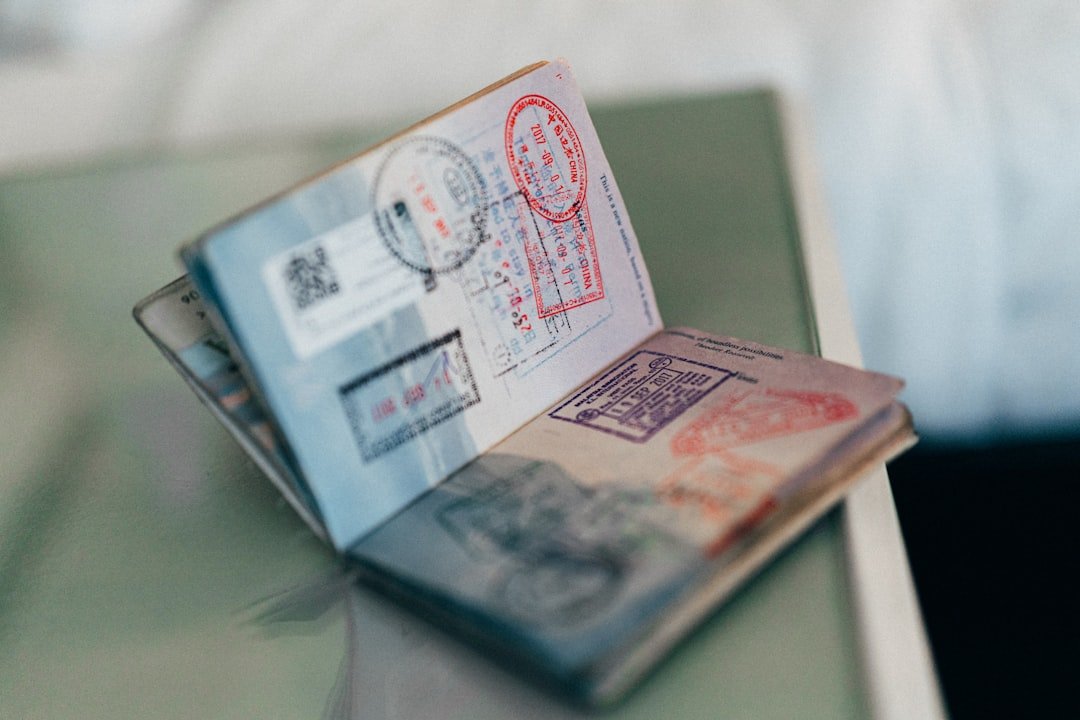
If you have a stopover between flights at a UAE airport and plan to step outside to explore, your passport determines your exact routine. Passengers who are not GCC nationals and do not qualify for visa-free entry or a visa on arrival cannot clear airport immigration without securing an approved transit visa in advance.
These permits come in two fixed options: 48 hours or 96 hours. Both options are strictly single-entry visas, remain valid for entry for 30 days from their issuance date, and cannot be extended under any circumstances. The duration clock starts ticking the moment an officer stamps your visa at the airport immigration counter.
Dubai-based public relations officer Musa Dayani confirmed that travellers who fall outside the visa-on-arrival list must submit their transit visa applications prior to travel. Arriving at the terminal without entry clearance means you will be restricted to the airport transit area for the duration of your layover.
Who needs to apply and how application channels differ
Your path to securing a transit permit depends on your airline and your exact arrival point.
Passengers traveling on UAE-based airlines can rely on their carrier to manage the submission. The airline collects your details and routes the application to the Federal Authority for Identity, Citizenship, Customs & Port Security (ICP) before your departure.
If your flight routes specifically through Dubai, you have an additional direct route. You can submit your entry request directly through the General Directorate of Residency and Foreigners Affairs, Dubai (GDRFA).
How to secure your transit permit before flying
- Check your nationality’s status to confirm whether you qualify for visa-free entry or a visa on arrival before booking any stopover activities.
- Submit your visa application through your UAE-based airline, which will forward the file to the Federal Authority for Identity, Citizenship, Customs & Port Security (ICP).
- Apply directly through the General Directorate of Residency and Foreigners Affairs, Dubai (GDRFA) platform if your flight stops in Dubai.

Dubai airport new scanners end liquid and laptop security rules
No More Liquids or Laptops Out: DXB Rolls Out 100+ AI Security Scanners
Passengers travelling through Dubai International (DXB) no longer need to unpack liquids, laptops, shoes, or belts at security checkpoints as Dubai Airports installs over 100 advanced AI-powered screening machines across all three terminals. The continuous upgrade programme is active throughout 2026, streamlining checkpoint lanes so passengers can place their bags on the conveyor and walk straight through without pausing.
The infrastructure upgrade stems from a contract awarded by Dubai Aviation Engineering Projects to Smiths Detection in May 2025 to overhaul screening tech across DXB. The 3D screening systems utilize artificial intelligence to triage carry-on bags automatically. The enhanced non-intrusive imaging technology ends the requirement to remove electronics or discard liquids exceeding the traditional 100ml limit, allowing standard toiletries to remain inside luggage.
To accommodate the heavier hardware and higher passenger flow, Dubai Airports is simultaneously reconfiguring terminal flooring and checkpoint layouts across the airport. Six of the upgraded scanners were placed into active operational service during the initial phase of the deployment, with the remaining units being phased into service progressively.
| Security Screening Area | Upgraded DXB Security Rule |
|---|---|
| Liquids & Toiletries | Remain inside hand luggage; 100ml removal rule eliminated |
| Laptops & Electronics | Remain inside carry-on bags |
| Shoes & Belts | Remain on the passenger during walk-through screening |
| Terminal Coverage | More than 100 scanners across Terminals 1, 2, and 3 |
"This means no shoes off, no liquids out of bags, no laptops out," Dubai Airports Chief Executive Paul Griffiths confirmed regarding the physical screening process. "You literally put your bag on the tray and walk through the security process without stopping."
The security upgrade is part of a wider effort to eliminate friction across DXB's departure and transit halls. Dubai Airports is pairing the new checkpoint scanners with biometric facial-recognition check-in, passport-less immigration corridors, smart airport wayfinding, and off-airport baggage delivery services across the emirate, while maintaining work on the next expansion phase of Al Maktoum International (DWC) scheduled for 2032.

White-Collar Jobs Face Destruction: Bill Gates AI Warning
Entry and Mid-Level Jobs Face Elimination Within 10 Years as AI Advances
Microsoft co-founder Bill Gates warned on August 26, 2026, that artificial intelligence could cause permanent job destruction across global labor markets within a decade. Entry- and mid-level professionals in law, medicine, software, customer service, and manufacturing face immediate displacement as automated systems substitute for human cognition without a global transition plan.
Automation Threatens White-Collar Sectors Before Reaching Construction and Hospitality
Gates stated in a nearly 6,000-word blog essay that unlike historical industrial shifts that unfolded across generations, software automation directly replaces human thinking itself. The 70-year-old philanthropist noted that blue-collar roles in construction and hospitality will encounter severe automated pressure by the end of the decade as robotic hardware becomes cheaper. Beyond labor disruption, the essay cited escalating cyber threats against hospitals, banks, power grids, and water systems as attackers gain ground over defenders, alongside risks that non-challenging conversational bots will impede social development in children.
The policy warning follows Gates's June appearance before the House Oversight Committee regarding his prior association with the late sex offender Jeffrey Epstein, which he characterized to lawmakers as a grave error in judgment.

Dubai School Calendar 2026-27: Key Dates and Holidays
Dubai School Calendar 2026, 27: Exact Term Dates & Holidays
Students in Dubai are heading back to classrooms on 31 August 2026, leaving families with a tight window to sort out uniforms, travel, and childcare before the new academic year kicks off.
The UAE Ministry of Education has released its official academic framework for the 2026, 27 school year, mapping out every term, mid-term break, and holiday from late August right through to the summer break on 2 July 2027. If you are trying to coordinate family holidays, flight bookings, or annual leave around school closures, getting your diary organized now avoids last-minute scrambles.
However, there is a crucial catch for parents with children enrolled in private institutions. While public schools and private campuses following the Ministry curriculum lock into these exact dates, other private providers operate under different curricula. British, American, IB, Indian, and other international schools are permitted to run approved calendar variations, particularly when it comes to mid-term breaks.
That means the official Ministry schedule serves as your baseline planning framework, but you cannot rely on it blindly. The Knowledge and Human Development Authority publishes individual school calendars, making a direct check with your child's specific campus the safest route before booking non-refundable flights or holiday packages.
For families whose schedules align directly with the Ministry framework, the core dates to mark down are straightforward. The first major pause of the academic year arrives quickly in autumn, running from 12, 18 October 2026, with students heading back to lessons on 19 October. It is a brief window that many households use for a short local trip or simply to help younger children catch their breath after the initial weeks of the term.
Later in the year, the winter break stretches from 14 December 2026 through 3 January 2027, with classes resuming on 4 January 2027. Because this represents the longest continuous break during the school year, families planning international travel to visit relatives or take winter holidays will want to look at flight availability and accommodation prices well ahead of time.
Spring brings the final major scheduled pause before the end-of-year exams, running from 5, 11 April 2027, with students returning on 12 April. Parents should also factor in potential adjustments around Islamic holidays, which can shift relative to the standard academic calendar and require keeping a close eye on direct communications from school administrations.

Toxic early reviews tear into Yash's new movie for a brutal 194-minute runtime
194 Minutes of Chaos: Toxic Early Reviews Hit Yash’s Big-Budget Fairytale
Yash’s much-hyped *Toxic: A Fairy Tale for Grown-Ups* has finally hit screens, pulling in heavy advance bookings that crossed Rs 45 crore and neared Rs 50 crore ahead of release. But if early reactions are any indication, the massive box office momentum hides a deeply divided audience, with critics slamming the film as a style-over-substance disaster where the narrative fails to hold together.
For all the heavy marketing push led by director and co-writer Geetu Mohandas alongside Yash, the production faces sharp backlash for a punishing 194-minute runtime. Reviewers haven't held back, with at least one critic dubbing it the *Saaho* of Yash's career, a direct nod to a high-profile project that opened big but left audiences cold on content.
On the positive side, critics consistently single out the film's rich production values, crisp cinematography, and Yash's commanding screen presence. Specific bright spots include an inventive circus action sequence, a handful of grounded moments shared between Yash and Kiara Advani (who plays Nadia), and a stronger, better-executed final act that helps the film finally find its footing right when it matters most.
On the negative side, reviewers point to an overcrowded character roster, an editing style so relentlessly fast-paced that emotional beats never get room to breathe, and a chaotic screenplay that leaves viewers confused for long stretches. Critics also take aim at over-stylized dialogue leaning too heavily on repetitive analogies, Ravi Basrur's background score, and a heavy reliance on violence and glamour that many argue leads to a regressive treatment of its female characters.
With pre-sales blasting past Rs 45 crore before audiences even sat in theaters, the financial stakes are enormous, but ticket-holders are paying for a sprawling endurance test that feels heavily reminiscent of Yash's previous work in the *KGF* franchise, leaving some fans thrilled by the familiar "mass" persona while others bemoan the lack of creative reinvention.
For hardcore fans chasing Yash's signature action style and high-end visual polish, it's worth weathering the narrative gaps. For viewers looking for tight storytelling and a fresh character arc, skip it.

Iran petrol shortages trigger 20-litre limit as pumps dry up
Drivers face 20-litre caps as fuel stations shut across Tehran
Fuel stations across Tehran and major Iranian cities shut down or capped sales this week as a daily supply shortfall of up to 15 million litres crippled local distribution networks. Motorists in Tehran, Karaj, Mashhad, and Kerman waited in lines extending past two hours or drove between multiple empty stations as operating outlets limited individual purchases to 20 litres per vehicle.
Damaged refineries and naval blockade push daily fuel deficit to 15 million litres
Stations in Tehran districts including Pasdaran, Mirdamad, Shariati Park, Damavand, Mirza-ye Shirazi, and Dolat ran dry or imposed 20-litre fill caps per vehicle as drivers queued around city blocks. Iran’s Energy Optimisation Organisation confirmed the country faces a daily deficit of 14 to 15 million litres against national demand of roughly 135 million litres. Officials linked the gap to record domestic consumption, infrastructure damage to refineries and storage sites from strikes during the conflict that began in February, and an ongoing US naval blockade in place since mid-July that restricts petrol imports.
Mohsen Haji-Mirzaei, chief of staff to President Masoud Pezeshkian, stated that government fuel quotas will be cut while the subsidised base price remains unchanged, leaving excess purchases subject to higher tariffs. Officials at the National Iranian Oil Products Distribution Company attributed the supply bottlenecks to delivery delays, heavy traffic, war-damaged urban infrastructure, and panic buying. Pressure on the market intensified following an announcement by US Treasury Secretary Scott Bessent regarding expanded secondary sanctions targeting Iran's economy.
The current distribution crisis follows earlier strikes on Iranian refining and processing infrastructure during the conflict that began in February 2026, which severely damaged the nation's capacity to refine crude oil for domestic use.