
Dubai ranks sixth globally in IMD Smart City Index 2026
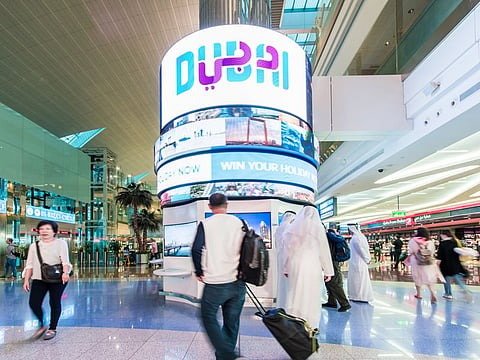
Dubai has secured the top regional spot and sixth position globally in the IMD Smart City Index 2026. For residents, this ranking translates directly into reduced administrative downtime. The emirate’s shift to an app-first service model means common tasks like visa renewals and bill payments are now handled through digital portals rather than physical service centers. In 2026, the result confirms that the city’s digital service model continues to outperform most global capitals.
- Ranking: Dubai is #6 globally and #1 regionally in the IMD Smart City Index 2026.
- Issuer: The index is published by the International Institute for Management Development (IMD) in the 2026 edition.
- What it measures: A resident-perception benchmark on whether technology improves daily life, including digital public services and connectivity reliability.
- Resident impact (2026): Higher-rated digital service delivery usually means fewer in-person visits and lower admin time for common Dubai government transactions completed via apps and portals.
The 2026 report from the International Institute for Management Development (IMD) focuses on resident satisfaction with digital connectivity. Integration between entities like the Roads and Transport Authority (RTA), Dubai Police, and DEWA ensures that data flows seamlessly across the city’s infrastructure. This ranking confirms that Dubai’s investment in digital identity systems and high-speed connectivity is meeting benchmarking standards for reliability and accessibility.
SMEs and large employers in Dubai benefit from lower compliance friction as a result of these high rankings. Processing cycles for government applications have shortened, reducing the working hours typically lost to manual paperwork and in-person visits. By utilizing integrated government portals, businesses can maintain legal compliance and handle service requests through verified digital channels.
Reputationally, the global top-10 placement strengthens the emirate’s position for investors and expats choosing a base in the Middle East. The placement supports local hiring and retention for specialized roles in cybersecurity, mobility technology, and data-driven city operations. As the operational design of the city expands, the smart mobility agenda remains a primary pillar of Dubai’s economic growth in 2026.
Quick Intel
- Global Rank: Dubai is positioned at #6 worldwide in the 2026 IMD Smart City Index.
- Regional Rank: The city maintains the #1 spot across the Middle East region.
- Primary Metrics: The index measures resident perception of digital service reliability and online public service access.
- Logistics: High-performing service delivery is facilitated via the DubaiNow app and UAE Pass integration.
Default to official digital portals for all routine government services to minimize processing time and ensure document security.

Etihad Rail cuts Abu Dhabi‑Fujairah commute to 1h 40m
Kalba commuter shaves two hours off daily trip thanks to new rail
At 7 a.m. on a Tuesday, a Kalba commuter steps onto the Etihad Rail platform, ticket in hand, ready for a journey that will end in Abu Dhabi in just 1 hour 40 minutes.
From three‑hour drives to a two‑hour commute

Emirates urges early arrival at DXB July 3‑5
DXB faces heavy traffic July 3‑5; Emirates tells flyers to add three‑hour buffer
Dubai International Airport (DXB) will see a surge of passengers from July 3‑5, 2026.
Longer queues and tighter gate cut‑offs at DXB terminals
The advisory reflects Dubai’s broader effort to keep airport flow smooth during seasonal travel spikes.

Dubai Customs Foil Pregabalin Smuggling Attempt
Dubai Authorities Thwart Pregabalin Smuggling Attempt
Dubai Customs and Dubai Police seized 278,850 Pregabalin pills in the initial smuggling attempt, according to official details of the joint operation, a controlled substance, weighing around 200 kg. The operation resulted in the arrest of a four-member gang, underscoring the authorities' ongoing efforts in border-security and anti-narcotics enforcement.
The seizure of 278,850 pregabalin tablets is a significant blow to drug trafficking networks in the UAE. Dubai Customs and Dubai Police have been working together to identify and intercept shipments of controlled substances, and this operation reflects their effective collaboration.
Dubai Customs and Dubai Police's joint operation is part of a broader effort to protect the community from the harm caused by controlled substances. Pregabalin is treated as a controlled substance in the UAE, and trafficking cases are typically handled as serious narcotics/controlled-medicine offenses.
The authorities' actions have prevented the diversion of these pills into local distribution markets, reducing the risk of harm linked to their misuse. This operation demonstrates the commitment of Dubai Customs and Dubai Police to enforcing border security and anti-narcotics laws, ensuring the safety and well-being of the community.
Officials said the joint operation reinforced Dubai’s leadership in border security and efforts to counter smuggling and protect the community.
The 200kg shipment of pregabalin pills was seized in a joint operation, resulting in the arrest of a four-member gang. This operation is a significant achievement for Dubai Customs and Dubai Police, demonstrating their effectiveness in identifying and intercepting shipments of controlled substances.

Emirates ID: Risks You Should Know Before You Share
Protect Your Emirates ID: The Hidden Dangers of Routine Sharing
As a resident in the UAE, you're likely familiar with the importance of your Emirates ID. However, a common habit among residents - sending Emirates ID copies for routine requests - can increase your exposure to identity theft and fraud. Authorities are warning against this practice, especially when sharing ID copies over WhatsApp or email.
The warning focuses on the potential risks of sharing Emirates ID copies, which can be stored, forwarded, or reused without the holder's knowledge. Emirates ID is a high-trust identifier used across many verification flows, and if misused, it can enable impersonation attempts, fraudulent account creation, unauthorized service sign-ups, or social-engineering scams.
Residents are advised to verify whether the request is mandatory and whether the recipient is authorized. It's recommended to prefer official portals or in-person verification when possible, avoid sending ID images over informal channels like WhatsApp, and limit exposure by sharing only what is necessary for the stated purpose. Red flags include requests from unverified numbers or emails, pressure to share immediately, unclear purpose for collection, or businesses that cannot explain how the data will be stored and protected.
For those who have already shared their Emirates ID copies, it's essential to be vigilant and monitor their accounts and personal data for any suspicious activity. If you suspect that your Emirates ID has been misused, you should report it to the relevant authorities immediately.
In the UAE, residents can take steps to protect their Emirates ID data by being cautious when sharing their ID copies. By being aware of the potential risks and taking the necessary precautions, residents can reduce their exposure to identity theft and fraud.
To protect your Emirates ID data, follow these best practices:
- Verify the recipient's authenticity before sharing your ID copy.
- Use official portals or in-person verification when possible.
- Avoid sending ID images over informal channels like WhatsApp.
- Limit exposure by sharing only what is necessary for the stated purpose.

Trump's $1.4B Crypto Income Disclosure
Trump's Crypto Income Sparks Scrutiny
If you're following the latest developments in cryptocurrency and US politics, a recent report has shed light on Donald Trump's significant income from crypto ventures. According to the report, Donald Trump’s 2025 financial disclosure reported total income of at least $2.2 billion, including more than $1.4 billion tied to cryptocurrency-related earnings largely linked to meme coins, with the largest share attributed to World Liberty Financial, a venture he co-founded. This disclosure has drawn attention due to the potential conflict of interest, as policy positions and regulatory decisions can materially affect digital-asset valuations and related business interests.
For individuals invested in or following the cryptocurrency market, this news may have significant implications. The reported income is substantial, and the fact that it's primarily linked to World Liberty Financial, a venture Trump co-founded, raises questions about the nature of this income and how it might influence his policy positions.
The disclosure described the cryptocurrency income as being largely driven by meme-coin activity, a detail that has intensified questions about how political statements and regulatory signals can move thinly traded digital assets. The filing did not provide a detailed breakdown of counterparties, transaction timing, or the ownership structure underpinning the cryptocurrency income attributed to meme-coin activity.
The disclosure of Trump's crypto income could lead to increased scrutiny of his policy decisions and their potential impact on the digital asset market. As such, it's essential to stay informed about developments in this area and consider the potential implications for investment strategies and risk management.
The disclosure did not specify whether the more than $1.4 billion in cryptocurrency-related income represented realized cash proceeds, unrealized gains, or valuation-based estimates.