(Credit - UAE Ministry of Foreign Affairs (mofa.gov.ae))
MBZ and Trump discuss Gulf maritime security in April 1 phone call
On April 1, 2026, UAE President His Highness Sheikh Mohamed bin Zayed Al Nahyan held a phone call with US President Donald Trump to discuss the latest regional developments and their impact on peace and security, according to Dubai Eye 103.8.
The call raised concerns about Iranian aggression and threats to maritime security in the Gulf, including attacks on civilians and infrastructure, as noted in the report. For UAE residents, these maritime risks may result in higher shipping surcharges and longer delivery times for imported goods routed through Jebel Ali Port in Dubai and Khalifa Port in Abu Dhabi.
Any rise in perceived risk to Gulf sea lanes can increase war-risk insurance premiums and freight rates used by carriers serving UAE ports, which can feed into retail prices and business input costs in Dubai and Abu Dhabi within weeks. Companies that rely on time-sensitive imports should watch for updated carrier advisories and revised delivery ETAs tied to Gulf routing.
Quick Intel
- Date: April 1, 2026 phone call between Sheikh Mohamed bin Zayed Al Nahyan and Donald Trump focused on regional peace and security.
- Risk area: Maritime security in the Gulf, with concerns cited about Iranian aggression and attacks on civilians and infrastructure.
- Money impact: Higher war-risk premiums and freight surcharges can raise landed costs for imports moving through Jebel Ali Port and Khalifa Port.
- Time impact: Routing changes and extra compliance checks can extend shipping ETAs and slow high-frequency supply chains serving UAE retailers and SMEs.
Beyond the immediate concerns within the Gulf, the leaders also broadened their discussion to encompass the wider implications for international maritime security, underscoring the interconnectedness of global shipping lanes.

Emirates ID sharing risk: How to protect yourself
Why sharing your Emirates ID can invite fraud, and what to do
Your ID, your risk: the hidden danger of casual Emirates ID sharing
If you’ve been sending a photo of your Emirates ID over WhatsApp or posting the number in a chat, you may be opening the door to identity theft. Routine sharing of Emirates ID details can be weaponised by fraudsters, and the UAE’s laws treat any misuse of identity documents as a criminal offence. In plain terms, a single misplaced image can enable impersonation, account take‑overs, or bogus applications that cost you time and money.
Residents across the Emirates rely on the card for everything from opening bank accounts to ordering food deliveries, which makes the temptation to “just show it” understandable. Yet that convenience is exactly what criminals exploit. Once an ID image or number circulates, it can be re‑used in weak verification processes that many services still employ. The result? Unauthorized loans, fake utility contracts, or even travel bookings made in your name.
What this means for you
UAE citizens and expatriates holding an Emirates ID should treat the document like a passport: share it only when a regulated entity explicitly asks for it and can justify the request. A quick check, is the request coming from a verified corporate email or a secure portal?, can spare you a future headache. Avoid sending full‑screen photos in unsecured messaging apps; a blurred or cropped version that hides the number is still risky.
If you suspect that your Emirates ID details have been misused, the first step is to note where and how you shared the information. Then, reach out to the fraud or security team of the service that was involved, banks, telecom operators, or e‑commerce platforms all maintain dedicated channels for such complaints. Prompt reporting can limit damage and trigger investigations under the UAE’s strict identity‑misuse statutes.
Practical steps to keep your Emirates ID safe
- Share your Emirates ID only with a legitimate, regulated entity that has a clear, documented purpose for the data.
- Never transmit a full‑size image of the card through unsecured messaging apps; use encrypted portals or in‑person verification whenever possible.
- If you receive an unsolicited request for your ID, verify the sender’s identity through official contact numbers before responding.
- When you suspect misuse, record the context of the sharing and immediately contact the relevant service provider’s fraud team.
Remember, the law in the UAE criminalises the illegal use of identity documents, so protecting your Emirates ID isn’t just good sense, it’s a legal obligation.

UAE Cybersecurity Council Blocks Sophisticated Financial Sector Attacks
UAE Cybersecurity Council Stops Major Cyber Threats to Banking System
The UAE Cybersecurity Council announced that it had neutralized sophisticated cyberattacks aimed at the nation’s financial sector, with no interruption to banking services. The statement directly concerns banks, payment providers and their customers across the Emirates.
Proactive threat‑hunting teams and newly‑formed partnerships with telecom operators and cloud providers were credited for the swift containment. The council’s briefing highlightd a shift toward real‑time monitoring and coordinated response drills that go beyond routine compliance checks.
Banking services remained fully operational across the UAE, meaning ATMs, online portals and point‑of‑sale terminals continued to function without delay.
The council’s success follows a 2024 incident in which a ransomware strain briefly disabled a regional payment gateway, prompting the launch of the current joint‑defense framework.

Dubai Police warning after Jebel Ali crash injures 25
25 injured as broken‑down bus hit on Jebel Ali Road; police urge caution
A broken‑down bus on Jebel Ali Road was struck by three vehicles, injuring 25 people. Dubai Police issued an immediate road‑safety warning to motorists.
Police stress that abrupt stops on fast‑moving highways can trigger chain‑reaction collisions, a risk highlighted by the recent multi‑bus incident. The warning comes as Jebel Ali Road serves as a key artery for commuters and freight, where speeds regularly exceed 80 km/h.
The crash left 25 individuals with injuries ranging from minor cuts to serious trauma. Drivers are urged to keep moving unless a breakdown is unavoidable, pull into a designated emergency lane, activate hazard lights, and contact the police without delay. Rapid risk reduction, the force said, can prevent secondary impacts that otherwise turn a single breakdown into a multi‑vehicle pile‑up.
The police message aims to cut down on unexpected stoppages that historically pose significant dangers and heightened liability for all road users.

Lionel Messi 20th World Cup goal lifts Golden Boot lead
Messi's 20th World Cup strike crowns him Golden Boot frontrunner
Lionel Messi netted his 20th World Cup goal on July 4, 2026, during the 2026 FIFA World Cup. The tally propels Argentina’s captain to the top of the tournament’s Golden Boot race.
The strike extended his scoring run to eight straight matches and eclipsed Miroslav Klose’s all‑time World Cup tally.
Messi’s 20th World Cup goal puts him ahead in the Golden Boot standings. Kylian Mbappé and Erling Haaland were next in the Golden Boot standings with six goals each as of July 3, 2026, trailing Messi’s tournament-leading total.

Emirates urges early arrival at DXB July 3‑5
DXB faces heavy traffic July 3‑5; Emirates tells flyers to add three‑hour buffer
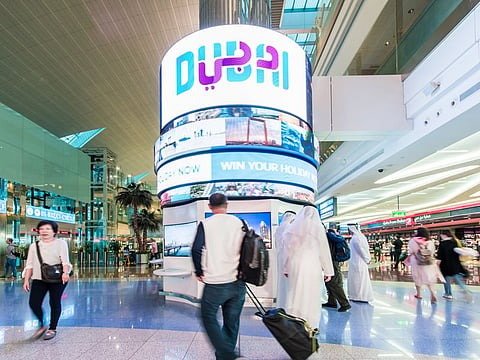
Dubai International Airport (DXB) will see a surge of passengers from July 3‑5, 2026.
Longer queues and tighter gate cut‑offs at DXB terminals
The advisory reflects Dubai’s broader effort to keep airport flow smooth during seasonal travel spikes.